
Editor's Review
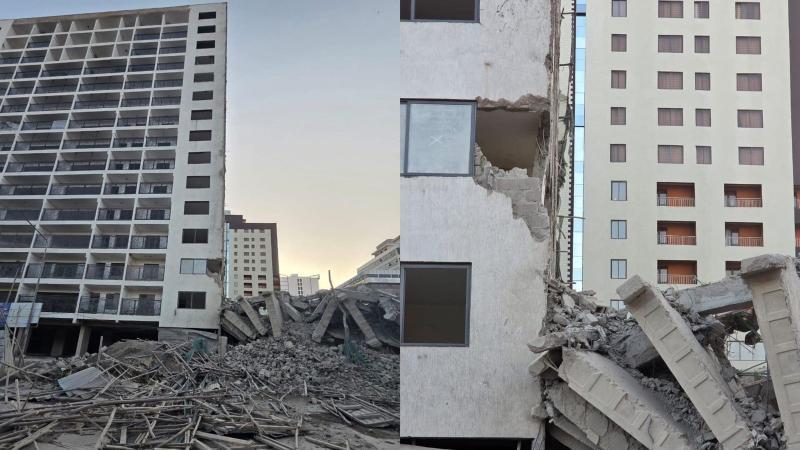
The Ministry of Health has warned Kenyans about the increased risk of buildings and other infrastructure collapsing during the ongoing long rains season.
The Ministry of Health has warned Kenyans about the increased risk of buildings and other infrastructure collapsing during the ongoing long rains season.
In a statement on Friday, March 13, Public Heath Principal Secretary Mary Muthoni said prolonged rainfall during the March–April–May (MAM) season can weaken structures and lead to serious safety hazards.
The ministry explained that heavy and sustained rainfall can damage foundations and critical infrastructure, increasing the chances of disasters that could lead to injuries or loss of life.
"The Ministry of Health alerts the public to the increased risk of collapse of buildings and other infrastructure during the ongoing March–April–May (MAM) long rains.
"Prolonged rainfall can weaken building foundations, cause flooding and landslides, and damage structures such as buildings, roads, and bridges, increasing the risk of injuries, loss of life, and other public health emergencies," the statement read.
Read More
As part of the advisory, the government urged members of the public to be cautious around buildings that appear structurally unsafe.
People have been advised to avoid occupying buildings that show visible cracks, flooding, or signs of weakness.
Landlords and property owners have also been encouraged to inspect their buildings and repair any structural defects such as weakened walls, cracks, or compromised foundations.
The ministry further cautioned against construction in unstable areas such as steep slopes, riparian land, and flood-prone zones, which become even more dangerous during heavy rains.
Kenyans were also advised to follow evacuation notices issued by national and county governments, the National Disaster Operations Centre, and other authorities in high-risk areas, and to immediately report any visible structural risks or collapsing infrastructure to local authorities.
In the event of a building or infrastructure collapse, the advisory instructs members of the public to move away from the affected structure immediately to avoid falling debris or additional collapse.
Authorities also advised people to contact emergency responders including police, fire services, or county disaster response teams.
The government warned against attempting risky rescues and instead urged the public to allow trained emergency responders to carry out rescue operations safely.
If someone is trapped under debris, people nearby should try to reassure them while alerting rescue teams about their location.
The Ministry of Health also emphasized the importance of immediate medical attention in case of injuries, advising the public to seek treatment at the nearest health facility.
Basic first aid measures such as controlling bleeding with a clean cloth or bandage and immobilising fractures where possible can help stabilize victims before professional medical help arrives.

In addition, the advisory warned about secondary health risks that may arise after structural collapses, particularly in areas affected by flooding.
The public has been advised to avoid contact with contaminated floodwater or debris, ensure access to safe drinking water, and maintain proper sanitation to prevent waterborne diseases.
People were also cautioned to avoid exposed electrical lines or damaged gas systems and to maintain hygiene, especially when assisting injured individuals.
Communities were encouraged to prepare for emergencies by identifying safe evacuation routes and community assembly points.
The ministry also urged residents to establish community alert systems to warn others about structural hazards and to assist vulnerable groups such as children, the elderly, pregnant women, and persons with disabilities during evacuations.
The advisory also acknowledged the emotional and psychological impact that such disasters can have on victims and their families, encouraging those affected to seek psychosocial support and counselling services.
In a call for public cooperation, the ministry urged Kenyans to remain alert and observe safety measures throughout the rainy season.
"The Ministry of Health urges all Kenyans to remain vigilant during the ongoing MAM long rains and observe safety measures to reduce injuries and loss of life associated with collapsing structures," the statement added.
Meanwhile, the Kenya Meteorological Department (KMD) has predicted heavy rainfall across five regions this weekend.
In a weather forecast earlier Friday, the department said rainfall is expected in the Highlands West of Rift Valley, Highlands East of the Rift Valley, and the Lake Victoria Basin.
The Rift Valley and the South-eastern Lowlands regions will also experience showers this weekend.
In the highlands west of the Rift Valley, the Lake Victoria Basin, and the Rift Valley, the weatherman said morning rains will be experienced over a few places, followed by afternoon showers and thunderstorms. In the evening, some locations are expected to receive rainfall.
In the highlands east of the Rift Valley, which includes Nairobi and Kiambu counties, the Met Department predicted that there will be a chance of morning rains in a few areas, followed by afternoon showers and thunderstorms.
In the evenings, some places will experience showers, while other areas will be partly cloudy.
Meanwhile the South Eastern Lowlands will experince morning rainfall over a few places followed by afternoon showers and thunderstorms.
The forecast comes days after the Met Department predicted a general reduction in rainfall across many parts of the country.
In an update on Monday, March 9, the department said rainfall will become less intense in several regions, although some parts will continue receiving occasional rains.
According to the agency, rainfall activity will decline in both spatial coverage and intensity across many areas of the country during the week under review.
"Rainfall is expected to reduce in spatial coverage and intensity across several parts of the country. However, occasional rainfall is likely to continue over several areas in the southern parts of the country," the statement read.
Despite the expected reduction, the department warned that some regions could still experience isolated heavy rainfall during the forecast period.

 (1)-1788411142-md.jpg)



-1792662527-md.jpg)

 (1)-1788411142-sm.jpg)