Head of Public Service Felix Koskei has announced that President William Ruto has received the resignation of Mohamed Liban, who served as Principal Secretary in the State Department for Petroleum.
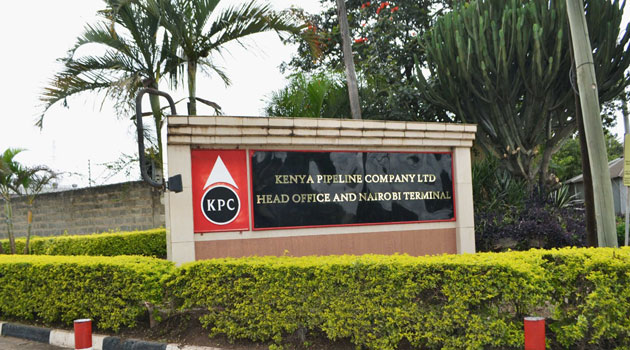
In a statement on Saturday, April 4, he added that the board of Kenya Pipeline Company PLC had received the resignation of Managing Director Joe Sang, while the board of Energy and Petroleum Regulatory Authority had received the resignation of Director General Daniel Kiptoo.
The resignations followed allegations linking the three officials to a fuel procurement and importation scandal involving substandard petroleum products.
Liban, Sang, and Kiptoo are accused of involvement in irregularities that allowed fuel that does not meet required quality standards to enter and circulate in the Kenyan market.
Authorities suspect that the petroleum products in question may have had high sulphur content or contamination.
Read More
Koskei stated that disciplinary action had also been initiated against other officials connected to the matter.
"The State Department for Petroleum has initiated appropriate administrative action against Mr Joseph Wafula, Deputy Director of Petroleum, while the management of the Kenya Pipeline Company has commenced due process against Joel Mburu, Supply and Logistics Manager; and the relevant investigative agencies will continue with their inquiries to ensure full accountability," the statement read in part.
Koskei added that the government would take firm action against those found responsible.
"The government remains steadfast in safeguarding the public good and protecting national interests. Any act of economic sabotage will be fully investigated and met with firm and decisive action against any individual or entity found culpable," the statement added.

Elsewhere, this comes a day after Treasury Cabinet Secretary John Mbadi assured lawmakers that Kenya has adequate petroleum reserves despite escalating tensions in the Middle East.
Appearing before the National Assembly’s Finance and National Planning Committee on Thursday, April 2, Mbadi revealed that, based on data from the Ministry of Energy and Petroleum, Kenya has sufficient fuel stocks covering petrol, diesel, and jet fuel needs for several days.
As of March 30, the country had 138,623 metric tonnes of Super Petrol, which translates to 16 days of supply, 207,841 metric tonnes of diesel, equivalent to 19 days, and 150,398 metric tonnes of jet fuel, enough for 49 days.
Mbadi further explained that additional shipments scheduled for March and April are expected to strengthen these reserves.
The planned deliveries include 290,000 metric tonnes of Super Petrol (47 days cover), 182,900 metric tonnes of diesel (20 days cover), and 60,000 metric tonnes of jet fuel (25 days cover), with the first consignments already expected to arrive.
While acknowledging that the current supply situation remains stable, Mbadi warned that future imports could become more expensive.
He cautioned that rising global oil prices in the coming months may translate into higher pump prices locally, potentially triggering inflationary pressure and straining public finances.
Mbadi maintained that despite global uncertainty, the country’s GDP is projected to grow to 5.3 percent in 2026 and 2027, up from 5.0 percent in 2025.
He further disclosed that the government has established a multi-agency team to continuously assess developments arising from the conflict and propose timely interventions to shield the economy from severe shocks.
"Hon. Members, as any responsible government would do, we are taking a whole government approach to monitoring the situation. In fact, I have just come from a meeting where we were deliberating on a few scenarios as a result of the ongoing war and how we would respond to them," he said.