
Editor's Review
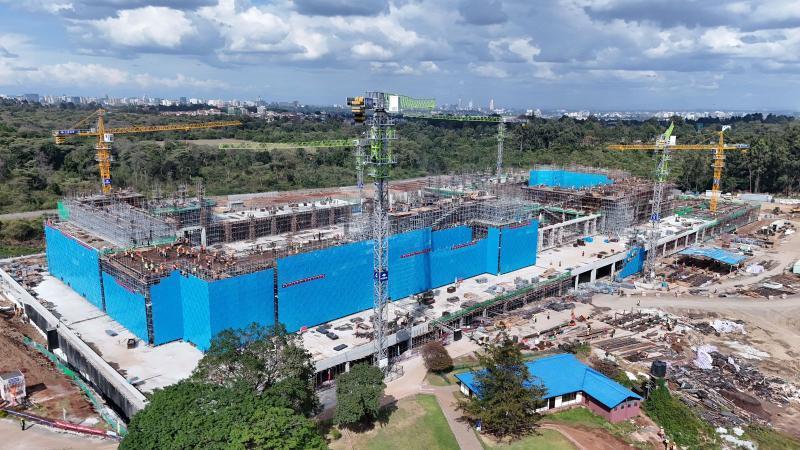
A Senate probe into safety practices at the Bomas of Kenya construction site has raised fresh concerns over worker welfare.
A Senate probe into safety practices at the Bomas of Kenya construction site has raised fresh concerns over worker welfare.
In a session on Tuesday, April 28, lawmakers questioned whether injured workers and families of the deceased have been properly compensated.
The inquiry, led by the Senate Committee on Labour and Social Welfare, brought together officials from the Ministries of Tourism, Defence, and Labour, alongside contractors involved in the multi-billion-shilling Bomas International Convention Complex (BICC) project.
However, despite detailed briefings on safety measures, senators consistently pressed for tangible proof that compensation had been issued following reported accidents.
During the session, Bomas of Kenya CEO Jimmy Okindiangi outlined the history of the project, tracing its inception back to 2013.
Read More
He described it as a large-scale, phased development aimed at transforming Kenya into a leading regional conferencing destination, complete with hospitality facilities, retail spaces, a cultural hub, and a sports arena.
Contractors from China Road and Bridge Corporation, represented by project official Peter Chen, detailed a comprehensive safety framework at the site.
According to their presentation, workers are required to undergo safety induction and assessments before accessing the site.
They added that protective gear is mandatory, safety officers are assigned to different zones, and systems such as surveillance, lighting, and emergency drills are fully operational.
Officials from the Ministry of Defence, led by Lt Col Wilfrida Amondi, supported the claims, stating that safety compliance is regularly monitored.
They indicated that documentation, including workplace registration, audit reports, injury records, and payroll data, is maintained and available for inspection.
Despite these assurances, senators remained unconvinced.
Kajiado Senator Seki Lenku pushed for a detailed breakdown of all recorded incidents, noting reports of at least 18 injuries and two fatalities.
He emphasized the need to establish whether those affected had received due compensation.
"We want to look at the records of all the fatalities and injuries suffered on this site," he said.

Concerns were echoed by Embu Senator Alexander Mundigi, who questioned the apparent mismatch between the safety measures described and the number of incidents reported.
He stressed that the committee’s priority was ensuring accountability, particularly given that the project employs an estimated 2,400 workers.
A representative from the Directorate of Occupational Safety and Health Services (DOSH) outlined the legal procedures for handling workplace injuries and deaths.
In the case of fatalities, incidents must be reported within 24 hours, followed by postmortem processes and claims from dependents.
However, the committee heard that in several instances, required documentation had yet to be submitted.
Senators later conducted an on-site inspection, visiting specific locations where the fatal incidents were reported to have occurred.
The investigation now continues with a focus on unresolved questions surrounding worker safety and compensation.
This comes a week after Interior Principal Secretary Raymond Omollo issued an update on the construction of the convention complex.
In a statement on Monday, April 20, Omollo said the construction of the complex is being executed by a workforce of 3000 people.
"The project is being executed by a workforce of over 3,000 personnel operating in continuous shifts, with a deliberate focus on inclusive job creation, engaging youth and women across skilled, semi-skilled and support roles," read the statement in part.
Omollo also said supporting infrastructure for the complex is advancing in tandem, including the Bomas Ring Road, with foundation works underway to enhance access from Lang'ata Road and streamline traffic circulation.
He highlighted that once complete, the complex will be one of the largest convention centres in East and Central Africa.
Omollo said the BICC will accommodate up to 11,000 delegates across 35 meeting rooms, supported by a 5,000-seat main auditorium and a 3,500-seat secondary hall.
It will also feature a presidential pavilion and a hospitality zone with multiple hotels, retail spaces and complementary facilities.
"A Presidential Pavilion will host up to 30 heads of state, while an integrated hospitality zone will feature multiple hotels, retail spaces and complementary facilities, including an animal orphanage," he said.
The complex will also be linked to the Raila Odinga International Stadium, enabling seamless movement during major events.
To enhance visitor management, Omollo said a structured parking system is being developed at the Kenya Wildlife Service (KWS) precinct, with controlled access into the convention centre through a ring road network.
Meanwhile, the State Department for Internal Security and National Administration is working to strengthen the facility’s operational readiness.
"The State Department for Internal Security and National Administration is enhancing the facility's operational readiness by coordinating secure event management systems, facilitating seamless VIP movement and integrating smart surveillance and access control measures, ensuring the BICC operates as a safe, efficient and globally competitive convention hub," he added.
-1792071927-md.jpg)



-1792071927-sm.jpg)