Editor's Review
The Ministry of Health has addressed ongoing discussions with the United States and other international partners regarding cooperation on Ebola Virus Disease preparedness and response measures.
The Ministry of Health has addressed ongoing discussions with the United States and other international partners regarding cooperation on Ebola Virus Disease preparedness and response measures.
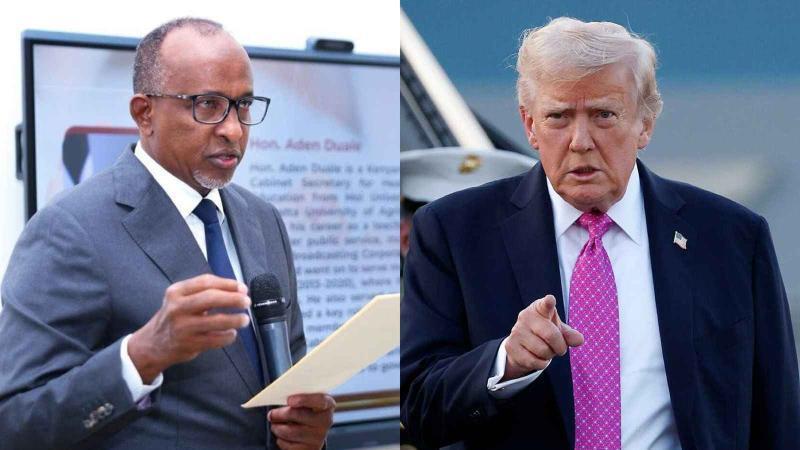
In a statement on Wednesday, May 27, Health Cabinet Secretary Aden Duale said Kenya remains committed to strengthening global health security through partnerships focused on science-based public health action.
The CS said the government recognizes the importance of international collaboration in addressing emerging health threats.
"The Government of Kenya notes ongoing discussions with US government and other global partners regarding international collaboration on strengthening preparedness and response mechanisms for Ebola Virus Disease (EVD) and other emerging public health threats," the statement read.
Duale noted that Kenya supports cooperative efforts aimed at improving global disease preparedness and response systems.
Read More
"Kenya welcomes partnerships that strengthen global health security and reaffirm our shared commitment to protecting lives through coordinated, science-based action," the statement added.
Duale highlighted Kenya’s long-standing investments in public health systems, noting that the country has built significant regional capacity over the years.
"Kenya's role in regional and global health security has been built over many years through deliberate investments in health systems strengthening, public health surveillance, workforce development and emergency preparedness," the statement continued.
Duale added that Kenyan health professionals have played a major role in responding to disease outbreaks across Africa, including the West African Ebola outbreak between 2014 and 2016.
"Our health professionals have supported responses to major disease outbreaks across the region including the West Africa EVD outbreak in 2014-2016. Our institutions have continued to play an important role in advancing disease surveillance, laboratory systems, emergency response and public health coordination," the statement further read.
Duale also outlined measures the government has put in place to respond to the current Ebola outbreak situation in the region.
"The country continues to maintain and strengthen preparedness measures in response to the ongoing EVD outbreak in the region. Kenya has activated its national Incident Management System, intensified surveillance at Points of Entry, designated laboratories for testing and strengthened coordination mechanisms at national and county levels," the statement noted.

Duale maintained that any international health cooperation agreements would be implemented within Kenya’s legal and public health frameworks, while prioritizing the safety of citizens and health workers.
"Any arrangements regarding international health cooperation will be guided by Kenya's national laws, public health regulations, biosafety and biosecurity standards, and the overriding responsibility of Government to safeguard the health and welfare of the people of Kenya. Protection of Kenyan citizens, frontline health workers and communities remains paramount," the statement assured.
Duale further noted that Kenya’s partnership with the United States and other global partners has contributed significantly to strengthening the country’s healthcare systems and emergency response capabilities.
"Kenya values its longstanding partnership with the United States and other global partners in strengthening health systems and health security capacities. These partnerships have contributed significantly to investments in surveillance systems, workforce training. emergency preparedness and health infrastructure that benefit not only Kenya, but also the broader region," the statement concluded.
This comes days after the United States government has committed Ksh1.68 billion ($13 million) toward emergency Ebola response efforts in DR Congo and Uganda.
In a statement on Wednesday, May 20, the United States Department of State said it moved swiftly after learning of the confirmed Ebola cases.
"On May 15, 2026, within 24 hours of learning of the confirmed cases, the Department leveraged its outbreak response and humanitarian assistance capabilities to establish an interagency coordination cell and incident management system in Washington, D.C. Embassies in the DRC, Rwanda, South Sudan, and Uganda have joined this group and established monitoring groups to track developments and communicate with American citizens in the region," the statement read.
The department said the response escalated rapidly within two days of the outbreak confirmation.
"Within 48 hours, the Department activated a response plan and mobilized an initial $13 million in foreign assistance for immediate response efforts," the statement added.
According to the statement, the latest funding adds to previous American investments in disease surveillance systems and emergency outbreak response partnerships signed with both Uganda and the DRC.
"This funding builds on U.S. investments in disease surveillance and outbreak detection, and response efforts made through bilateral health MOUs signed with both the DRC and Uganda under the America First Global Health Strategy," the statement continued.
The U.S. government further announced plans to support the establishment of up to 50 treatment clinics in affected regions to help strengthen screening and containment measures.
"The United States is committing to rapidly supporting the Ebola outbreak response by funding up to 50 treatment clinics, and associated frontline costs being established in Ebola-affected regions of the DRC and Uganda.
"These rapidly deployed clinics will provide emergency Ebola screening, triage, and isolation capacity," the statement further read.
The State Department noted that rapid containment efforts remain critical in preventing the virus from spreading beyond the affected regions.
"We know from previous outbreak response that ensuring partners rapidly scale up containment and treatment efforts in the affected regions is the most critical variable to ensuring an effective response and that the disease does not spread," the statement read.
According to the department, funding will largely be channeled through United Nations-managed emergency response systems.
"The United States will deliver this funding primarily via Central Emergency Response Funds (CERF) pooled funding vehicles administered by the United Nations Office for the Coordination of Humanitarian Affairs (OCHA), building upon our landmark partnership with OCHA to deliver life-saving assistance faster, more efficiently, and more accountable," the statement noted.



 (1)-1791178178-md.jpg)