Editor's Review
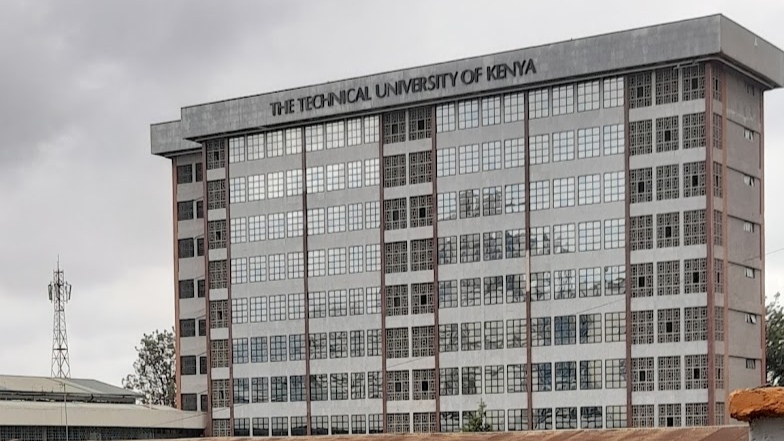
The Technical University of Kenya (TUK) has announced that certificates for students who graduated on March 31 are now ready for collection.
The Technical University of Kenya (TUK) has announced that certificates for students who graduated on March 31 are now ready for collection.
In a notice on Tuesday, June 9, the university urged all eligible graduates to begin the collection process in line with the set guidelines and timelines.
The institution confirmed that the certificates will be issued starting Monday, June 8.
Graduates have been advised to ensure they comply with all requirements before visiting the university to avoid delays in the issuance process.
The university stated that certificate collection will take place at the Examinations Office located on the Ground Floor of the Administration Block.
Read More
Collection will be done daily between 8:00 a.m. to 1:00 p.m. and 2:00 p.m. to 5:00 p.m.
Graduates are required to present several documents during collection, including a signed Request to Collect Certificate form obtained from the student portal, a copy of the Application to Graduate form, a copy of the Clearance Certificate, a current fee statement, as well as their original National ID or passport together with a photocopy.
The notice further allows for collection by next of kin as recorded in the university database.
"The Next of Kin, as recorded in the TUK database, may collect the certificate on behalf of a graduate upon presentation of the following, once approved," the notice read.
In such cases, the authorized representative must present a signed authorization letter from the graduate, all required documents except the graduate’s original identification document, and their own original National ID or passport accompanied by a photocopy.
TUK emphasized that all certificates must be collected within three months from June 8 after which a storage fee of Ksh1,000 per year will apply.
The university also noted that certificates will only be issued to graduates who have fully cleared with all university obligations.

Meanwhile, the German Academic Exchange Service (DAAD) has announced a new scholarship programme for highly qualified graduates from Kenya and other countries seeking to pursue a Master's degree in STEM fields at universities in Germany.
In a statement on Tuesday, the German Embassy in Kenya said the scholarship will support successful applicants by providing funding for tuition-free programmes and a range of additional benefits.
DAAD said the initiative is designed to help talented students advance their academic and professional careers in innovation-driven disciplines.
"The scholarship programme is aimed at high-achieving students from developing and emerging countries who would like to complete a Master’s degree in the STEM subjects at a German university.
"The scholarship offers the opportunity to continue their academic and professional career in innovation-driving STEM fields in Germany with a Master’s degree in mathematics, computer science, natural sciences and engineering," the statement read.
According to the programme guidelines, applicants must have completed a first university degree recognised in Germany, such as a Bachelor's degree, by the application deadline.
However, candidates who already hold a Master's degree by the application deadline are not eligible to apply.
The funding is available for full-time, on-campus Master's degree programmes at state or state-recognised universities in Germany.
Eligible courses must fall within the STEM disciplines of mathematics, computer science, natural sciences or engineering.
DAAD noted that interdisciplinary programmes may qualify if they have a clearly defined STEM focus.
However, study programmes that include integrated periods of study outside Germany are excluded from the scholarship.
The scholarship supports students for a minimum of 10 months and a maximum of 24 months, depending on the duration of the chosen Master's programme.
Applicants are required to indicate the full intended period of study when submitting their application.
For example, a student enrolling in a two-year Master's programme must apply for funding covering the entire two-year period from the outset.
DAAD explained that continuation of funding beyond the first year will depend on academic performance.
"After the first year of study, your academic achievements will be assessed. If this shows that you will successfully complete your programme within a reasonable period of time, the scholarship will continue as planned," the statement added.





 (1)-1789206669.jpg)