
Editor's Review
For governors, senators, and Woman Representatives, the proposed spending limits range from Sh12.3 million to Sh123 million, depending on population size and geographical coverage.
By Victor Bwire
The unending attempts to clean up our election campaigns by addressing voter bribery, money laundering through elections, and creating a level playing field for aspirants in general elections are back on the agenda. It is a timely and welcome move that requires the support of all and sundry. The huge expenses incurred during campaign activities have made elections in Kenya a life-and-death affair. Bankruptcy, mental stress, financial hardship, family breakdown, and social ostracisation often await election losers, while winners frequently view seats in the National and County Assemblies as opportunities to recover campaign expenses. This is even before factoring in the additional costs of election petitions.
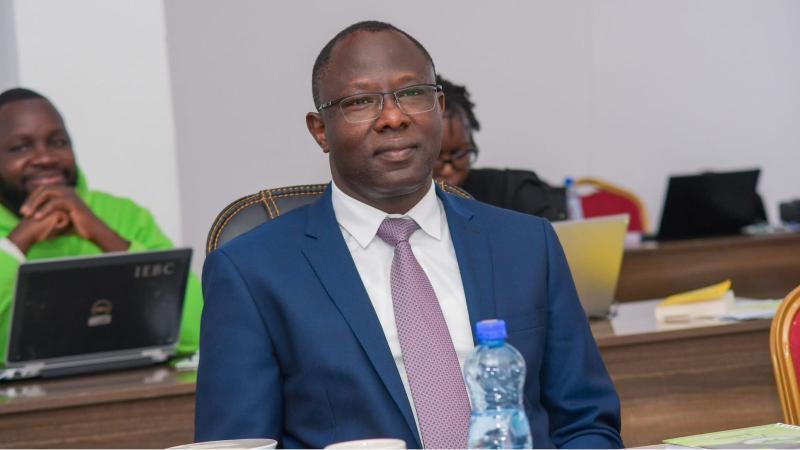
To enhance accountability in elections, the management of political parties, and campaigns for political office, the Independent Electoral and Boundaries Commission (IEBC) has published draft regulations seeking to cap campaign spending by candidates. This marks a second attempt after a similar proposal in 2022 was rejected by Members of Parliament. Whether these regulations will suffer the same fate as many other laws that gather dust on the shelves remains to be seen. However, if passed and effectively implemented, they could significantly increase transparency and reduce the cost of elective politics.
The draft regulations under the Election Campaign Financing Act, 2013, provide for regulated campaign contributions to political parties and candidates. The proposed spending limit for presidential candidates is Sh44 billion, while political parties would be capped at Sh17 billion. The regulations also require the establishment of campaign finance committees and compel candidates and parties to account for funds received and spent during election campaigns.
For governors, senators, and Woman Representatives, the proposed spending limits range from Sh12.3 million to Sh123 million, depending on population size and geographical coverage. Members of County Assembly (MCAs) would be allowed to spend between Sh2.5 million and Sh20 million. Hopefully, this time the regulations will see the light of day and, more importantly, be implemented.
Read More
The issue of disclosure of campaign funding sources, expenditure, members' involvement in party management, and accountability for the performance of elected and nominated leaders must also be addressed. Equally important is the management of party primaries within prescribed timelines and in accordance with minimum democratic standards. Nearly all political parties struggle to conduct credible nominations. Instead, party primaries are too often characterised by violence, intimidation by criminal gangs, corruption, manipulation of candidate selection processes, and blatant disregard for party constitutions. In extreme cases, party candidates are ultimately determined through court processes rather than democratic elections.

The electoral management body may also need to play a greater role in supporting political parties to conduct credible nominations ahead of the 2027 General Election. Many parties have repeatedly demonstrated that they are incapable of conducting free, fair, and transparent internal elections. They lack transparency in selecting candidates, rarely hold officials accountable for electoral offences, including tampering with nomination lists, and often fail to comply with the two-thirds gender principle.
Past experience also shows that many political parties neither maintain nor disclose basic information such as membership registers, sources of contributions, or expenditure of party funds. Party owners and founders often exert excessive influence over nomination processes, undermining internal democracy and denying members a fair opportunity to compete.
The rampant use and misuse of public resources, including the involvement of public officers in electoral campaigns, must also be re-examined. Given the country's increasingly polarised political environment, allowing public officers to participate directly in partisan campaigns undermines public confidence in state institutions. Electoral campaigns are not official government business. There can therefore be no justification for using public resources to advance what are essentially private political interests.
There are already laws requiring public officers seeking elective office to vacate their positions at least six months before the campaign period begins. The Public Officer Ethics Act also prohibits public officers from engaging in partisan politics. Unfortunately, these provisions appear to exist only on paper, as there seem to be few, if any, consequences for violating them.
A study released in 2022 by Prof. Karuti Kanyinga and Tom Mboya on behalf of South Consulting Africa Limited, titled The Cost of Politics in Kenya, found that candidates spent staggering amounts during the 2017 General Election. Winning Senate candidates spent an average of Sh49 million, Woman Representatives Sh32.2 million, Members of Parliament Sh21.2 million, and Members of County Assembly Sh4.2 million. Even unsuccessful candidates spent heavily, with average expenditures of Sh20.3 million for Senate, Sh13.4 million for Woman Representative, Sh14.9 million for Member of Parliament, and Sh2.1 million for MCA races.
The study further established that Senate contests were the most expensive, with candidates spending an average of Sh35.5 million. Woman Representative candidates followed with an average expenditure of Sh22.8 million, Members of Parliament Sh18.2 million, while MCA contests were the least expensive at approximately Sh3.1 million. Most candidates financed their campaigns through personal savings or support from friends and family, with fewer than 20 per cent receiving significant financial support from their political parties.
The findings also revealed that the more a candidate spends, the greater the likelihood of electoral success. Winning Woman Representative candidates, for example, spent almost three times more than their unsuccessful competitors. In addition to campaign expenditure, affiliation with a dominant political party significantly increased a candidate's chances of victory.
The implementation of the Election Campaign Financing Act requires greater commitment and accountability. Political parties must be encouraged to develop clear policies, coherent strategies, and distinct ideologies that enable citizens to make informed choices. Proactive disclosure of party finances, nomination processes, complaints-handling mechanisms, manifestos, gender inclusion efforts, and other key information, together with rigorous media scrutiny, will go a long way in strengthening transparency, promoting accountability, and deepening democracy in Kenya.
Victor Bwire is the Director, Media Training and Development at the Media Council of Kenya.

 (1)-1792402350-md.jpg)



 (1)-1792402350-sm.jpg)