
Editor's Review
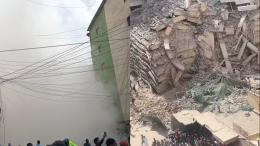
The Ministry of Labour has announced new measures to strengthen workplace safety in the construction sector, stepping up inspections and regulatory compliance.
The Ministry of Labour has announced new measures to strengthen workplace safety in the construction sector, stepping up inspections, regulatory compliance and support for workers injured or killed in the course of their employment.
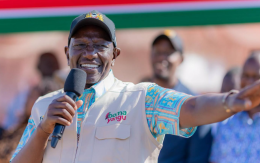
Speaking in the Senate on Wednesday, July 22, Labour Cabinet Secretary Alfred Mutai said the measures were aimed at ensuring construction sites operate within the law and that workers are protected from occupational hazards.
He said the ministry had established a dedicated division to oversee safety in the sector while also strengthening inspections across the country.
"The Ministry, through the Directorate of Occupational Safety and Health Services (DOSHS), has established a dedicated Construction Safety Division that focuses specifically on the construction sector.
"Officers from this division are deployed to major projects to ensure continuous monitoring and compliance," he said.
Read More
Mutua said the government had also maintained a nationwide inspection system to ensure workplaces, including major government projects, comply with occupational safety and health requirements.
"DOSHS maintains a nationwide presence across all the 47 counties, enabling regular inspections of workplaces, including large-scale government projects.
"These inspections are aimed at identifying risks, enforcing compliance, and taking corrective action where necessary," he added.

Mutai further said construction sites were required to be registered before beginning operations, a requirement intended to ensure contractors and subcontractors were brought under the country’s regulatory framework.
"In addition, all construction sites are required to undergo mandatory registration before commencement of operations.
"This process ensures that contractors and subcontractors are formally brought within the regulatory framework and are fully aware of their statutory obligations on safety and health," he further said.
The government has also put in place mechanisms to compensate workers who suffer injuries at the workplace, as well as dependants of employees who die as a result of injuries sustained during employment.
"The Government has established clear mechanisms to provide compensation and support to workers who suffer injuries in the course of their employment and to their dependants for workers who suffer fatal injuries in the course of employment," Mutua explained.
Mutua said the compensation framework was anchored in the Work Injury Benefits Act, 2007, which provides for compensation in cases involving work-related injuries, occupational diseases and death.
"Under the Work Iniury Benefits Act, 2007, employees or their dependants are entitled to compensation in cases of work-related injuries, occupational diseases, or death," he stated.
This comes weeks after Mutua directed employees to pay house helps at least Ksh18,047 per month.
He issued the directive vide a legal notice dated Friday, June 5, stating that the new changes take effect immediately.
The rule also applies to gardeners, day watchmen, messengers and sweepers
Domestic workers will enjoy a Ksh1,934 increase to their minimum wage of Ksh16,113 in 2024.
This new minimum pay applies to domestic workers hired in Mombasa, Nairobi, Nakuru, Eldoret, and Kisumu.
Mutua instructed that employers in former municipalities such as Ruiru, Mavoko and Limuru will be required to pay domestic workers a minimum of Ksh16,550.
Meanwhile, he set the minimum wage for workers in smaller towns at a minimum of Ksh9,268 per month.
Employers who breach the directive risk a three-month jail term or a fine of Ksh50,000 if found culpable by a court of law.