
Editor's Review
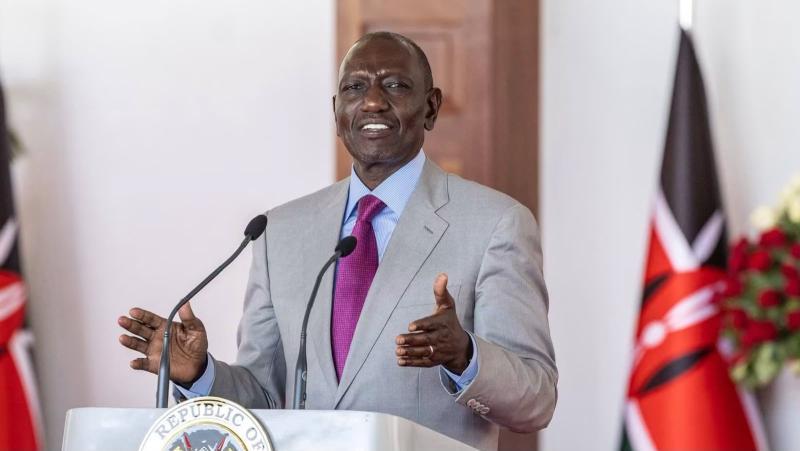
I invite every Kenyan to what I believe will become the most consequential national conversation since the adoption of our Constitution in 2010 - President William Ruto.
1. Tonight, I invite every Kenyan to what I believe will become the most consequential national conversation since the adoption of our Constitution in 2010. A national conversation about Kenya’s development charter.
2. This is a national undertaking about the future of our Republic; about the development imperative enshrined in the articles of our Constitution; the attainment of the constitution’s high development aspirations; and the opportunities we owe future generations as a result.
3. This national conversation must rise above politics, transcend electoral cycles, and unite us around a shared destiny.
4. For two decades, Vision 2030 shaped our national development priorities, informed public policy, catalysed investment, and most importantly inspired the promulgation of our new Constitution.
5. As Vision 2030 approaches its horizon, our responsibility is not simply to replace it with another Government development plan. Our responsibility is far greater under the 2010 Constitution: to craft a new national development charter that gives effect to the development imperatives enshrined in the Constitution and to decide, together, what kind of Kenya we want to build over the next generation, and beyond.
Read More
6. That conversation belongs to each one of us, and to all of us.
7. But before we decide where we should go next, we must first reflect honestly on the journey we have travelled.
8. Since our Independence more than six decades ago, the world has witnessed three great waves of industrialisation and economic transformation, and Kenya has stood at the threshold of each of them.
9. Each wave lifted hundreds of millions of people out of poverty, transformed low-income economies into higher income nations, and created new centres of high economic growth, manufacturing, innovation, and global prosperity.
10. The first unfolded between the 1960s and the 1980s. It involved the East Asian Tigers, including South Korea, Singapore, Taiwan, and Hong Kong, which transformed themselves into prosperous, high-income industrialised economies.
11. The second was in the late 1970s. China, together with Malaysia, Thailand, Indonesia, and Mauritius, embarked on bold economic reforms that lifted hundreds of millions of their citizens out of poverty and transformed their economies into globally competitive manufacturing and investment hubs.
12. The third wave began in the early 1990s. Vietnam, India, Bangladesh, and Cape Verde embraced reform, expanded exports, attracted investment, and fundamentally changed the trajectory of their economies within a generation.
13. Our country was present in all these major developments but we did not take full advantage of them. In 1965, Kenya and South Korea each had a GDP per capita of approximately US$110. Today, South Korea’s exceeds US$36,000 compared to ours of US$2,400. A multiple of fifteen.
14. In 1980, when China began its economic reforms, its GDP per capita stood at approximately US$200. Kenya’s was then at US$450. China overtook us and today has a GDP per capita exceeding US$14,000. A multiple of six compared to ours.
15. When Vietnam embarked on economic reforms in the early 1990s, Vietnam’s income per person was roughly half of ours. Today, Vietnam’s GDP per capita stands at approximately US$5,000, more than double Kenya’s. Bangladesh has followed a similarly remarkable path.
16. Even more sobering is the fact that we are now being challenged by countries much closer to home. Ghana’s GDP per capita is about US$3,200, roughly 30% higher than ours, while Zimbabwe, after enduring decades of profound economic hardship, has recovered to a GDP per capita of about US$3,000, now slightly exceeding ours.
17. The question we must ask ourselves candidly and honestly is why other nations have fulfilled so much of their potential while we have repeatedly fallen short. More importantly, what must we now do differently to ensure that the next chapter of Kenya’s development story is fundamentally different from the last?
18. There is, however, some good news. We can, we must and we shall, together, get it right this time round.
19. History rarely announces the arrival of defining moments. Yet there are occasions when the forces shaping the world create opportunities that come perhaps once in a generation. I believe we are on the threshold of one such historic moment, and I believe so for four compelling reasons.
20. First, four years ago, our priority as a nation was not to imagine Kenya’s next chapter. It was to survive global economic turbulence, restore stability, rebuild confidence, and place our economy back on a firm foundation.
21. Together, we achieved that. We have restored macroeconomic stability. We have stabilised our currency. We have rebuilt our foreign exchange reserves to over US$15 billion, providing six and half months of import cover. Inflation has fallen. Borrowing costs have declined. Investor confidence has returned. Last year, Kenya attracted a record US$3.2 billion in foreign direct investment, more than double the amount recorded in 2022.
22. The 2025 IMD World Competitiveness Ranking placed Kenya as the most competitive economy in Africa, reflecting the confidence our reforms have restored.
23. Because we have restored stability, rebuilt investor confidence, and laid a firm foundation for our economy, now is the perfect opportunity for Kenya to begin shaping the next phase of our national development.
24. That is why, in my State of the Nation Address last year, I challenged us to begin thinking beyond the immediate demands of today and to start imagining a futuristic roadmap for our nation. That was not simply a call to dream; it was a call to prepare and an invitation to begin building the institutions that will support Kenya’s long-term transformation.
25. That journey has already begun. We have already established the National Infrastructure Fund to ensure the investments essential for Kenya’s transformation are financed sustainably. It is also why we have established the Sovereign Wealth Fund, to preserve and invest the wealth our nation creates so that today’s prosperity becomes tomorrow’s opportunity, shared fairly between present and future generations.
26. Together, these institutions represent more than new opportunities. They embody a philosophy of nation-building: that lasting prosperity is built through institutions that outlive governments, inspire long-term investment, safeguard intergenerational wealth, and provide confidence in our economy.
27. The second reason why I believe this is our moment is because our current roadmap is approaching its destination. Vision 2030 has brought us this far, but it is approaching its horizon. It has served Kenya well. It transformed the way we think about national development, provided a common direction, inspired investment, guided public policy and demonstrated the power of long-term planning.
28. But honesty also requires us to acknowledge that some of its ambitions remain unattained. In several respects, we are still falling short even of the very standards we set out for ourselves. Vision 2030 set a target of Kenya becoming an upper-middle income country by 2030. So far, we are off target. This is not a criticism of Vision 2030. Nor is it a reason for disappointment.
29. Rather, it is an opportunity to proudly learn from our successes, reflect with honesty on where we have fallen short, and define, together, Kenya’s next long-term vision.
30. The third reason why this is our moment is that the next great wave of economic transformation will, I believe, be African.
31. The world is entering what may become the greatest wave of global economic transformation in the past six decades and, for the first time in modern history, its centre of gravity is steadily shifting towards Africa.
32. Our continent is home to the world’s youngest and fastest-growing population, vast reserves of strategic minerals, immense renewable energy potential, abundant arable land, and rapidly expanding consumer markets.
33. Nine of the world’s fastest-growing economies are in Africa and, by 2050, one in every four people on Earth will be African. Increasingly, global investors, manufacturers, innovators, and policymakers are looking to Africa not merely as a continent of future promise, but as the next frontier of global growth and prosperity.
34. While we may not have taken full advantage of the previous three great waves of global transformation, we have a historic moment and a once-in-a-lifetime opportunity not just to be part of, but to lead the next transformation. We have positioned Kenya as one of the nations that will define Africa’s economic rise.
35. Fourth, and perhaps most profoundly, this conversation is potent because the time has come to fulfil not only the political and governance promise of our Constitution, but also its equally compelling promise of development, national transformation, and shared prosperity.

Fellow Citizens,
36. The Constitution envisages both a democratic and wealthy and prosperous nation. Democracy allows us to organise power, protect liberties and govern ourselves. Through our democratic institutions, our laws and policy reforms, we have steadily transformed that constitutional principle into a proudly democratic national culture.
37. The next chapter of our national transformation journey is to operationalise the Constitution’s development charter.
38. The Constitution establishes our national development mandate. It requires us to build a wealthy, economically developed and prosperous nation, and defines what Government must ultimately achieve: a nation that is just, inclusive, and sustainable; a nation where every Kenyan, regardless of circumstance or place of birth, has a genuine opportunity to thrive.
39. Taken together, the provisions of our Constitution reveal something profound. They affirm that the purpose of state power is not simply to administer the affairs of the State, but to expand opportunity, promote human dignity, create wealth, and improve the lives of citizens. Development, therefore, is not simply a policy preference of those govern. It is a constitutional imperative for the governed.
40. While the Constitution’s Preamble commits us to building a nation founded on human rights, equality, freedom, democracy, social justice, and the rule of law; Article 10 speaks to patriotism, integrity, accountability, and sustainable development as among our highest national values.
41. Moreover, our Constitution in article 43 guarantees every Kenyan the right to the highest attainable standard of health; accessible and adequate housing, and reasonable standards of sanitation; freedom from hunger, and adequate food of acceptable quality; clean and safe water in adequate quantities; social security; and education.
42. Together, we must ask ourselves what these constitutional guarantees should mean in practice. What should an education system worthy of our constitutional promise look like? What should define accessible and adequate housing for every Kenyan? What kind of healthcare system is required to secure the highest attainable standard of health? How do we ensure that no Kenyan experiences the indignity of hunger and that every family has access to adequate food of acceptable quality? How do we guarantee universal access to clean and safe water, meaningful social protection, and the opportunity for every citizen to live a life of dignity?
43. Above all, what measurable outcomes should demonstrate that we are truly giving practical effect to these economic and social rights as contained in our Constitution?
44. Equally, we have not defined with sufficient clarity what patriotism, equality, social justice, and sustainable development should demand of us as government, institutions, leaders, and citizens.
45. Yet these constitutional aspirations cannot fulfil themselves. We must, as a nation, collectively define the standards by which they should be measured and establish a common national development charter for their realisation.
46. Until we do so, our development and progress will remain subject to the ebb and flow of political expediency, changing priorities, competing interpretations and fluid guesswork.
47. A national development charter for the attainment of these noble constitutional imperatives cannot be designed by politicians alone, nor by any single institution, profession, or interest group. It must be shaped by the people of Kenya themselves through an open, inclusive, and honest national conversation. For the Constitution belongs to the people, and so too must the vision that gives it practical expression.
48. They demand the wisdom of our farmers and workers; the ingenuity of our entrepreneurs and innovators; the experience of our professionals and scholars; the moral leadership of our faith communities; the energy of our young people; and the participation of every patriotic citizen who believes in Kenya’s future.
49. Such a development charter will succeed when anchored on strong institutions; institutions that enable rather than obstruct; that solve problems rather than multiply; that encourage enterprise rather than frustrate; and that make it easier for people to work, invest, innovate, build, and create wealth.
50. Great nations are never built by chance. They are built by design, by discipline and by deliberate, focused national purpose. Ours should be no exception. National development must never be left to chance or short-term politics. It must be guided by a shared national vision that endures beyond administrations and election cycles.
51. A combination of the robustly democratic society we have built and a well-crafted national development charter anchored on the economic and social rights enshrined in the Constitution, is the potent ingredient necessary for the quantum leap that will make up for past missed opportunities and take us into the First World nation that we rightfully should be.
Fellow Citizens,
52. Article 3 of our Constitution places a solemn obligation upon every Kenyan to respect, uphold and defend the Constitution. That duty extends beyond merely safeguarding its provisions. It obligates each one of us to build a broad national consensus on the destiny of our Republic. The future of Kenya is too important to be left to politicians alone. It must be imagined, shaped and built by each one and all of us.
53. Patriotism, therefore, is not only measured by what we say about our country. It is also measured by what we contribute to it, what we build for it, what we protect within it.
54. Once we, as a people, define the national framework for realising the aspirations in our Constitution, we will have settled the question of our destiny. Thereafter, the true contest of democracy should be about who has the best ideas, the soundest policies, and the best capability to take us there faster, more efficiently and more inclusively. That is the political competition our nation deserves.
55. This is not a theoretical discourse. The decisions we make today will determine whether our Constitution becomes the greatest instrument of national transformation in our history or the greatest opportunity we missed.
56. The defining task of our generation, therefore, is to forge a shared national development charter that translates constitutional aspirations into deliberate action, measurable progress, and lasting national transformation.
57. This is how constitutional ideals become possibilities. This is how rights become opportunities. This is how aspirations become achievement, and this is how prosperity becomes lived reality.
58. We must not merely state what our Constitution says. We must fulfil its highest purpose.
Fellow Citizens,
59. This is the conversation I invite our nation to have. It is not a conversation about producing another Government document. It is about forging a new national consensus on the country we intend to become and the standards by which we shall measure our progress.
60. It is about translating constitutional ideals into measurable development outcomes, outcomes into better lives, and better lives into national transformation and shared prosperity.
61. If the defining achievement of those who came before us was to give Kenya a Constitution worthy of our aspirations, then the defining responsibility of our generation is to build a nation worthy of that Constitution.
Fellow Citizens,
62. Over the past several months, I have engaged and sought the counsel of current and former national leaders, political leaders, scholars, business leaders, faith leaders, professionals, civil society, grassroots representatives and, most importantly, young Kenyans from every part of our Republic.
63. Those interactions reinforced one conviction above all others: a vision worthy of guiding Kenya for the next generation cannot be written by Government. It cannot be crafted by a handful of experts, however distinguished, nor can it emerge from a single institution or political formation.
64. It must be forged through a genuinely people-driven, citizen-centred, and future-focused national process; one that draws upon the collective wisdom, experience, imagination, and aspirations of the Kenyan people while remaining open to the very best ideas the world has to offer.
65. It was in that spirit that I invited Hiroyuki Hino, Anyang’ Nyong’o and their distinguished colleagues to begin examining Kenya’s future beyond Vision 2030.
66. Last week, I had the honour of receiving their proposals on strategic guidelines for Kenya’s long-term national transformation.
67. The thrust of their proposals is both ambitious and achievable: that Kenya can become a prosperous, high-income, industrialised and globally competitive nation within one generation, provided we remain united in purpose, disciplined in execution and unwavering in our commitment to long-term national transformation.
68. These proposals provide the foundation for a much broader national conversation; a conversation that now belongs not to Government, nor to its authors, but to every Kenyan.
Fellow Citizens,
69. Somewhere in Kenya tonight is a child too young to understand this address. Some may never remember Vision 2030. Others may never remember this conversation. But they will live in the Kenya we choose to build.
70. That is why this landmark national conversation is a once-in-a-lifetime opportunity. It is about all of us and also the generations that will inherit the Republic we will leave behind.
71. Our Constitution places public participation at the very heart of governance. It is therefore not merely my desire, but my constitutional duty, to ensure that the national vision which succeeds Vision 2030 is shaped through an inclusive, transparent, people-driven, and genuinely national process.
72. Accordingly, on Wednesday, 12th August 2026, we shall formally launch a National Conversation on Kenya’s Future Beyond Vision 2030; the most consequential exercise in national reflection and public participation since the promulgation of our Constitution in 2010.
73. We shall bring together every institution of our Republic, every county, and every generation. Leaders from political parties, the private sector, workers’ organisations, faith communities, universities, professional associations, innovators, civil society, our creative industries and, above all, our young people will be at the centre.
Fellow Citizens,
74. In 2010, we gave ourselves a Constitution worthy of our dreams. The task of our generation is to build a nation worthy of that Constitution.
75. We have secured the foundations of our democracy. Let us now secure the foundations of our prosperity. When we achieve both, we will have fulfilled not only the letter and spirit of our Constitution, but its highest purpose. Let us rise together and write that next chapter of our Republic.
God bless you. God bless Kenya. I thank you.


 (1)-1791178178-md.jpg)



 (1)-1791178178-sm.jpg)