
Editor's Review
The Kenya Police Service (KPS) has confirmed a revised organizational structure comprising 13 specialized formations, units, and components under the updated framework.
The Kenya Police Service (KPS) has confirmed a revised organizational structure comprising 13 specialized formations, units, and components under the updated framework published in the Kenya Subsidiary Legislation, 2026.
In an update on Tuesday, August 4, KPS announced the publication of the revised organizational framework and outlined the specialized formations that make up the service.
"Under the updated organizational structure published in the Kenya Subsidiary Legislation, 2026, the Kenya Police Service includes the following key units and formations," the service wrote.
At the apex of the structure is the Kenya Police Service Headquarters, located at Vigilance House and Jogoo House B along Harambee Avenue in Nairobi, which serves as the central command of the service.
The General Service Unit (GSU), established in 1948, remains the elite paramilitary wing responsible for handling civil disturbances, VIP protection, counter-terrorism, and other specialized tactical operations under the leadership of the Commandant based at its Ruaraka headquarters.
Read More
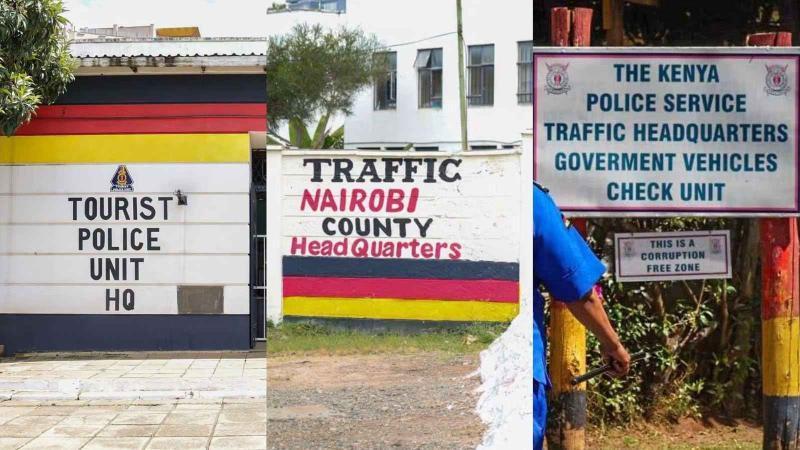
The Kenya Police Traffic Unit continues to oversee enforcement of the Traffic Act, road safety, and accident investigations through county and station-level commands across the country.
The Presidential Escort Unit, operating under the GSU, remains responsible for providing round-the-clock protection to the President, the First Family, retired presidents, the Deputy President, and visiting Heads of State.

Meanwhile, the revised structure also retains the Kenya Airports Police Unit, which is tasked with securing airports, passengers, airlines, aircraft, cargo, and aviation infrastructure while ensuring compliance with aviation security standards.
Alongside it is the Kenya Railways & Ports Police Unit, which safeguards railway infrastructure, the Standard Gauge Railway, ports, cargo, and passengers under the revised national command structure.
The Kenya Police K-9 Unit continues to provide specialized canine support through trained police dogs deployed for patrols, search and rescue, tracking, and the detection of narcotics, firearms, and explosives.
The unit also supports other security agencies, including the Kenya Defence Forces, Kenya Prisons Service, and the Kenya Wildlife Service.
Also included is the Nairobi Metropolitan Police Unit, which is being established to coordinate policing and security operations across Nairobi and surrounding urban areas by bringing together personnel and resources from the National Police Service and, in some cases, Nairobi County.
The structure further recognizes the Diplomatic Police Unit, established in 2005 to protect embassies, international organizations, diplomatic personnel, and diplomatic residential areas, as well as the Tourist Police Unit, which works with tourism stakeholders to enhance the safety of local and international visitors.
The Kenya Police Marine Unit remains responsible for enforcing maritime laws, countering threats within Kenya's territorial waters, and conducting search and rescue operations on the country's waterways.
Among the newest formations is the Kenya Police Quick Response Unit, officially gazetted in late July 2026 to provide rapid deployment during armed attacks, hostage situations, and other high-risk emergencies requiring immediate police intervention.
The updated organizational structure also includes the Government Vehicle Check Unit, a specialized branch of the Traffic Police Department mandated to monitor the use of government and county vehicles and prevent the misuse of public resources through unauthorized operations or personal use.
-1779977622-md.jpg)


-1779977622-sm.jpg)