
Editor's Review
MPs have backed proposed changes, including measures aimed at protecting lawmakers from personal financial liability arising from staff disputes and administrative lapses.
Members of Parliament have backed proposed changes to regulations governing constituency and county offices, including measures aimed at protecting lawmakers from personal financial liability arising from staff disputes and administrative lapses.
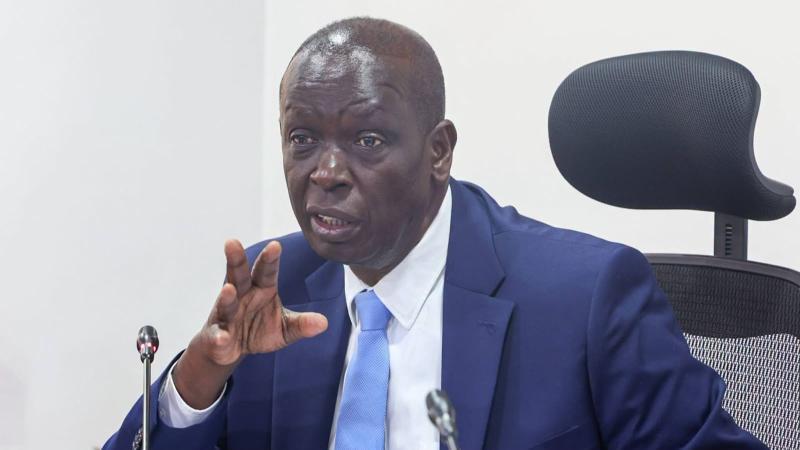
The reforms were reviewed by the National Assembly’s Committee on Delegated Legislation during a session on Tuesday, August 25.
The committee, chaired by Ainabkoi MP Samuel Chepkonga, considered amendments proposed by the Parliamentary Service Commission (PSC), which seek to update rules that have remained largely unchanged since 2005.
One of the major changes involves the employment terms of staff working in MPs’ constituency and county offices.
Under the proposed regulations, employees would move from five-year contracts to one-year renewable contracts, giving MPs greater discretion over the management of their offices and personnel.
Read More
During the committee proceedings, Chepkonga stressed the importance of MPs having authority over their staff, arguing that lawmakers should have the ability to determine who works in their offices.
He indicated that members who disagreed with their employer’s decisions would have to wait until the next contract period.
The proposed regulations also seek to address concerns over the personal liability of MPs in employment-related disputes.
Under the existing arrangement, court awards arising from wrongful dismissal cases could result in an MP’s salary or personal funds being targeted to settle the claims.
Under the new framework, however, financial awards arising from such disputes would be paid from the relevant constituency or county office allocation instead of being recovered from an individual MP.

Mathare MP Anthony Oluoch recounted his experience with debt recovery linked to a staff dispute, explaining the lengths he went to in order to prevent his personal funds from being seized.
"My personal salary that they pay was attached. I jumped from the third floor where I was and went to the bank and closed that account to take the money elsewhere so that it is not seized," he said.
The proposed regulations further introduce an internal mechanism for resolving disputes between MPs and their employees.
The PSC has established an arbitration system through which a three-member commission panel will hear and determine staff-related disputes.
The mechanism is intended to reduce the need for MPs to face lengthy and potentially costly proceedings before employment courts over disputes involving workers in their offices.
The reforms also address statutory deductions, including contributions to the National Social Security Fund (NSSF) and the Social Health Insurance Fund (SHIF).
Under the proposed rules, the PSC would assume responsibility for penalties resulting from delayed remittances where the delay is attributable to the Commission rather than the respective constituency or county office.
The new regulations would also introduce stricter handover procedures when MPs leave office.
Outgoing office managers would be held accountable for outstanding financial obligations, with the aim of preventing incoming lawmakers from inheriting unpaid taxes, debts or other liabilities accumulated under previous administrations.
This comes days after the Public Accounts Committee has cautioned Principal Secretaries against mismanaging public funds, stressing the need for greater accountability in the use of money allocated to government departments.
During a session on Wednesday, August 19, Committee Chairperson, Butere MP Tindi Mwale, said accounting officers must ensure taxpayers receive value for the resources entrusted to their respective departments.
"Being accounting officers, PSs must take personal responsibility for the resources entrusted to their departments.
"Where loss of public funds occurs due to negligence or failure to follow the law, the responsible accounting officers will be held personally accountable," he said.
Mwale spoke as the committee reviewed Auditor-General reports covering the 2023/2024 and 2024/2025 financial years relating to the State Departments of Investment Promotion and Trade.