President William Ruto has awarded a charter to the Kenya Advanced Institute of Science and Technology (Kenya-AIST).
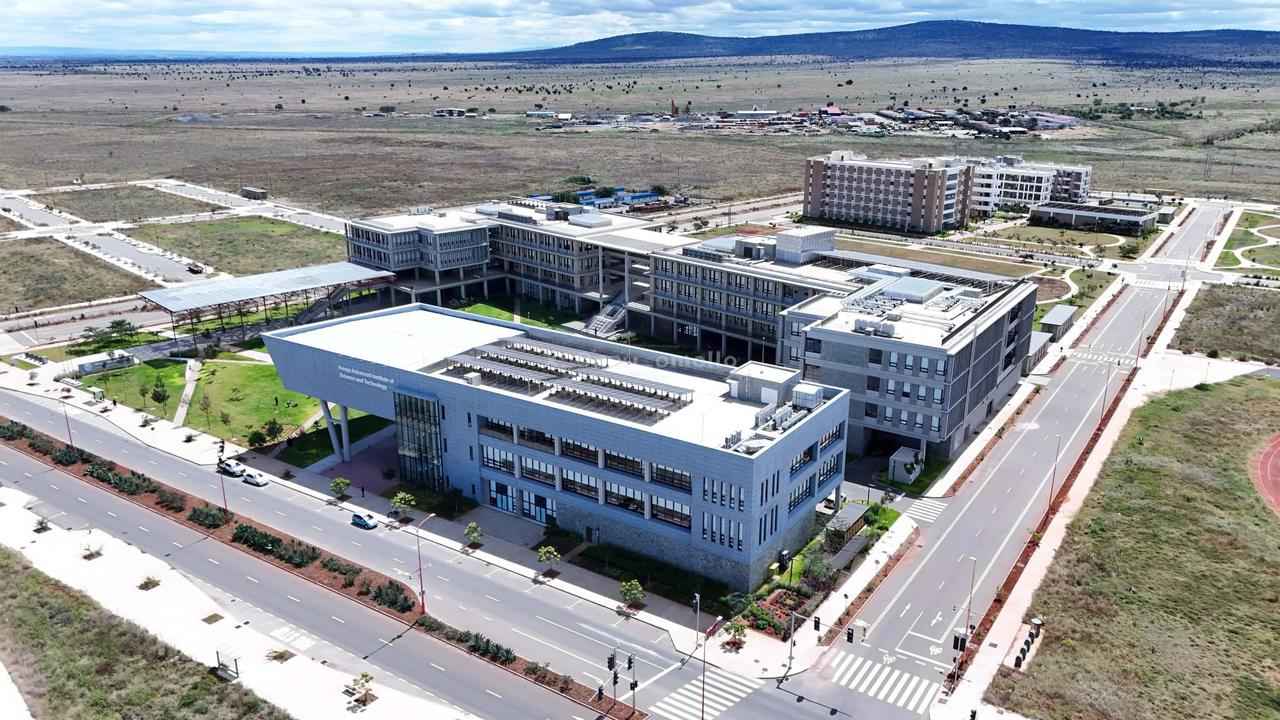
Located within Konza Technopolis, the institution is Kenya’s first public postgraduate-only university and is fully funded through scholarships.
In a statement on Wednesday, June 3, Interior Principal Secretary Raymond Omollo said Kenya was drawing lessons from successful innovation-driven economies to accelerate its development agenda.
"Kenya is increasingly aligning its advanced development agenda on comparative global learning, drawing lessons from leading innovation economies such as South Korea to accelerate its transition into a knowledge-driven industrial state," he wrote.
Read More

Omollo noted that the granting of a charter to the university marked a key milestone in the country’s efforts to strengthen research, innovation, and industrial development.
"In this context, President William Ruto awarded a charter to the Kenya Advanced Institute of Science and Technology (Kenya-AIST) in May 2026, marking a strategic milestone in positioning Kenya within the global frontier of science, technology, and research-led development," he added.
Kenya-AIST has been structured around seven advanced disciplines: Mechanical Engineering, Nuclear Engineering, Electrical and Electronics Engineering, IT Engineering, Civil and Environmental Engineering, Chemical Engineering, and Agricultural Biotechnology.
The institution is expected to produce highly skilled researchers and innovators capable of driving Kenya’s industrial transformation.

According to Omollo, the university’s location within Konza Technopolis places it at the heart of an expanding innovation ecosystem.
The campus sits alongside advanced manufacturing facilities, including the Lucky DJX Jeans Export Processing Zone hub and the National Data Centre, creating opportunities for direct collaboration between researchers and industry players.
According to Omollo, the university’s integration with surrounding industrial infrastructure is designed to ensure that research outputs can be rapidly commercialized and deployed.
"This 'plugged-in' model enables real-time research-to-industry transition, where prototypes, patents, and systems can be tested, refined and immediately scaled within adjacent production facilities," he further said.

The campus also features a robotics innovation space, a utility building equipped to support potable water supply, rainwater harvesting, and fire-water systems, and residential hostels designed for both single and married postgraduate students.
Omollo added that the institution has been equipped with reliable infrastructure to support advanced scientific research and innovation activities.
"Its operations are further strengthened by Konza's 2N+1 power architecture and a 200kVA backup power system, along with sustainable water reclamation systems, ensuring uninterrupted high-performance computing and laboratory research," the statement concluded.

This comes weeks after President William Ruto awarded charters to the Kenya Advanced Institute of Science and Technology (KAIST) and the Kenya Medical Research Institute (KEMRI) universities.
The charters were awarded during a ceremony held at State House, Nairobi, on Thursday, May 14, where Ruto said the move forms part of the government’s strategy to expand opportunities in science, technology, and medical research.
"Awarded charters to the Kenya Advanced Institute of Science and Technology (KAIST) and the Kenya Medical Research Institute (KEMRI) universities at State House, Nairobi.
"This is part of a deliberate and strategic step in expanding opportunities for higher learning, scientific research, and innovation in Kenya. The future we are building is driven by quality education, homegrown innovation, and continuous research," he said.
Ruto emphasized the role universities play in nurturing professionals and innovators capable of transforming the country and contributing to global development.
"Universities play a central role in training the scientists, engineers, doctors, and innovators who will not only expand local horizons of knowledge, drive national transformation and address our challenges, but also make valuable contributions in diverse spheres globally," he added.