
Editor's Review
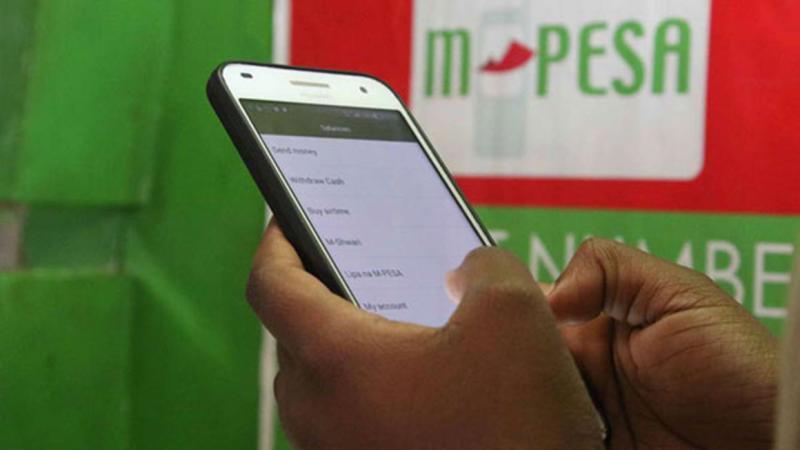
A suspected SIM swap fraudster is in police custody after detectives uncovered a scheme that saw a victim lose more than Ksh450,000 from her M-PESA account without her knowledge.
A suspected SIM swap fraudster is in police custody after detectives uncovered a scheme that saw a victim lose more than Ksh450,000 from her M-PESA account without her knowledge.
In a statement on Saturday, June 6, the Directorate of Criminal Investigations (DCI) said the suspect allegedly exploited a SIM swap scheme to gain control of the victim’s mobile line and drain funds.
"Detectives from the Operation Support Unit (OSU) at the DCI headquarters have nabbed a cunning SIM-swap fraudster who ruthlessly siphoned Ksh450,500 from an unsuspecting victim, leaving her financial dreams in tatters," the statement read.
According to the DCI, the victim’s troubles reportedly began years earlier after relocating abroad in search of employment opportunities.
To ensure continued access to mobile money services while living outside the country, authorities said the victim took steps to keep her line active.
Read More
"It all began back in January 2019 when the victim, chasing the bright lights of a job opportunity in the USA, jetted off, ready to make her mark.
"To keep her Safaricom line alive for seamless M-Pesa transactions while abroad, she enrolled in Safaricom’s Daima programme, ensuring her line would remain active for two years, even without a network," the statement added.
According to investigators, the line remained functional until the victim unexpectedly lost access to services while still overseas.
"The SIM functioned normally until May 24, 2024, when all cellular and M-Pesa services ceased. When she returned to Kenya in December 2024, she discovered that her SIM card had been swapped without her consent," the statement further read.
The victim then made a shocking discovery after checking her mobile money balance.
"Expecting a comfortable M-Pesa balance of about Ksh450,500, she was hit with the cold slap of reality; her account now showed a measly balance of Ksh18," the statement noted.

Following the discovery, detectives launched investigations that uncovered suspicious transactions linked to another phone number.
Authorities then launched a manhunt that eventually led them to the suspect’s residence.
"Investigations were launched, revealing a web of deceit whereby on October 15, 2024, Sh450,500 was transferred in two swift transactions to a number registered under the name of Oscar Livondo.
"Detectives launched a manhunt that trailed Livondo to his hideout in Ngumba Estate, and subsequently arrested him. A swift search of his house revealed two mobile phones and six SIM card holders," the statement concluded.
The suspect, Oscar Livondo, is currently behind bars undergoing processing as authorities prepare to arraign him in court.
Elsewhere, this comes months after a Kenyan man was arraigned at the Milimani Law Courts in connection with defrauding an Australian national of $600,000 (Ksh77.8 million) in a fake gold scheme.
In a statement on Thursday, March 26, the DCI said Duncan Okaka Okonji was charged with conspiracy to defraud.
The accused denied the charge and was released on a bond of Ksh5 million or an alternative cash bail of Ksh1 million, with two contact persons.
According to the DCI, the alleged fraud dates back to October 2025, when the complainant, while in Dubai, was introduced to an individual identified as Marshall Morrison, who posed as an American investor.
Morrison linked the Australian investor to Okonji, who presented himself as a facilitator of a 590 kg gold consignment transaction.
"Investigations further indicate that the complainant was taken to Tanzania, where he was shown purported mining sites, before being brought to Kenya," the DCI stated.
The suspects allegedly staged a series of meetings and prepared documentation to convince the victim that arrangements were underway to ship the gold consignment to Dubai.
The complainant transferred the Ksh77.8 million to the suspects through Conrad Law Advocates LLC after believing the deal was legitimate.
However, suspicions later arose, prompting the Australian national to report the matter to the DCI.
"Believing the transaction to be legitimate, the complainant reportedly transferred USD 600,000 through Conrad Law Advocates LLC before later suspecting fraud and reporting the matter to the Directorate of Criminal Investigations (DCI)," the DCI added.




-1792658467-md.jpg)
-1768823097-md.jpg)