Editor's Review
The alleged bribes were intended to facilitate passing the NTSA-administered exams.
The Ethics and Anti-Corruption Commission (EACC) has uncovered a multi-million shilling bribery syndicate at the Kenya Institute of Highways and Building Technology (KIHBT), Kisii Campus, involving instructors and National Transport and Safety Authority (NTSA) examiners.
In a statement released on Monday, December 1, the anti-graft agency revealed that two instructors had transacted over Ksh42 million through M-Pesa in the last three years, collecting illegal fees from students seeking to pass driving test exams.
On November 28, 2025, EACC officers, armed with search warrants, conducted a comprehensive operation at the KIHBT Kisii Campus and the residences of three officials from both the institute and NTSA.
The operation was launched following reports that instructors in the Plant Operation Department had been soliciting and receiving bribes from students scheduled to undertake test-drive examinations.
The alleged bribes were meant to facilitate passes in the NTSA-administered exams, with students who refused to pay being automatically failed regardless of their competence.
Read More
According to preliminary investigations, the bribery ring was operated by two KIHBT instructors identified as Philip Dawa and Fidel Omondi.
The Commission established that all students were required to pay a "facilitation fee" of Ksh3,100, collected in cash by Fidel Omondi, to guarantee passing their driving test exams.
The collected monies were then shared between NTSA examiners and the two KIHBT instructors. In a disturbing revelation, EACC investigators found that after paying the facilitation fee, students sometimes did not undertake actual practical exams but still received passing marks and certificates.
Beyond the bribery for exam passes, the Commission discovered that the instructors had also been collecting school fees directly in cash, as well as through their personal mobile phone numbers and those of proxies.
The required tuition fees for the KIHBT campus, which should be paid through the official pay bill number, amount to Ksh65,000, with an additional Ksh1,050 for registration. However, students who opted to pay directly to the instructors were charged only Ksh 40,000 instead of the mandatory Ksh 65,000, creating a parallel and potentially illegal fee collection system.
The scale of the operation became clear when EACC analyzed mobile money transactions linked to the suspects. In the last three years, Philip Dawa had transacted over Ksh34 million via M-Pesa using two mobile numbers, while Fidel Omondi had made M-Pesa transactions totaling Ksh8 million within the same period.
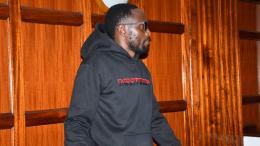
The operation led to the arrest of Fidel Omondi, from whom Ksh171,000 was recovered in an envelope inside his jacket. Additional critical evidentiary material was confiscated for analysis and further investigation.
The suspect was processed at the Kisii Police Station and is being held pending completion of investigations.

In another case of bribery and extortion, the Commission conducted a search operation at the residence and offices of Josphat Gichunge Kabeabea, Chairperson of the Board of the Anti-Counterfeit Authority, on November 14, 2025.
That operation followed allegations that Kabeabea had demanded a Ksh5 million bribe from a Chinese investor trading as Hongda Automotive Limited, threatening arrest for alleged involvement in counterfeit trade unless the bribe was paid.
The suspect allegedly reduced the demand to Ksh150,000, which was sent to a mobile number believed to belong to his personal driver.
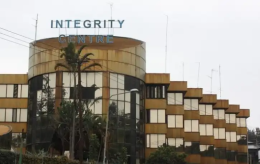
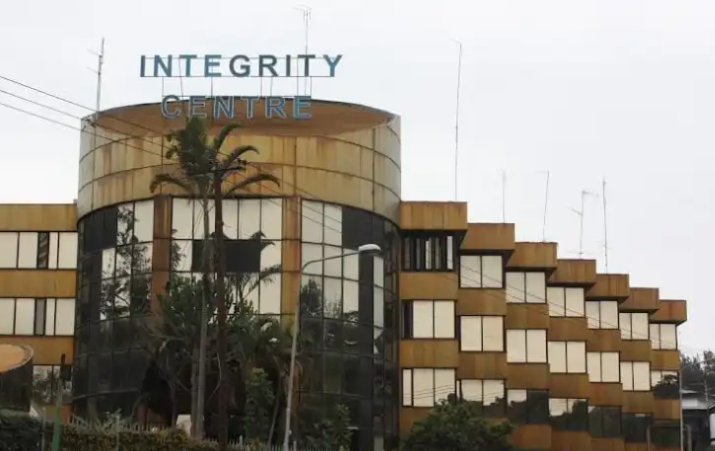
Kabeabea was arrested and held at the Integrity Centre Police Station for further questioning.
The Commission has reiterated its commitment to tackling bribery at service delivery points and safeguarding public interests.