Editor's Review
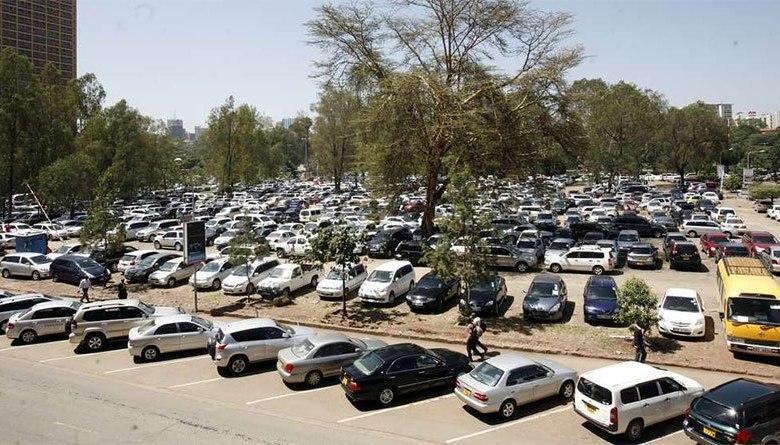
The Nairobi City County Government has clarified details of the newly introduced Tariff and Pricing Policy 2025-2030 after reports circulated claiming parking fees would rise from Ksh300 to Ksh520.
Nairobi County Receiver of Revenue, Tiras Njoroge, has clarified details of the newly introduced Tariff and Pricing Policy 2025-2030 after reports circulated claiming parking fees would rise from Ksh300 to Ksh520.
Speaking on Tuesday, December 2, he said the policy is a framework that outlines how the county will set, review, and adjust charges such as parking, business permits, market fees, and health service charges over the next five years.
Njoroge also noted that Nairobi is the first county since devolution to create such a policy.
The policy’s cost analysis indicates that providing a single parking service costs the county Ksh520, but Njoroge said this does not translate to an automatic increase.
"For any charge to be changed, it must go through the Finance Act making process and reflect the economic realities and public interest," he said.
Read More
Njoroge explained that the policy was developed to align county fees with service delivery and to establish a clear legal process for setting charges amid long-standing concerns over arbitrary fees, revenue leakages, and legal disputes.
"Governor Sakaja Johnson is not planning to hike any service charge. The county is sensitive to the current economic times and the needs of Nairobi residents," he added.

This comes two months after Sakaja refuted claims that he is planning to hand over some county functions to the national government.
Speaking on Wednesday, October 15, he said the move would be a repeat of the defunct Nairobi Metropolitan Services (NMS), which he said was ‘disastrous’.
"There are no functions that are going to be transferred to the national government. The last time that happened during the previous regime, it ended up disastrously," he said.
Sakaja noted that NMS left pending bills worth Ksh16 billion despite being allocated Ksh27 billion by the Nairobi County Assembly.
"You can imagine that in two years, NMS left us a pending bill of Ksh16 billion, and you know the revenue that was being collected at that time.
"The County Assembly had appropriated Ksh27 billion to the same entity, and the National Assembly also appropriated money to it, and despite that, they still left a hole of Ksh16 billion," he added.
Sakaja explained that the ongoing discussions with the national government are outlined in the Urban Areas and Cities Act.
He said Nairobi requires close cooperation with the national government, as it also serves as the capital city and is a diplomatic hub.
"What the city requires is what is provided for in the Urban Areas and Cities Act. If you look at section 6, it talks about a collaboration. Because Nairobi is also the capital city, it’s a city of the national government, a diplomatic hub, and there are areas where you can collaborate with the national government," he further said.