
Editor's Review
The four nurses were ordered to be released.
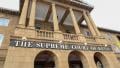
Four Kenyatta National Hospital nurses were acquitted on Friday, December 19, of murder charges in the death of a cancer patient, with the court ruling that the prosecution failed to prove its case beyond a reasonable doubt.
According to Justice Diana Kavedza, there was no direct or forensic evidence linking the accused persons to the crime, and serious security lapses at the hospital left open the possibility that an unknown third party committed the attack.
The four nurses, Priscilla Wairimu Njeru, Godfrey Murithi Gachora, Rosemary Nkonge, and Mary Mudoni Kamau, were represented by lawyer Cliff Ombeta and were cleared after the court found critical gaps in the prosecution's case.
Justice Kavedza emphasized that the circumstantial evidence presented did not form a complete chain pointing irresistibly to the accused persons as the perpetrators of the offense.
"The circumstantial nature of the evidence, absence of forensic linkage, porous ward security, and credible alibi and routine activities of the accused preclude a finding of guilt beyond reasonable doubt," the judge ruled.
Read More
The nurses had been charged with the murder of Cosmas Mutunga Kenyatta, who died on November 28, 2015, while admitted to ward 8C within Kenyatta National Hospital.
Justice Kavedza identified several critical gaps in the prosecution's case.
First, there was no direct evidence linking the accused to the metal bar or the injuries sustained by the deceased; no fingerprints, DNA, or eyewitness account placed any of the accused in the act of assaulting the patient.
Second, the prosecution failed to establish a motive, as the accused had no prior relationship with the deceased, who was a bedridden cancer patient, and there was no evidence of animosity or reason to commit the act.
Third, the court found that the ward's layout and security deficiencies permitted multiple possible avenues for an unknown third party to have gained access to the deceased.
Fourth, the accused were observed performing professional duties throughout the night and acted upon discovering the deceased, which the court found inconsistent with the conduct of persons who had intentionally inflicted fatal injuries.
"The evidence demonstrates that while the deceased's death was violent, the prosecution has failed to eliminate reasonable doubt as to the identity of the perpetrator," Justice Kavedza stated.
"The prosecution has not discharged the evidential burden required for a conviction. The Court is bound by the principle that doubt in the prosecution's case should be resolved in favour of the accused persons," Justice Kavedza concluded.

According to the prosecution, which called 18 witnesses, the deceased sustained multiple injuries including stab wounds to the face and head, a missing eye, fractured teeth, and other blunt force trauma. A blood-stained metal bar was found present in the ward.
However, testimony from the deceased's widow, Celestine Mwende Kenyatta, painted a picture of a patient who was in relatively good health before the incident. She testified that she visited her husband daily, and on November 28, 2015, the deceased received male colleagues and other relatives, all of whom he recognized and communicated with independently.
The defense presented detailed testimony from three of the accused nurses who were on duty in ward 8C, as well as from a cleaner. They consistently testified to routine night shift activities, including administering treatment, turning immobile patients, checking vitals, and securing the ward.
The nurses stated they only discovered the blood on the deceased and the metal bar nearby when they found his body, at which point they promptly called security and police.
The four nurses were ordered to be released forthwith unless lawfully held on other charges.


 (1)-1792651348-md.jpg)


-1792658467-sm.jpg)
 (1)-1792651348-sm.jpg)