
Editor's Review
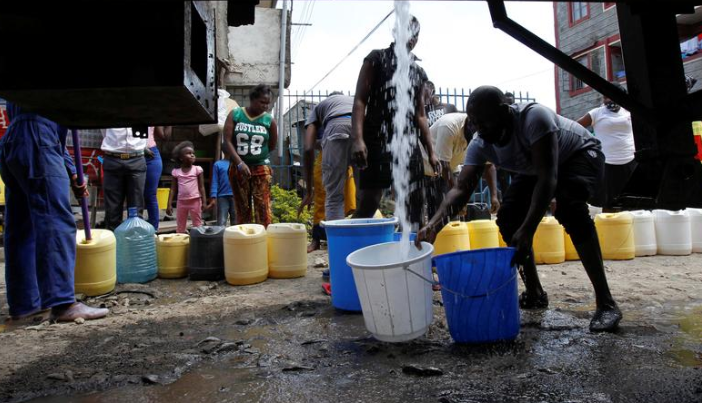
The Coast Water Works Development Agency (CWWDA) explained that the disruption follows a burst along the Mima Water Pipeline.
Water services in parts of Kwale, Mombasa, and Kilifi counties will be temporarily halted as repair works are carried out on a damaged pipeline.
In a notice on Wednesday, January 7, the Coast Water Works Development Agency (CWWDA) explained that the disruption follows a burst along the Mima Water Pipeline.
"Kindly be notified that there will be an interruption of water supply to the following areas: Taru, Samburu, Mariakani, Mazeras, Rabai and Mombasa West Mainland.
"This is due to the execution of repair works as a result of a pipeline burst that has occurred along the Mima Water Pipeline," the notice read.
CWWDA assured the public that the situation is being addressed promptly and asked for patience during the repairs.
Read More
"The exercise will take approximately 48 hours. We sincerely regret any inconvenience this may cause and appreciate your patience and understanding," the notice added.

Elsewhere, this comes barely a day after the Ministry of Agriculture warned that Kenya is edging closer to a food crisis as worsening drought, widening rice shortages, and emerging price instability threaten household food security.
In a statement on Tuesday, January 6, Agriculture Cabinet Secretary Mutahi Kagwe said rice has become a critical pressure point because of its growing role as a staple food in urban areas and arid and semi-arid lands (ASAL) counties.
"Kenya is edging closer to a food crisis as drought disrupts production, rice supply gaps widen, and prices begin to wobble. With rice now a key staple in urban and ASAL households, falling domestic output and erratic rainfall are already fuelling volatility and threatening a broader food inflation wave that could hit maize and other essentials," the statement read.
Kagwe explained that Kenya’s reliance on imported rice remains high, with local production meeting only a fraction of national demand.
According to the ministry, the projected supply gap is expected to widen sharply in early 2026 as consumption peaks in the first half of the year.
"Kenya produces less than 20% of the rice it consumes. By early 2026, the deficit is projected to exceed 380,000MT, with demand between January and June alone estimated at 750,000MT," the statement added.
Kagwe further warned that existing domestic stocks are insufficient to absorb the deficit, placing vulnerable populations at heightened risk.
He noted that without timely interventions, food insecurity in ASAL regions could escalate significantly.
"Local stocks cannot fill this gap. Meanwhile, acute food insecurity in ASAL counties could surge from 1.8M to 3.5M people if interventions stall," the statement further read.
With the concern coming as the High Court weighs a challenge to the government's decision to allow limited, duty-free rice imports, Kagwe noted that the court’s decision will have far-reaching implications for food affordability.
"Against this backdrop, the High Court is considering a challenge to the Government’s move to allow time-bound, duty-free rice imports to stabilise supply and prices. The ruling, due on 29 January 2026, will carry real consequences for food prices, household budgets, and the constitutional right to food at a moment when delay risks turning climate stress into a full-blown hunger crisis," the statement concluded.


 (1)-1792314340-md.jpg)


 (1)-1792314340-sm.jpg)