
Editor's Review
The legal team argued that denying them this right amounts to religious discrimination.
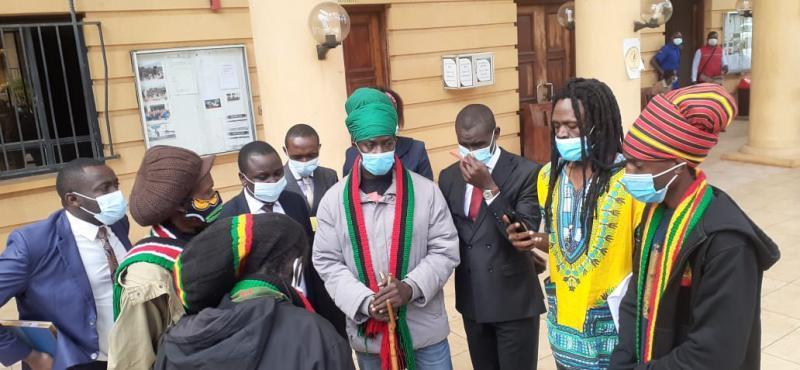
The Rastafarian community has renewed its push for the legalization of bhang, arguing that laws criminalising the substance violate their constitutional rights to freedom of religion, worship, and protection from discrimination.
Speaking on Wednesday, their lawyer Danstan Omari said the case before the High Court is anchored on constitutional provisions that protect cultural and religious practices.
He cited Article 32 of the Constitution, which guarantees freedom of conscience, religion, belief, and worship, and argued that the State has no authority to interfere with how any faith conducts its religious practices.
Omari maintained that just as police officers do not interfere with how other religions dress, pray, or conduct their rituals, Rastafarians should equally be allowed to practise their faith without harassment or discrimination.
He added that denying them this right amounts to discrimination on the basis of religion, which is prohibited under Article 27, and any law that contradicts the Constitution is null and void.
Read More
“The Rastafari are part and parcel of this country. Article 32 is clear that nobody can interfere with the manner in which worship is conducted,” Omari said, adding that Rastafarians fall under minority and marginalised groups that are expressly protected by the Constitution.
He also criticised an application by the National Authority for the Campaign Against Alcohol and Drug Abuse (NACADA) to be enjoined in the case, arguing that it was not filed in good faith and was intended to delay the matter. Omari told the court that the petition has been active since 2021 and that NACADA was well aware of its existence.
However, the court allowed the application and directed that the case proceed on January 30 and February 4.

Omari welcomed the ruling, saying it was an opportunity to remind the country that all marginalised groups, including minorities, women, children, persons with disabilities, and religious minorities, are protected under the law.
“Any attempt to stigmatise people on the basis of religion is dangerous for this country. We must learn to tolerate different shades of faith,” Omari said, adding that the court should be guided by the Bill of Rights when determining the matter.
The petition by the Rastafarian community was filed in 2021, seeking the legalisation of Cannabis Sativa, commonly known as bhang or marijuana, for religious, spiritual, and medicinal purposes.
The case gained renewed attention in November 2025 when the Rastafarians accused the Office of the Attorney General of deliberately delaying the matter by failing to file a response for several years. At the time, they warned that they would move to court to seek the removal of Attorney General Dorcas Oduor over alleged incompetence and neglect of duty.
The High Court later scheduled hearing dates, paving the way for the substantive determination of the petition.
-1779781762-md.jpg)
 (1)-1791266228-md.jpg)



-1779781762-sm.jpg)