Editor's Review
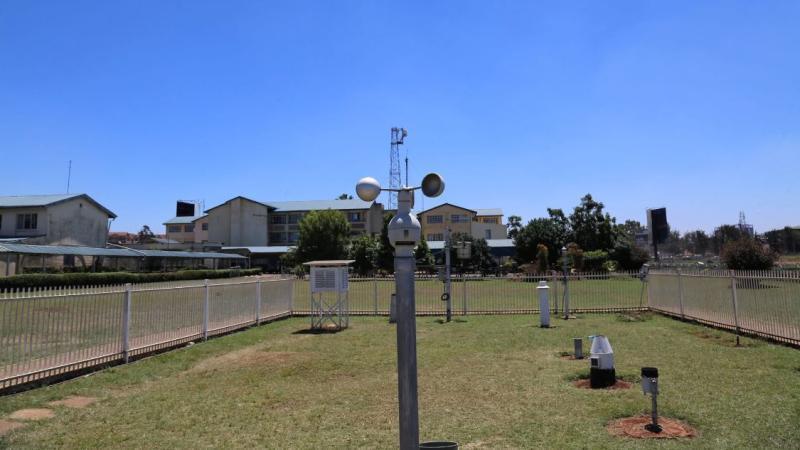
The Kenya Meteorological Department (KMD) has dismissed a heat wave alert circulating online, terming it fake.
The Kenya Meteorological Department (KMD) has dismissed a heat wave alert circulating online, terming it fake.
In a statement on Monday, January 26, the department clarified that the alert did not originate from its channels and cautioned Kenyans against sharing unverified weather information.
"The Kenya Meteorological Department (KMD) would like to clarify that the heat wave alert currently circulating on social media is not an official communication from KMD. We are aware of the message and urge members of the public to ignore it," the statement read.
Kenya Met explained that the current temperatures being experienced across the country are in line with seasonal patterns.
It noted that the early months of the year are historically the warmest.
Read More
"As shown in KMD temperature climatology, January, February, and March are typically the hottest months in Kenya, and the warmer-than-average temperatures currently being experienced are normal for this period and consistent with the forecast," the statement added.
Kenya Met further assured the public that it is closely monitoring weather conditions and will communicate any developments.
"KMD will continue to monitor conditions and will issue official advisories as necessary through its verified channels. Members of the public are encouraged to rely only on official KMD information and avoid sharing unverified weather messages," the statement further read.

In its forecast for January 27 to February 2, 2026, Kenya Met outlined the expected weather conditions across different regions.
"Predominantly sunny and dry conditions are expected over much of the country. However, isolated light rainfall is likely to occur in a few areas, particularly the Highlands east and west of the Rift Valley, the Rift Valley, the Lake Victoria Basin, the Coastal region, and the south-eastern lowlands," the statement continued.
According to the forecast, high daytime temperatures is expected in several parts of the country.
"Average daytime (maximum) temperatures above 30°C are anticipated over the Coastal region, North-eastern and North-western Kenya, and parts of the south-eastern lowlands, the Lake Victoria Basin, the Rift Valley, and Western Kenya," the statement added.
At the same time, Kenya Met said cooler night-time temperatures are also expected in specific regions.
"Average night-time (minimum) temperatures are expected to be less than 10°C in some parts of the Central Highlands, the North and Central Rift Valley, Western Kenya, and in the vicinity of Mt. Kilimanjaro," the statement concluded.
This comes months after Kenya Met issued a malaria epidemic warning for parts of Western Kenya following a new forecast released in collaboration with the Ministry of Health and the Kenya Medical Research Institute (KEMRI).
In a statement on Wednesday, November 5, Kenya Met said the early warning comes from a new predictive system designed to monitor and anticipate potential malaria outbreaks in highland regions.
The report indicates that Kakamega County is at high risk of a malaria epidemic between November and December 2025, while Kisii and Nandi counties are not under immediate threat.
"Kenya Met Department in collaboration with the Ministry of Health and Kenya Medical Research Institute (KEMRI), has released the Malaria Epidemic Early Warning Prediction System for the Western Kenya Highlands, covering Kakamega, Kisii, and Nandi Counties," the statement read.
Kenya Met explained that the predictive system uses real-time environmental and climate data to determine potential malaria surges.
"This data-driven system integrates climate and environmental indicators, including temperature and rainfall trends, to forecast the likelihood of malaria epidemics and support early health action," the statement added.
Kenya Met noted that the results are critical in helping local governments and health partners take timely preventive action.
"The results emphasize how climate information can strengthen health preparedness, allowing local health authorities and communities to plan preventive measures, distribute mosquito nets, enhance awareness, and prepare health facilities before peak transmission periods," the statement further read.

 (1)-1791178178-md.jpg)


 (1)-1791178178-sm.jpg)