
Editor's Review
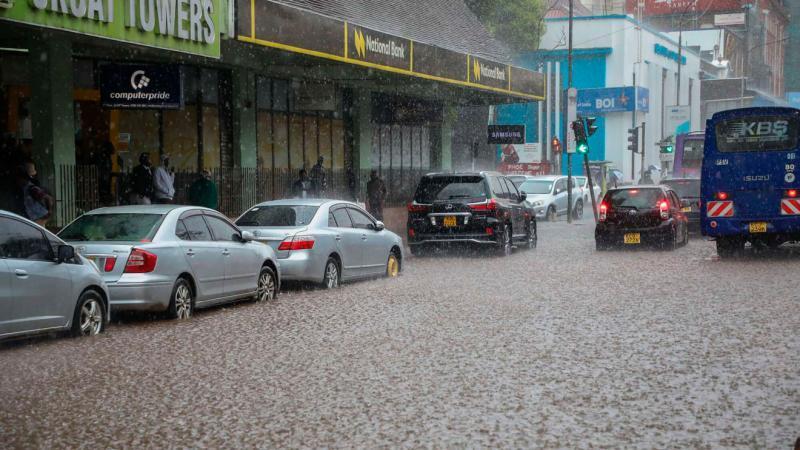
The IGAD Climate Prediction and Applications Centre (ICPAC) has projected a likelihood of wetter-than-normal rainfall across parts of Kenya and the wider Greater Horn of Africa.
The IGAD Climate Prediction and Applications Centre (ICPAC) has projected a likelihood of wetter-than-normal rainfall across parts of Kenya and the wider Greater Horn of Africa during the March to May (MAM) 2026 season
In its regional climate outlook released on Tuesday, January 27, ICPAC also highlighted variations across sub-regions, noting that while some areas may receive near-normal rainfall, others could face drier conditions or delayed onset of rains.
ICPAC indicated that there is a strong chance of wetter-than-normal rainfall over large parts of the Horn of Africa, encompassing central to western Kenya and several neighboring countries.
"The regional climate outlook for the March to May (MAM) 2026 rainfall season indicates a 45% probability of wetter-than-normal rainfall conditions over much of the Greater Horn of Africa, including most parts of Uganda, Rwanda, Burundi, Tanzania, central to western Kenya, Ethiopia, South Sudan, northern Somalia, and Djibouti," the report read.
The climate centre also projected areas likely to experience near-normal rainfall, including parts of Kenya such as the north-eastern and south-western regions, alongside sections of South Sudan, Somalia, Tanzania, Uganda, and Ethiopia.
Read More
"A 40% probability of near-normal rainfall is indicated over western and eastern South Sudan, north-eastern and south-western Kenya, most parts of Somalia, coastal Tanzania, and isolated areas of Uganda and Ethiopia," the report added.
According to ICPAC, some locations are expected to be drier than usual, with coastal Kenya singled out, while much of the region may see a normal to early onset of rains.
"Drier-than-normal conditions are expected over coastal parts of Kenya while normal to early onset of rains is expected over most parts of the region, while delayed onset is forecast over localised areas of Ethiopia, South Sudan, and Somalia," the report continued.
ICPAC cautioned that even in areas forecast to receive above-normal rainfall, variability remains likely, with the possibility of dry spells, while wetter spells could still occur in drier-forecast zones.
"Despite the seasonal outlook, dry spells may still occur in areas forecasted to receive near-normal or above-normal rainfall, and wet spells may occur in areas forecasted to receive near-normal or below-normal rainfall," the report continued.

ICPAC further noted that temperatures across most of the Greater Horn of Africa are expected to be higher than average, with certain countries and regions facing stronger warming signals.
At the same time, the outlook suggests that cooler-than-average conditions could prevail in specific highland areas of Ethiopia.
"Warmer-than-average temperatures are expected over most parts of the Greater Horn of Africa, with higher probabilities over Sudan, Djibouti, Tanzania, and parts of Ethiopia, Somalia, and Kenya.
"Cooler-than-average conditions are expected over parts of central to northern Ethiopia," the report indicated.
ICPAC called on governments and partners to integrate seasonal forecasts into planning and preparedness efforts to reduce potential impacts.
"ICPAC urges member states and humanitarian and development partners to actively use the ICPAC regional seasonal outlook alongside the national and sub-national forecasts issued by National Meteorological and Hydrological Services (NMHSs); closely monitor updated seasonal forecasts, as well as sub-seasonal and short-range forecasts, to inform timely planning and decision-making; and scale up preparedness and anticipatory actions to minimise potential flood and drought impacts, protect lives and livelihoods, and safeguard critical infrastructure," the report concluded.
This comes two days after the Kenya Meteorological Department (KMD) has dismissed a heat wave alert circulating online, terming it fake.
In a statement on Monday, January 26, the department clarified that the alert did not originate from its channels and cautioned Kenyans against sharing unverified weather information.
"The Kenya Meteorological Department (KMD) would like to clarify that the heat wave alert currently circulating on social media is not an official communication from KMD. We are aware of the message and urge members of the public to ignore it," the statement read.
Kenya Met explained that the current temperatures being experienced across the country are in line with seasonal patterns.
It noted that the early months of the year are historically the warmest.
"As shown in KMD temperature climatology, January, February, and March are typically the hottest months in Kenya, and the warmer-than-average temperatures currently being experienced are normal for this period and consistent with the forecast," the statement added.
Kenya Met further assured the public that it is closely monitoring weather conditions and will communicate any developments.
"KMD will continue to monitor conditions and will issue official advisories as necessary through its verified channels. Members of the public are encouraged to rely only on official KMD information and avoid sharing unverified weather messages," the statement further read.





-1784539615-md.jpg)