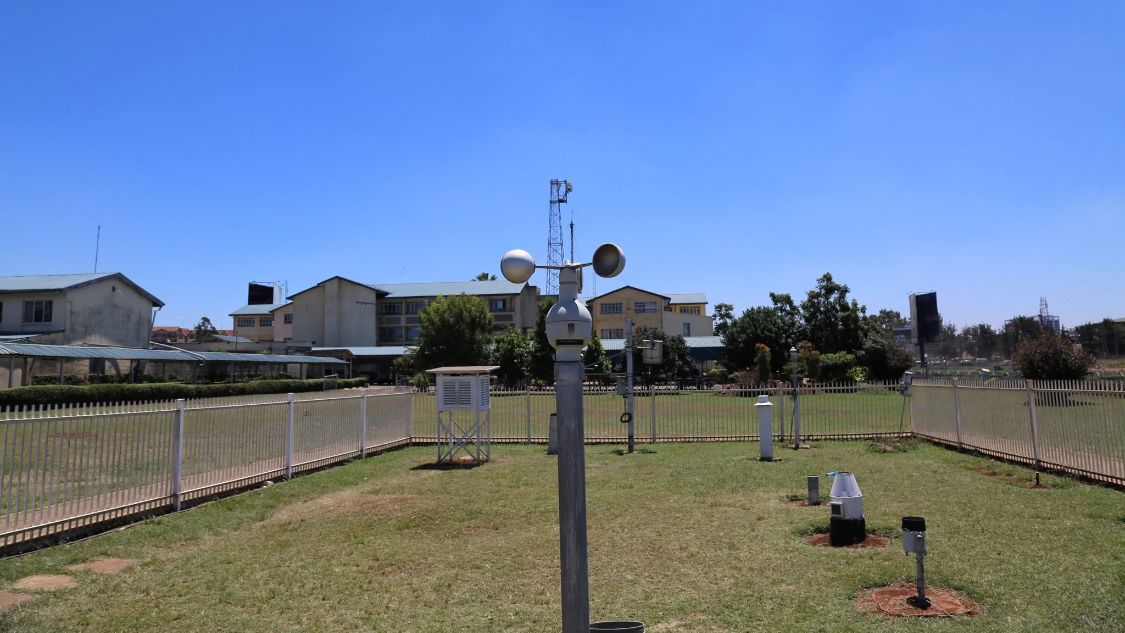
The Kenya Meteorological Department (Kenya Met) has issued its weather outlook for the week from Tuesday, February 10, to Monday, February 16.
In its update, Kenya Met warned of a mix of hot daytime conditions and chilly nights across different parts of the country, alongside limited rainfall in specific regions.
According to Kenya Met, the outlook follows a review of weather conditions recorded between February 2 and February 8, which showed rainfall in only a few areas and sharp contrasts between daytime heat and night-time cold.
The department explained that most parts of the country will experience sunny and dry weather during the forecast period, although some regions are expected to receive rainfall.
"Mostly sunny and dry conditions are expected over most parts of the country. However, rainfall is likely in some areas, particularly the Central Highlands, the Lake Victoria Basin, the Rift Valley, the South-eastern Lowlands, and Western Kenya," the update read.
Read More
Kenya Met also warned that high daytime temperatures will be a key feature of the week, especially in low-lying and arid regions.
"Daytime (maximum) temperatures above 30°C are expected in several parts of the country, including the Coast, South-eastern Lowlands, North-eastern, and North-western Kenya," the update added.
At the same time, Kenya Met cautioned that some regions will experience notably cold nights, particularly in highland and elevated areas.
"Night-time (minimum) temperatures below 10°C are expected in parts of the Central Highlands, the Central Rift Valley, Western Kenya, and areas near Mt. Kilimanjaro," the update further read.

This came days after Kenya Met released the March-April-May (MAM) 2026 Long Rains Seasonal Climate Outlook.
In an update issued on Wednesday, February 4, the department outlined expectations of mixed rainfall performance across the country alongside generally warmer-than-average temperatures.
According to KMD, the long rains season was likely to be characterized by near-average to below-average rainfall over several parts of the country, with notable variability in onset, distribution, and intensity.
While some regions were expected to receive relatively favorable rainfall, others were projected to experience suppressed totals and intermittent dry spells that could affect livelihoods and key economic sectors.
In its regional assessment, the department indicated that near- to above-average rainfall was expected over the Lake Victoria Basin, the Highlands West of the Rift Valley, the Highlands East of the Rift Valley, including Nairobi, the Rift Valley, and parts of north-western Kenya.
KMD cautioned, however, that even in these regions, rainfall might not have been evenly distributed, and isolated heavy rainfall events could have occurred.
For the Arid and Semi-Arid Lands (ASALs), including the south-eastern lowlands, north-eastern Kenya, and parts of the north-west, the outlook pointed to near-average to below-average rainfall.
The department noted that rainfall in these areas was likely to have been poorly distributed, with breaks in between rainy episodes.
This pattern was expected to negatively affect crop production, pasture regeneration, and water availability if mitigation measures were not put in place early.
The coastal region was projected to experience below-average rainfall during the MAM 2026 season.
Counties including Mombasa, Kilifi, Kwale, and Lamu, as well as coastal parts of the Tana River Delta, fell within this zone.
Despite the overall outlook of reduced rainfall totals, KMD noted that isolated heavy rainfall events may still have occurred, particularly later in the season.
The department further indicated that peak rainfall along the Coast was expected in May, later than in most other parts of the country, where April was projected to be the wettest month.
On the overall characteristics of the season, KMD reported that the onset of the long rains was expected to be normal to late in many areas, while rainfall distribution was likely to range from poor to fair across several regions.
"The season was projected to have a generally poor to fair temporal and spatial distribution of rainfall across several areas, with intermittent dry spells, though isolated heavy rainfall events may have occurred," Acting Director of Meteorological Services Edward Muriuki said.
In addition to rainfall patterns, the department warned of elevated temperatures across the country during the March–May period.
Warmer-than-average temperatures were expected nationwide, a trend that could have heightened heat-related risks, particularly in ASAL areas, coastal counties, and densely populated urban centres.
KMD noted that higher temperatures may have exacerbated water stress, increased the risk of heat-related illnesses, and placed additional pressure on energy and health systems.
KMD advised members of the public and sectoral stakeholders to use the seasonal outlook to guide planning and preparedness efforts.
The department said the forecast was relevant for agriculture and food security planning, water resources management, public health preparedness, energy production and demand management, transport and infrastructure resilience, disaster risk management, and urban and community planning.