Editor's Review
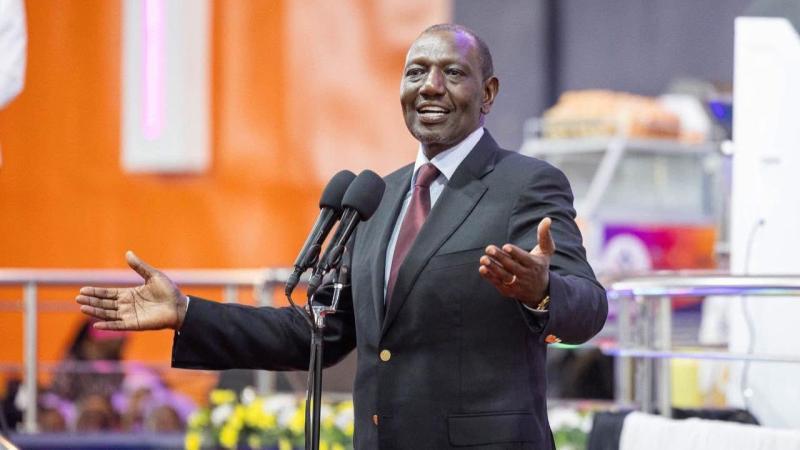
President William Ruto has appointed a new chairperson and members of the National Land Commission (NLC).
President William Ruto has appointed a new chairperson and members of the National Land Commission (NLC).
In a gazette notice dated Thursday, March 12, Ruto appointed Abdillahi Saggaf Alawy as NLC Chairperson for a six-year term.
"In exercise of the powers conferred by Article 250 (2) (c) of the Constitution as read with section 7 (2) of the National Land Commission Act, I, William Samoei Ruto, President of the Republic of Kenya and Commander-in-Chief of the Defence Forces, appoint Abdillahi Saggaf Alwy (Dr.) to be the Chairperson of the National Land Commission, for a term of six (6) years," the notice read.
In a separate gazette notice, Ruto also named six individuals as members of the National Land Commission, each set to serve a six-year term.
They are Susan Khakasa Oyatsi, Daniel Murithi Muriungi, Kigen Vincent Cheruiyot, Julie Ouma Oseko, Mohamed Abdi Haji Mohamed, and Mary Jane Seneta.
Read More
According to the gazette, the appointments were made under the same legal provisions cited for the chairperson.
"In exercise of the powers conferred by Article 250 (2) (c) of the Constitution as read with section 7 (2) of the National Land Commission Act, I, William Samoei Ruto appoint Susan Khakasa Oyatsi, Daniel Murithi Muriungi, Kigen Vincent Cheruiyot, Julie Ouma Oseko (Dr.), Mohamed Abdi Haji Mohamed, and Mary Jane Seneta to be Members of the National Land Commission, for a term of six (6) years," the notice stated.

NLC's primary responsibility is to manage public land on behalf of the national and county governments and to ensure that land in Kenya is administered in a fair, transparent, and sustainable manner.
The commission was created to address long-standing land challenges in the country, including irregular allocation of public land, historical land injustices, and poor land management systems.
It operates under several laws, including the National Land Commission Act, the Land Act, and the Land Registration Act.
The commission is made up of a chairperson and eight members, who are appointed to serve a single non-renewable term of six years.
One of its main functions is managing public land on behalf of both the national and county governments, ensuring that such land is allocated, leased, or used according to the law.
The commission also recommends national land policies to the government to guide the ownership, use, and management of land across the country.
In addition, it advises the government on programs related to land registration to help improve the documentation and security of land ownership.
The commission is also mandated to investigate present and historical land injustices and recommend appropriate remedies such as restitution or compensation where necessary.
Another important function of the commission is conducting research on land use and the management of natural resources and advising the government on sustainable land practices.
The commission monitors land use planning throughout the country to ensure that development and land utilization are carried out responsibly.
It also promotes the use of traditional dispute resolution mechanisms in addressing land conflicts, especially at the community level.
In certain areas designated by law, the commission may also assess land taxes and premiums on immovable property to support effective land administration.
The chairperson presides over meetings of the commission, guides discussions, and ensures that the commission operates effectively and in accordance with the law.
The role also involves coordinating the work of the commissioners, ensuring that decisions made by the commission are implemented, and representing the commission in official engagements.
The chairperson also works closely with the commission’s secretariat to ensure that the institution functions smoothly and fulfills its constitutional mandate.
Members of the commission participate in making key decisions regarding land administration, policy recommendations, and investigations into land disputes and injustices.

 (1)-1792651348-md.jpg)



 (1)-1792651348-sm.jpg)