
Editor's Review
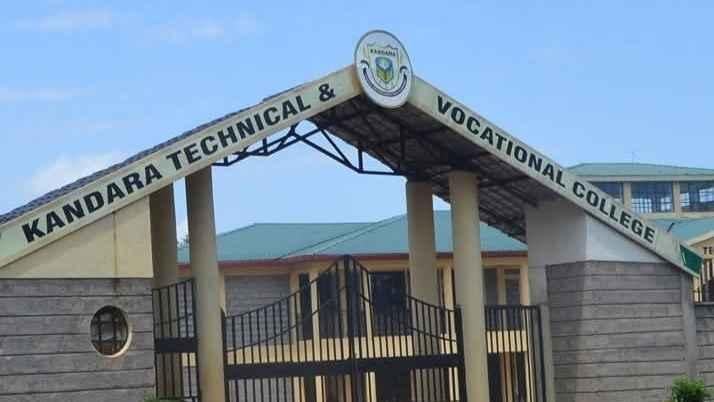
The management of Kandara Technical and Vocational College has come under scrutiny over its fee collection practices.
The management of Kandara Technical and Vocational College has come under scrutiny over its fee collection practices.
Appearing before the Public Investments Committee on Education and Governance on Wednesday, April 8, the institution’s principal and senior officials were asked to account for why a significant portion of billed fees for the financial year ending June 2025 had not been recovered.
Findings by the Auditor-General show that the college managed to collect Ksh41.3 million, which represents 49 per cent of the total fees billed.
This left an outstanding amount of Ksh43.3 million, equivalent to 51 per cent.
The audit also raised concerns about the institution’s decision to continue providing services to students with pending fee balances, a move said to be inconsistent with its own Finance Manual and Credit Control and Debtor Policy.
Read More
Lawmakers questioned the effectiveness of the college’s debt recovery strategies and whether sufficient measures had been put in place to address the issue.
"This level of uncollected revenue raises serious concerns about financial discipline and sustainability of the institution. Why are you continuing to offer services without enforcing your own policies?" Public Investments Committee on Education and Governance Chair, Bumula MP Jack Wamboka, asked.
In their response, the college leadership pointed to delays in the release of funds for government-sponsored students as the primary cause of the outstanding balances.
"The Ksh41.3 million reflects actual fees paid by students. The outstanding Ksh43.3 million relates largely to unreleased funds from government-sponsored students, including capitation, HELB loans, scholarships and bursaries," the principal told the committee.
They clarified that such funds are disbursed directly by sponsoring agencies rather than the institution, noting that the college continues to provide training services while awaiting the release of the funds.
"We are operating within the prevailing government financing framework. Denying students access to training due to delayed disbursements would be punitive and counterproductive," the principal added.

Despite this explanation, members of the committee expressed concern that the approach weakens internal financial controls, especially in cases where enforcement tools like withholding exam results or transcripts have not been applied consistently.
The MPs also sought clarification on whether the college has an effective system for tracking debts linked to individual students and sponsors.
In response, the management stated that it has updated its accounts receivable records and is actively engaging the Ministry of Education and other sponsoring bodies to recover the funds.
"We have documentation, including follow-up letters and reconciled debtor records, to support our position. We remain committed to pursuing these receivables and improving our collection framework," the officials added.
Wamboka instructed the college to enhance its debt recovery systems and strictly follow its financial policies, warning that failure to do so could expose it to financial instability.
Elsewhere, members of the Public Petitions Committee have thrown their weight behind a proposal seeking to introduce a structured regulatory system for theological colleges.
The committee, led by Runyenjes MP Muchangi Karemba, adopted the position during a meeting with the Principal Secretary in the State Department for Technical and Vocational Education and Training, Esther Muoria on Tuesday, April 7.
The session focused on a petition submitted by Rev. Josiah Njiru Wajoshuah, who chairs the Association of Pentecostal Vocational Training Institutions of Kenya (APVOTIK).
In the petition, Njiru warned that the lack of a clear legal and regulatory framework for theological training threatens standards, accountability, and the credibility of religious instruction.
He called on lawmakers to develop legislation specifically targeting the governance of theological education in Kenya.
While tabling the petition before the House, Speaker Moses Wetang’ula pointed out that the petitioner had flagged a surge in theological colleges, Bible schools, and online ministry programmes.
He noted that many operate under Pentecostal, Charismatic, and Indigenous movements without formal ecclesiastical supervision such as Episcopal structures.
Responding to the concerns, Muoria argued that the absence of a specific framework does not automatically mean there is no oversight, noting that institutions are still required to comply with existing national education standards.
"It is therefore recommended that the petitioner may collaborate with the various regulatory bodies recognized under the Kenya National Qualifications Framework (General) Regulations, 2025, which are mandated to regulate and enforce legislative provisions in the education and training sector to weed out unlicensed and unaccredited theological colleges, Bible schools, and online ministry training platforms in Kenya," he said.
However, lawmakers, led by Muchangi, pressed the State Department to explain why it could not take the lead in creating a comprehensive framework that applies across all religious groups.
"The petitioners do not want something for the Christians, another for the Muslims, another for the Hindus. They want a regulatory body that will guide the establishment of theological institutions. Is that something you can develop?" posed the chairperson.
 (1)-1791708588-md.jpg)
 (1)-1791175033-md.jpg)
-1791699761-md.jpg)
-1791696120-md.jpg)

 (1)-1791708588-sm.jpg)
 (1)-1791175033-sm.jpg)