Editor's Review
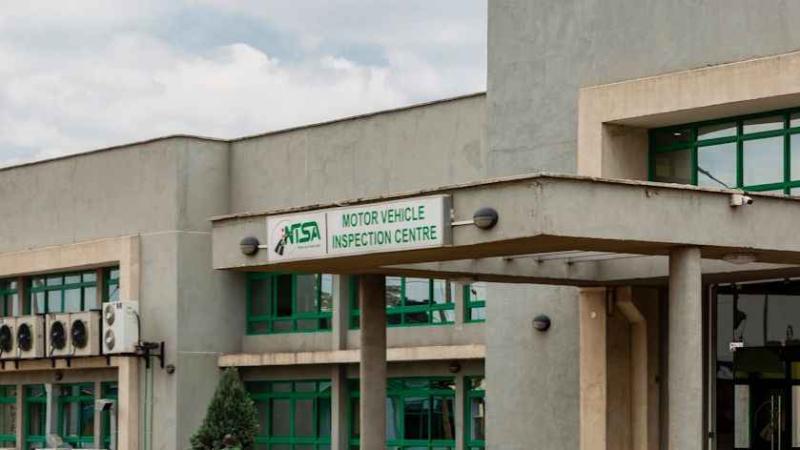
NTSA has outlined the official requirements and application process for registering a new driving school in Kenya.
The National Transport and Safety Authority (NTSA) has outlined the official requirements and application process for registering a new driving school in Kenya.
In an update on Tuesday, April 14, NTSA said applicants must meet several key requirements before applying for a driving school licence.
The requirements include providing a valid Kenya Revenue Authority (KRA) PIN for the driving school, as well as a certificate of registration or a Gazette Notice confirming the school’s legal status.
In addition, all directors associated with the driving school must submit their individual KRA PINs.
NTSA also requires a mobile phone number that is not currently linked to any active account on the Transport Integrated Management System (TIMS), ensuring that each application is unique and properly tracked.
Read More
Applicants are required to submit their applications online through the government’s eCitizen platform.
Once logged in, users should select the NTSA Integrated Services Application (NISA) portal, which facilitates the application process for new driving school licences.
The process involves filling out the application form and uploading all required documents, including coloured photographs where specified.
After submission, applicants must wait for approval and will be notified via SMS once their application status is updated.
Following the initial review, NTSA officials will conduct a verification process, which includes a physical inspection of the driving school facilities.
Once the inspection is successfully completed and approval granted, applicants will be required to make the necessary payments as stipulated by NTSA.
After payment, the driving school licence can be printed and must be displayed prominently at the school’s office.
NTSA noted that the applicable charges will depend on the specific requirements of the application.
The entire process, from application to issuance of the licence, is expected to take approximately 10 working days.

This comes days after members of the National Assembly’s Public Debt and Privatization Committee faulted a 21-year Public-Private Partnership (PPP) deal between the National Transport and Safety Authority (NTSA) and a private consortium led by PesaPrint, describing the revenue-sharing arrangement as unfair and skewed against the public.
The committee, chaired by Balambala MP Abdi Shurie, raised alarm over the structure of the agreement, which focuses on the rollout of smart driving licences and an automated 'instant fine' system.
Legislators noted that the deal would see private partners take about 77.4 per cent of the projected earnings, leaving the government with less than 25 per cent throughout the contract period.
Appearing before the lawmakers, NTSA Director General Nashon Kondiwa defended the decision to adopt a PPP model, pointing to persistent budgetary constraints from the National Treasury.
He explained that under the earlier government-funded system, only 2.7 million licences were issued over nearly nine years, missing the five million target.
"We were clearly disadvantaged in terms of ability to negotiate because we are not even negotiating our own money; we are negotiating our services and the revenue is going elsewhere," he said.
Kondiwa added that 60 per cent of NTSA’s revenue is surrendered to the Exchequer, a situation he said limits the Authority’s ability to reinvest in key road safety initiatives.
Despite this explanation, MPs rejected the rationale, highlighting the strong financial performance of the previous model.
Between 2017 and 2024, the government invested Ksh1.2 billion and realized Ksh6.7 billion in returns; figures lawmakers said prove that a fully public system is sustainable.
Wajir East MP Aden Daudi criticised the financial assumptions behind the agreement, arguing that it disproportionately benefits private players.
"This is a PPP that is so unfair to the public and so fair to the private part of the equation. Over 21 years, projected revenues are about KSh900 billion against costs of KSh300 billion, that is a 300 per cent profit," he stated.
The consortium behind the deal also includes KCB Bank, following its acquisition of National Bank of Kenya.
Lawmakers argued that the technology required to produce smart licences is similar to that used in the issuance of national identification cards, which is handled under a traditional public framework.
The project further outlines plans to install 1,000 surveillance cameras across the country to support automated traffic enforcement.
While MPs acknowledged the urgent need to address road accidents, estimated to cost the economy Ksh460 billion annually, they questioned whether the terms of the deal were proportionate.
"Who in their right mind negotiates away revenue from the Kenyan public? Seventy-seven per cent going to a private entity for 21 years makes no sense," Daudi added.