Editor's Review
"It would replace the expensive domestic borrowing and therefore reduce the cost of interest."
Central Bank Governor Dr Kamau Thugge revealed that Kenya is seeking an additional Ksh193 billion (USD1.5 billion) from the World Bank to cushion Kenyans from the potential pressures of the Iran War, including the cost of fuel.
Thugge, on Friday, April 17, explained that the funding would be processed through the World Bank's Rapid Results operation, which allows the re-phasing of already existing funding.
He expressed hope that the loan would be approved and disbursed by June 30, 2026.
"We have had a very good discussion with the World Bank on the particular issue and are also getting additional financing, given the kind of shocks that we are facing."
"With the World Bank, we hope we can reach an agreement, especially with the Rapid Results Operation, so that we can get additional financing above the DPO. Our hope and expectation is that money will come in in this financial year," Thugge stated.
Read More

The CBK Governor disclosed that Kenya had funds for imports in its reserve, but needed a boost in the event that the war extended.
"Currently, we have about 5.8 months of import cover, and this is even before the disbursements of funds related to the Safaricom privatisation. Once that money comes in, that will strengthen our buffer even more to seven months of import cover," he stated.
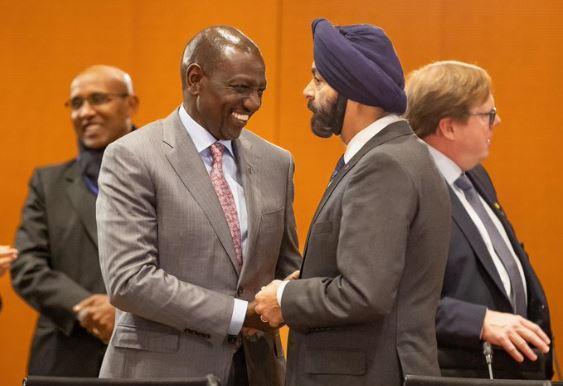
Thugge noted that the new loan and the new funding programme with the International Monetary Fund (IMF) would reduce the heavy burden of domestic loans.
He explained that the shift to consessional financing meant that Kenya would get access to cheaper financing.
"The support from the IMF and the World Bank is concessional financing. It would replace the expensive domestic borrowing and therefore improve the debt vulnerabilities and reduce the cost of interest," the CBK governor reiterated.
President William Ruto had earlier disclosed that the government has spent Ksh6.2 billion to subsidise the cost of fuel for the April 15 -May 14 period.
Despite the subsidy and reduction of the value-added tax (VAT) imposed on fuel products, the cost of fuel still rose by Ksh28 per litre for super petrol and Ksh30 per litre of diesel.
Kenyans expressed their dissatisfaction with the new fuel prices, stating that the rise in costs would affect the retail prices of basic commodities.
The United Opposition had threatened to mobilise mass action on Tuesday, April 21, to make the government address the matter.