
Editor's Review
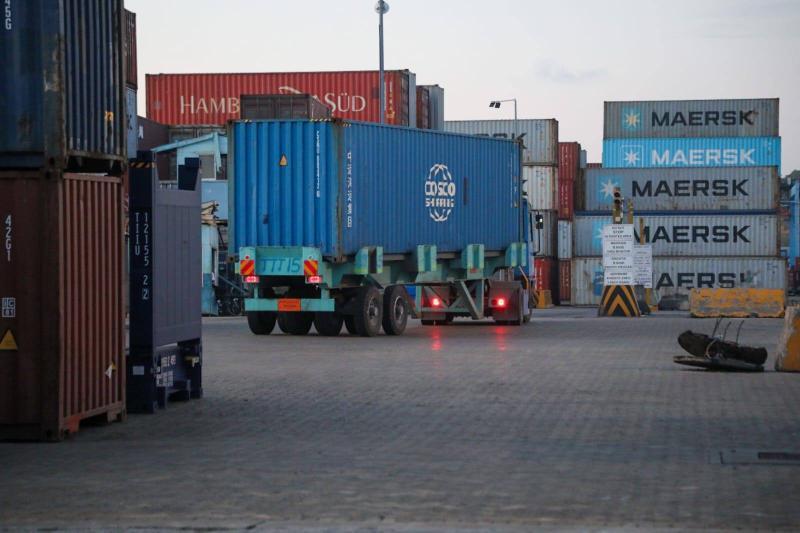
The Kenya Nuclear Regulatory Authority (KNRA) has announced that all cargo entering and exiting the country will be subjected to mandatory screening.
The Kenya Nuclear Regulatory Authority (KNRA) has announced that all cargo entering and exiting the country will be subjected to mandatory screening.
In a notice on Tuesday, April 21, KNRA said the mandatory testing is aimed at detecting and preventing the movement of unauthorized nuclear and radioactive materials.
“All cargo entering or exiting Kenyan ports of entry must undergo specialized screening to detect and prevent illicit trafficking of special nuclear and other radioactive materials,” read the notice in part.
The authority noted that containerized cargo will be required to pass through monitors stationed at strategic points, such as the Mombasa Port and inland container depots.
“These monitors provide non-intrusive, high-sensitivity detection of gamma and neutron radiation,” KNRA stated.
Read More

According to the authority, all legitimate radioactive sources must be accompanied by a valid KNRA Import License and accurate documentation, including the correct Harmonized System (HS) codes.
KNRA also directed importers and clearing agents to ensure truck drivers adhere to designated traffic flow systems within ports and terminals.
“Cooperation with the Authority and multi-agency teams is essential to minimize clearance delays,” the notice read.
Further, the authority said the directive will take effect from 1st May 2026.
The directives come just weeks after President William Ruto announced that Kenya plans to construct a 2,000MW nuclear power plant in Siaya County.
Speaking on March 25, the Head of State said the nuclear plant will be commissioned in 2027 and is expected to be completed by 2034.
“Kenya plans to commence construction of a 2,000MW nuclear power plant in Siaya County next year, with commissioning of the project expected in 2034,” the President announced.
Siaya Governor James Orengo welcomed the proposed plant, saying it will be a game-changing investment in the county.
"If Siaya secures a primary investor capable of lifting our largely subsistence economy, then Siaya will become a different place altogether.
“Concessionary electricity tariffs for host communities could attract manufacturers and investors,” said Orengo.


 (1)-1792651348-md.jpg)



-1792658467-sm.jpg)


 (1)-1792651348-sm.jpg)