Editor's Review
MPs have questioned the State Department for Wildlife over the use of Ksh300 million on consultancy services linked to a wildlife compensation digitalisation project.
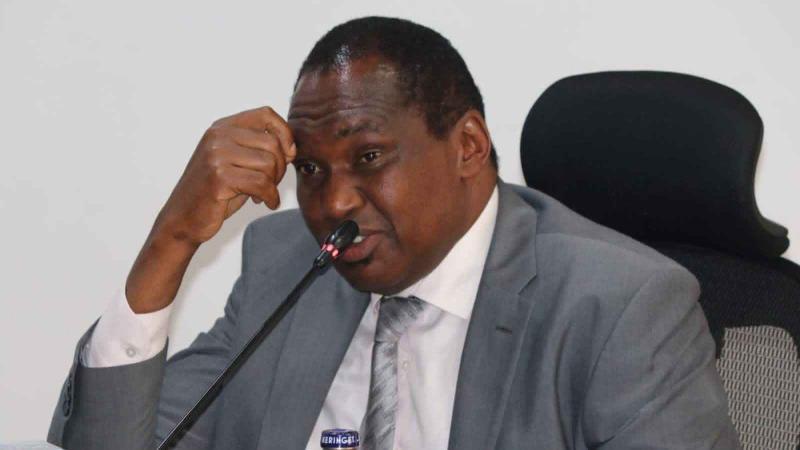
Members of the National Assembly’s Departmental Committee on Tourism and Wildlife have questioned the State Department for Wildlife over the use of Ksh300 million on consultancy services linked to a wildlife compensation digitalisation project.
During a session held at Parliament Buildings on Tuesday, May 12, the committee reviewed the State Department’s budget estimates for the 2026/27 financial year.
According to the department, the consultancy payment formed part of an earlier Ksh800 million allocation that had been set aside for compensating victims of human-wildlife conflict.
Officials explained that the funds were also used to pilot a digital system intended to streamline compensation claims and payments.
Committee Chairperson and Maara MP Kareke Mbiuki questioned the justification for the expenditure, saying the amount spent on consultancy appeared excessive.
Read More
"What kind of services were worth Ksh300 million?" he posed during the meeting.
Lawmakers were informed that a private firm had been contracted to develop the digital platform at a cost of Ksh300 million, while the balance of the allocation went toward compensating individuals injured by wild animals and families of those killed in wildlife-related incidents.
Voi MP Abdi Chome demanded a detailed breakdown of the project, arguing that Parliament needed proof the expenditure provided value for money.
"Provide the Committee with details of the digital project to justify paying such a huge amount. How do you spend Ksh300 million to create a programme for paying out Ksh500 million? There is no value for money," he said.
Lamu East MP Mohammed Ruweida urged the department to ensure openness and accountability in the handling of compensation funds.
"The issue of compensation for victims has always been raised on the floor of the House. The State Department should be transparent in disbursing funds to victims," he stated.

During the briefing, the committee was told that the State Department for Wildlife has been allocated Ksh16.5 billion for the 2026/27 financial year, an increase from Ksh15.1 billion in the previous budget cycle.
Out of the allocation, Ksh13.6 billion has been earmarked for Semi-Autonomous Government Agencies (SAGAs), Ksh1.9 billion for compensation related to human-wildlife conflict, Ksh546 million for recurrent expenditure, and Ksh382 million for development projects.
Officials further disclosed that the department currently has pending bills amounting to Ksh1.1 billion.
This comes a day after the National Police Service (NPS) has defended its proposed Ksh1.9 billion allocation for VIP protection and security of government installations.
During a session of the National Assembly Departmental Committee on National Administration and Internal Security on Monday, May 11, Members of Parliament questioned the expenditure amid the country’s ongoing economic pressures.
The lawmakers scrutinised the 2026/2027 budget estimates and raised concerns over whether the funding priorities matched the realities facing ordinary police stations across the country.
MPs also pressed officials to explain another allocation estimated at between Ksh5 billion and Ksh6 billion meant for ward policing and operations at police stations, seeking details on how the funds would improve security services and infrastructure.
National Police Service Secretary Administration and Accounting Officer Bernice Lemedeket told the committee that the government had recently shifted police officers and prison warders from private medical insurers to the Social Health Authority’s Public Officers Medical Scheme Fund following a directive issued on March 31.
The transition affects more than 140,000 officers who were previously insured under private firms including APA Insurance, Britam, First Assurance and Jubilee Insurance.
According to Lemedeket, the new arrangement is designed to mirror the medical cover available to civil servants and teachers, although implementation difficulties have already emerged.
"It’s like-for-like. We were doing about Ksh8.6 billion for medical insurance and Ksh4.2 billion for group life cover," she said.
Lemedeket also warned that persistent underfunding had severely affected police insurance programmes, especially group life cover that handles compensation for injuries, deaths and funeral expenses.
"Most of the time you see widows and widowers camping at the Inspector General’s office asking for compensation because insurers cannot process claims without full premium payments," she added.
Chief Finance Officer Arthur Nduati explained that the VIP protection budget was not entirely a fresh allocation but had previously existed under the Critical Infrastructure Protection Unit before being separated into its own budget line.
He clarified that the bulk of the Ksh1.8 billion allocation would go toward salaries for newly recruited officers tasked with guarding key government facilities.
"Out of the Ksh1.8 billion allocated to that item, Sh1.8 billion is for salaries, leaving only Sh66 million for Operations and Maintenance," Nduati said.
Nduati further stated that the increased ward policing allocation would mainly support salaries for incoming recruits, improve food rations for suspects in custody and strengthen security operations countrywide.
Officials additionally revealed that the service continues to face significant financial shortfalls, including a requirement of more than Ksh2 billion for medical insurance and another Ksh8 billion for group life cover.