Editor's Review
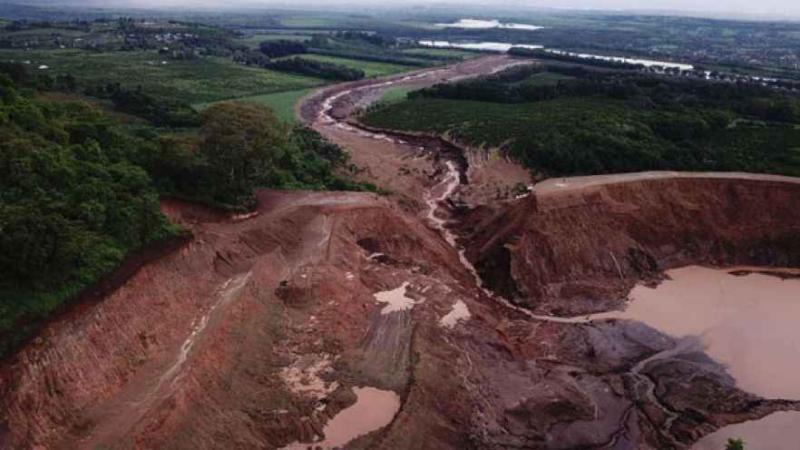
The National Disaster Operations Centre (NDOC) has explained who bears liability in cases where dams break during floods.
The National Disaster Operations Centre (NDOC) has explained who bears liability in cases where dams break during floods.
In an interview on Wednesday, May 13, NDOC Director Col (Rtd) David Samoei said it depends on whether the collapse was caused purely by natural factors or by negligence, poor maintenance, illegal construction, or failure to comply with safety standards.
Samoei said action is taken in cases where human actions or negligence contributed to the collapse.
"This depends on whether the disaster was purely natural or whether negligence, poor maintenance, illegal construction, or failure to comply with safety standards contributed to the collapse," he said.
NDOC further explained that understanding disaster levels is important in helping communities know how emergency response is coordinated and which authorities take responsibility at different stages of a crisis.
Read More
According to the agency, Level One disasters are localized emergencies managed through village and ward-level response structures.
Level Two disasters require County Governments to take the lead in coordinating response and recovery operations within affected areas.
Level Three disasters occur when multiple counties are affected, prompting joint intervention by the National Government alongside county authorities.

The agency noted that disasters may escalate to Level Four, which is classified as a national emergency requiring Presidential direction and a multi-agency response.
The response is coordinated by the NDOC, security agencies, relevant Ministries, Departments and Agencies (MDAs), as well as humanitarian organizations.
Notably, this comes days after 15 people were confirmed dead following the collapse of the Romus Gold Mine in West Pokot County.
The bodies of the deceased were retrieved on Friday, May 9, during a rescue mission conducted by the National Police Service and the Kenya Red Cross.
12 other miners who were pulled out from the rubble were rushed to the Kapenguria Sub-County Referral Hospital, where they are receiving treatment.
The rescue team confirmed that there were at least 60 people in the gold mine at the time of the collapse, and that several people could be trapped in the debris.
One of the survivors claimed that a boulder within the mine collapsed and crushed some of the miners, killing some and leaving others severely injured. His recount was corroborated by hospital staff.
"Some of them had severe crush injuries and had to have emergency surgery, including amputations. One of them had a suspected head injury and is due to be taken to theatre," Dr Caren Cheyech stated.
Locals disclosed that the workers at the firm included Kenyans from across the country and some foreigners from Uganda and Burundi.
Interior Cabinet Secretary Kipchumba Murkomen stated that the government would conduct investigations to establish if the calamity was a result of illegal mining practices.
He further warned Kenyans against working in mines which have not been approved by the State Department of Mining or the National Environmental Management Authority (NEMA).
Murkomen ordered the shutdown of the gold mine to pave the way for the search and rescue mission to continue.
"If anyone is found culpable of conducting blasting and mining in a manner outside the provisions of the law, they will be held responsible for the lives lost," he stated.