Editor's Review
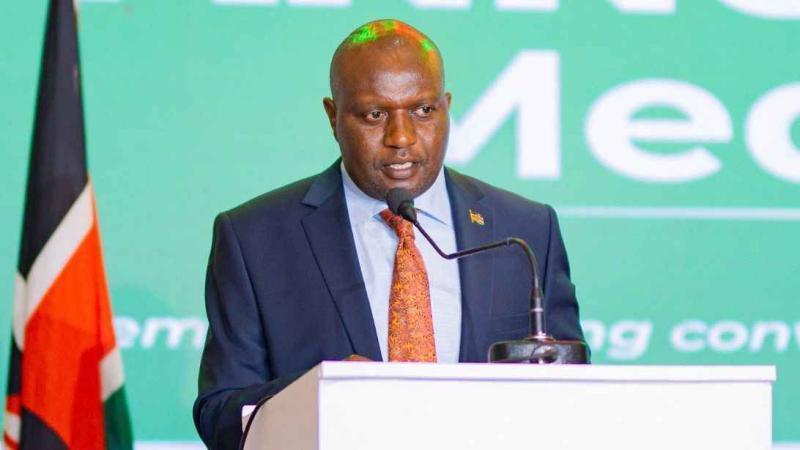
The Pan-African Media Summit 2026, hosted by the Media Council of Kenya (MCK), has kicked off at the Safari Park Hotel in Nairobi.
The Pan-African Media Summit 2026 kicked off on Wednesday, May 13, in Nairobi, bringing together editors, journalists, media stakeholders, development partners, and scholars from across Africa to discuss the future of the media industry.
Hosted by the Media Council of Kenya (MCK) at the Safari Park Hotel, the summit focuses on key issues affecting modern journalism, including information integrity, artificial intelligence, digital platforms, and media sustainability.
Speaking during the opening session, MCK CEO David Omwoyo said the rapid transformation of the media industry has created growing concerns over misinformation.
He noted that the summit aims to address these challenges and help strengthen public trust in the media.
"The media ecosystem has evolved rapidly, and the integrity of information is now at stake. That is why we are gathered here today to demand accountability," he said.
Read More
Omwoyo further said the discussions at the summit are intended to help shape stronger and more reliable information systems across Africa.
"We seek to chart a clear path forward and build robust information systems that the public can trust," he added.
Meanwhile, Head of the Anti-Corruption and Integrity in Government Division at the Organisation for Economic Co-operation and Development (OECD), Nejla Saula, highlighted the importance of citizens having access to accurate and trustworthy information.
She noted that informed societies are better equipped to participate in governance and decision-making processes.
"Empowered citizens are essential to ensuring access to reliable and accurate information. They are better placed to make informed decisions and participate meaningfully in public life," she said.
Saula also highlighted changing trends in news consumption among younger audiences, pointing to the growing influence of social media and video-based content.
"Research from Reuters indicates that young people prefer video content and rely more on social media platforms than on mainstream media. It is therefore critical that we understand how these younger audiences consume information," she added.

Saula added that tackling misinformation and protecting information integrity requires joint efforts between governments, regulators, media institutions, and other stakeholders.
"No single actor can tackle these challenges alone. That is why governments, media regulators, and all relevant stakeholders must strengthen collaboration at both regional and international levels," she further said.
At the same time, African Union Director Huyam Ahmed said the union remains committed to supporting information integrity efforts across the continent.
He noted that reliable information is essential in shaping better policies and decisions.
"The African Union remains committed to information integrity because accurate information shapes better decisions across the continent," she stated.
Ahmed also praised journalists and media practitioners for their role in telling African stories and highlighting issues affecting communities across the continent.
"To the journalists and media practitioners, being recognised, your work matters. Together, you are helping to tell Africa’s story," she added.
On his part, the Ambassador of the Netherlands to Kenya, Henk Jan Bakker, stressed the need to protect freedom of expression while ensuring the information space is not abused through misinformation and harmful content.
"Governments must protect the information space without restricting legitimate speech while media and journalists verify facts and provide context, and citizens think critically and engage respectfully," he said.
Bakker warned that protecting information integrity is critical in safeguarding democratic institutions in a rapidly evolving digital environment.
"In an era of rapid technological change, safeguarding information integrity means safeguarding the integrity of democracy itself," he added.

The event is being organised through a strong coalition that includes the Kenya Editors Guild (KEG), the Kenya Union of Journalists (KUJ), and the Association of Media Women in Kenya (AMWIK).
Speaking ahead of the summit, Omwoyo explained that the summit comes at a time when the media industry is grappling with profound changes.
He said the rise of artificial intelligence, the dominance of digital platforms, and shifting consumer habits are reshaping how information is produced and consumed.
While the developments offer new opportunities, Omwoyo argued that they have also accelerated the spread of misinformation and placed significant pressure on traditional media business models.
Against this backdrop, he noted that the summit will focus on actionable solutions aimed at strengthening the sector.
Omwoyo stated that discussions will centre on practical strategies to address the most pressing issues facing the industry.
"The Summit, themed 'Information Integrity, Digital Platforms and Media in Africa', is designed to cut through the noise and focus on practical solutions. Participants will explore ways to strengthen media viability, protect information integrity and uphold the professional and ethical standards that journalism depends on," he said in a statement.
The outcomes of the summit are expected to contribute to building stronger, more resilient media systems across Africa.