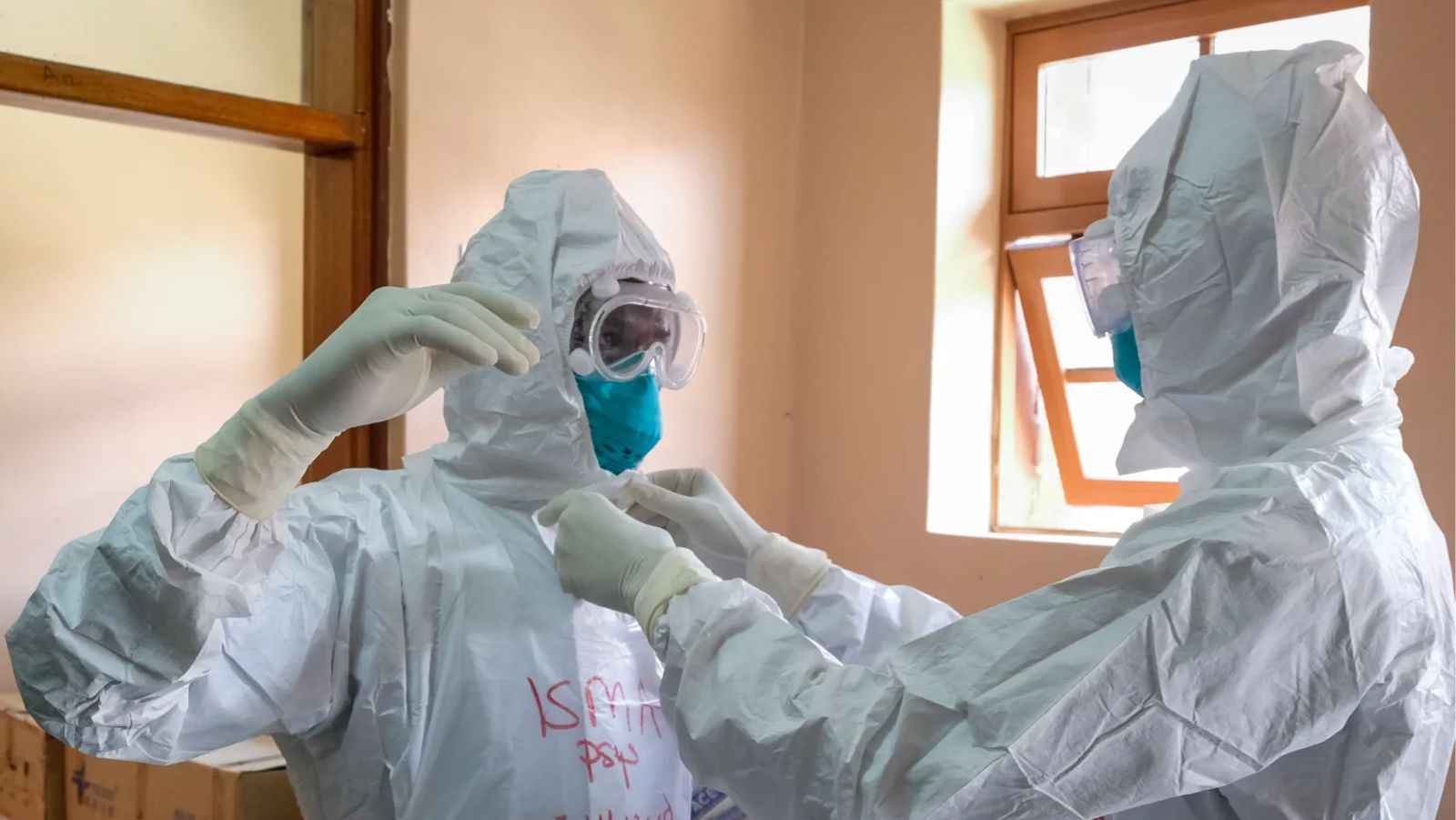
The Democratic Republic of the Congo (DRC) has confirmed a new Ebola outbreak in Ituri province, with suspected infections rising to 246 and reported deaths reaching 65.
In a statement on Friday, May 15, the Africa Centres for Disease Control and Prevention (Africa CDC) said it was actively working with authorities in the DRC and international partners to contain the outbreak.
"The Africa CDC is closely monitoring the confirmed Ebola Virus Disease outbreak in Ituri province, Democratic Republic of the Congo, and is working with national authorities and partners to support a rapid, coordinated response," the statement read.
Africa CDC said preliminary laboratory testing had already identified the Ebola virus in multiple samples, although sequencing is still ongoing to determine the exact strain involved.
"Following consultations with the DRC's Ministry of Health and National Public Health Institute, preliminary laboratory results from the Institut National de Recherche Biomédicale (INRB) have detected Ebola virus in 13 of 20 samples tested.
Read More
"The results suggest a non-Zaire ebolavirus, with sequencing ongoing to further characterise the strain. Results are expected within the next 24 hours with support from Africa CDC," the statement added.
According to figures released by the agency, the outbreak has heavily affected the Mongwalu and Rwampara health zones, while suspected infections have also been reported in Bunia.
"As of the latest update, about 246 suspected cases and 65 deaths have been reported, mainly in Mongwalu and Rwampara health zones. Four deaths have been reported among laboratory-confirmed cases. Suspected cases have also been reported in Bunia, pending confirmation," the statement continued.
Africa CDC warned that several factors could worsen the outbreak and accelerate transmission across borders.
"Africa CDC is concerned about the risk of further spread due to the urban context of Bunia and Rampara, intense population movement, mining-related mobility in Mongwalu, insecurity in affected areas, gaps in contact listing, infection prevention and control challenges, and the proximity of affected areas to Uganda and South Sudan," the statement further read.

In response, Africa CDC convened an urgent high-level coordination meeting on May 15, bringing together officials from the DRC, Uganda and South Sudan alongside global health agencies and pharmaceutical partners, including the World Health Organization, UNICEF, United States Centers for Disease Control and Prevention, Merck & Co., Johnson & Johnson Innovative Medicine, Moderna and Médecins Sans Frontières.
The agency said the discussions would focus on strengthening emergency response efforts and preventing cross-border spread.
"The meeting will focus on immediate response priorities, cross-border coordination, surveillance, laboratory support, infection prevention and control, risk communication, safe and dignified burials, and resource mobilisation," the statement noted.
Africa CDC also outlined several response measures it is preparing to deploy as investigations continue.
"Africa CDC is preparing support across key response pillars, including coordination through emergency operations mechanisms, digital surveillance and data management, cross-border preparedness, laboratory coordination, infection prevention and control, risk communication and community engagement.
"In addition, Africa CDC will work with partners to assess the availability and appropriateness of medical countermeasures once sequencing results confirm the exact ebolavirus species," the statement explained.
The agency further urged residents in affected and neighboring areas to cooperate with health teams and follow official guidance to reduce infections.
"Africa CDC is urging communities in affected and at-risk areas to follow guidance from national health authorities, report symptoms promptly, avoid direct contact with suspected cases, and support response teams working to protect communities," the statement concluded.
Elsewhere, speaking on the outbreak, Africa CDC Director General Jean Kaseya expressed support for the DRC government and stressed the need for rapid regional action.
"Africa CDC stands in solidarity with the Government and people of the Democratic Republic of the Congo as they respond to this outbreak," he said.
Kaseya also warned that heavy movement between countries in the region increases the risk of wider transmission if swift action is not taken.
"Given the high population movement between affected areas and neighbouring countries, rapid regional coordination is essential. We are working with DRC, Uganda, South Sudan and partners to strengthen surveillance, preparedness and response, and to help contain the outbreak as quickly as possible," he added.