
Editor's Review
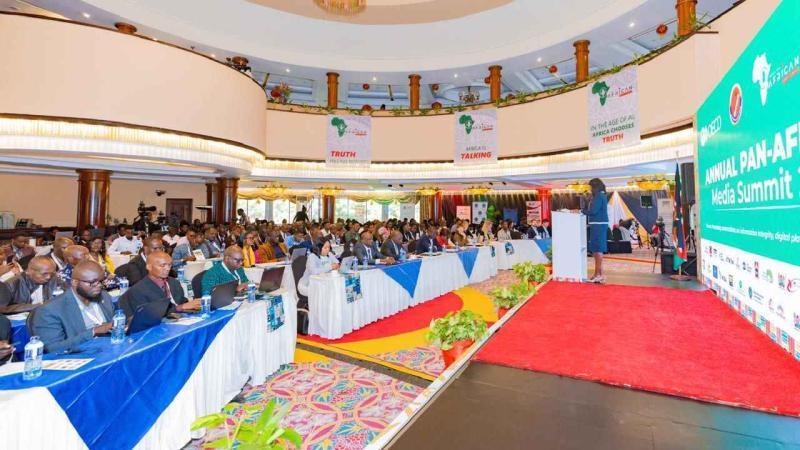
The inaugural Pan-African Media Summit was held at the Safari Park Hotel in Nairobi, bringing together professionals to discuss the future of journalism, media sustainability, democratic resilience, and digital transformation in Africa.
The inaugural Pan-African Media Summit was held at the Safari Park Hotel in Nairobi on Wednesday, May 14, and Thursday, May 15.
The summit was convened by the Media Council of Kenya (MCK) in collaboration with the Organisation for Economic Co-operation and Development (OECD), the Kenya Union of Journalists (KUJ), the Association of Media Women in Kenya (AMWIK), and the Kenya Editors Guild (KEG).
The summit brought together policymakers, editors, journalists, regulators, academics, technology companies, civil society organisations, development partners, youth representatives, and private sector stakeholders to discuss the future of journalism, media sustainability, democratic resilience, and digital transformation in Africa’s evolving information landscape.
Participants underscored the importance of reliable, timely, evidence-based, plural, and accurate information in supporting democratic governance, economic growth, and the protection of freedom of expression.
They reaffirmed the role of free, independent, pluralistic, and sustainable media in democratic societies, while also expressing concern over declining public trust in institutions and the growing economic pressures facing African journalism and public interest media.
Read More

A major focus of the discussions was the growing influence of digital technologies, particularly artificial intelligence and online platforms, on the information ecosystem.
Delegates stressed the need to strengthen African perspectives in global conversations on digital transformation and highlighted concerns over coordinated inauthentic online behaviour, harmful content, and cyber harassment, especially during elections.
The summit also recognised young people as Africa’s largest demographic group and the most active consumers of digital media.
Participants called for stronger media and information literacy programmes, promotion of responsible digital citizenship, and increased support for youth-led journalism and innovation initiatives.

Emphasis was also placed on equipping young people with critical thinking skills to navigate increasingly complex digital environments.
Participants further raised concerns over media ownership concentration across the continent, warning that it threatens diversity, limits voices and perspectives, and contributes to biased reporting and the under-representation of marginalised communities.
Concerns were also raised about the decline of local journalism, which participants said has weakened community-focused reporting and accountability while reducing diversity in newsrooms.
Notably, financial sustainability emerged as another major issue affecting the media sector in Africa.
Delegates noted that traditional business models continue to struggle in adapting to the digital age, negatively impacting the quality of journalism.

Participants called for a comprehensive approach involving media policy reforms, public funding, technological innovation, media literacy, support for local journalism, diversity in reporting, and strengthened fact-checking initiatives to ensure a healthy media environment that serves the public interest.
During the summit, participants committed to continued engagement on several priority areas, including the annual convening of the Pan-African Media Summit and the strengthening of structured engagement between African regulators, technology platforms, and other stakeholders to promote transparent, accountable, and rights-respecting governance practices.
They also explored possible arrangements between online platforms and media organisations aimed at supporting the sustainability of journalism.
Participants further highlighted the importance of supporting minority, local, and community media, including the promotion of local languages in journalism and broadcasting.

The summit additionally called for stronger collaboration with technology companies to improve transparency around algorithms, content moderation systems, and data practices in order to boost accountability and restore public trust.
Delegates further stressed the need for coordinated responses to inauthentic online behaviour through professional reporting, partnerships with independent fact-checking organisations, and the promotion of credible sources of information.
Participants also emphasised the importance of strengthening regional and international cooperation on information integrity based on existing global and regional standards.
The summit concluded with strong support for continued dialogue and collaboration beyond the Nairobi meeting, including plans to institutionalise the Pan-African Media Summit as an annual platform and establish a representative mechanism to guide future meetings.

 (1)-1793001898-md.jpg)
-1780684637-md.jpg)
 (1)-1792999571-md.jpg)


 (1)-1793001898-sm.jpg)
-1780684637-sm.jpg)
 (1)-1792999571-sm.jpg)