
Editor's Review
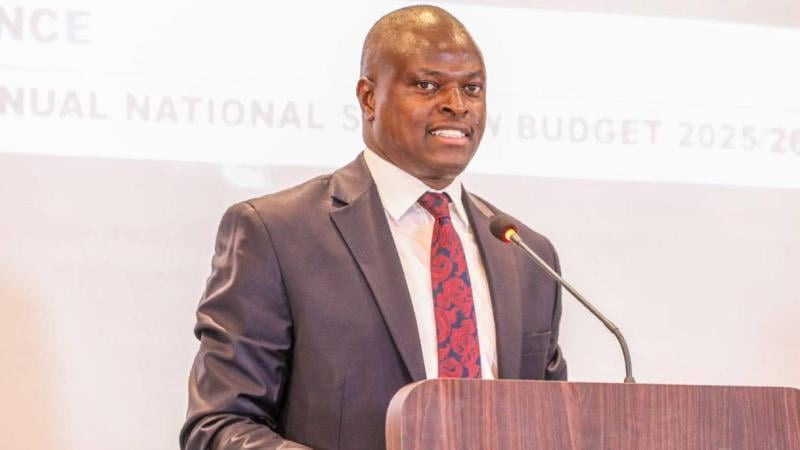
Kiharu Member of Parliament Ndindi Nyoro has proposed a raft of measures aimed at lowering fuel prices.
Kiharu Member of Parliament Ndindi Nyoro has proposed a raft of measures aimed at lowering fuel prices.
In a statement on Friday, May 15, he warned that the current cost of petroleum products could severely hurt the economy and increase the cost of living.
Nyoro criticized the current fuel pricing structure, saying the country risks facing a major inflation crisis if urgent interventions are not taken.
"The drastic rise in fuel prices to Ksh214.25 for Petrol and 242.92 for Diesel is unacceptable and will grossly hurt the economy now, in the medium and long term. Inflation is expected to rise drastically in the month of May going forward if we do not change course," he said.
Nyoro also argued that previous government interventions on Value Added Tax had failed to provide meaningful relief to consumers because VAT calculations are tied to the rising landed cost of fuel imports.
Read More
"The reduction in the percentage of VAT has not done much to reduce pump prices. This is due to the fact that VAT is calculated as a percentage of the landed cost, which has escalated," he added.
Nyoro further accused the government of manipulating fuel pricing announcements for political purposes, saying the public was still left with high pump prices despite claims of reductions.
"It is not acceptable that the government has been playing with fuel prices for political gains, purporting to give further direction after price guidance by EPRA. Policymakers need to understand that the announcement of "reduction" of variables after the gazetting of prices still leaves resultant costs high," he continued.

Nyoro also warned that increases in fuel prices often trigger permanent increases in transport and commodity costs, even when fuel prices later decline.
"Most price hikes are sticky and therefore may not correspond with any reduction. Case in point is the transport cost. When fares go up, they become sticky, and therefore Kenyans are left paying high prices. What happened last Month is unfortunate," he further said.
According to Nyoro, the proposed interventions would include reducing importers’ and distributors’ margins by Ksh4 per litre, providing an additional Ksh5 billion diesel subsidy, scrapping VAT on petroleum products and reducing the fuel levy introduced in 2024 by Ksh7.
He noted that while the current government pricing structure places Super Petrol at Ksh214.25 and Diesel at Ksh242.92 per litre, the proposed changes would lower the prices to Ksh187.38 for Petrol and Ksh189.16 for Diesel.
Under the proposals, Diesel subsidy support would increase significantly from Ksh14.51 per litre to Ksh24.75 per litre following the additional Ksh5 billion allocation.
The plan would also eliminate VAT charges currently amounting to Ksh15.87 on Petrol and Ksh17.99 on Diesel, while also removing Ksh7 from the fuel levy.
At the same time, Nyoro stated that he would begin the parliamentary process to amend the relevant laws in order to implement the proposals.
In a letter addressed to the Clerk of the National Assembly, Samuel Njoroge, the MP announced his intention to push for legislative amendments targeting lower fuel costs.
"Pursuant to the provisions of the Constitution of Kenya, the Standing Orders of the National Assembly, and the relevant laws governing public finance and taxation, I hereby give formal notice of my intention to initiate legislative amendments aimed at reducing the retail prices of super petrol, diesel and kerosene in Kenya," he stated.
Nyoro explained that one of the key amendments would involve reducing the Road Maintenance Levy Fund charge by Ksh7 through the revocation of the Road Maintenance Levy Fund (Imposition of Levy) Order, 2024.
"The current levy of Ksh 25 per litre shall be reduced by ksh 7 that was added in 2024 thereby reducing it from the current ksh 25 to Ksh 18 per litre," he added.
Nyoro also proposed amendments to the VAT Act aimed at making petroleum products tax exempt.
"This is to delete Section 5 subsection 2A of VAT Act Cap 476 thereby moving Petroleum products to the First Schedule of VAT Act as exempt supplies. This will effectively reduce the VAT from the current 8 percent to 0% (tax exempt) on petroleum products," he further said.


-1792658467-md.jpg)
-1768823097-md.jpg)

-1780684637-sm.jpg)
 (1)-1792999571-sm.jpg)