
Editor's Review
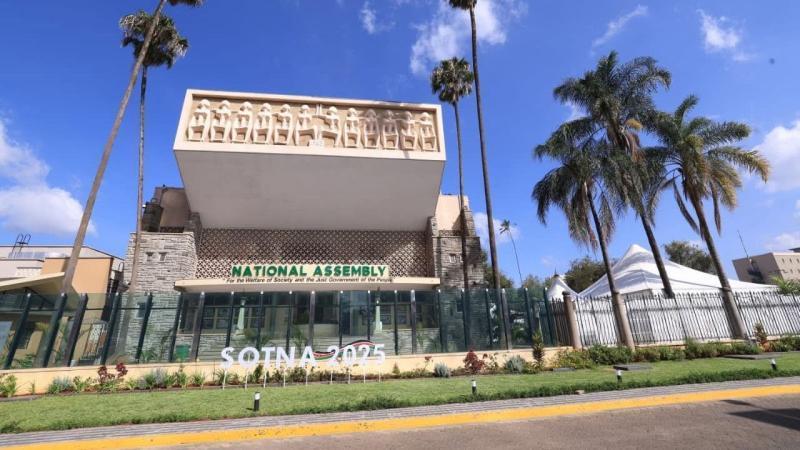
The National Assembly has announced the commencement of public participation on the Finance Bill, 2026, inviting Kenyans and stakeholders to submit their views.
The National Assembly has announced the commencement of public participation on the Finance Bill, 2026, inviting Kenyans and stakeholders to submit their views.
In a statement on Thursday, May 21, the National Assembly said the public engagement process would be spearheaded by the Departmental Committee on Finance and National Planning and will run until the end of May.
"The Departmental Committee on Finance and National Planning is set to commence Stakeholder Engagements on the Finance Bill, 2026 this morning," the statement read.
According to the statement, the exercise will continue for several days before lawmakers compile submissions from the public and other stakeholders.
"The engagements are set to run through Friday May 29, 2026, before the Committee collates views on the proposed law from members of the public," the statement added.
Read More
The National Assembly explained that Kenyans can take part in the process and submit their opinions on the Bill by using the Quick Response (QR) Code provided.

The Finance Bill, 2026, has been introduced as part of the government’s efforts to boost revenue collection and improve the efficiency of tax administration.
The proposed measures are projected to raise approximately Ksh117 billion in additional revenue.
The Bill proposes amendments to several key tax laws, including the Income Tax Act, Value Added Tax Act, Excise Duty Act, Tax Procedures Act, Miscellaneous Fees and Levies Act, and the Stamp Duty Act.
According to the National Assembly, the proposed law also aims to simplify tax compliance processes, remove outdated provisions, and clean up redundant legal references in existing legislation.
Kenyans seeking to review the Bill can access it through the Parliament website via https://www.parliament.go.ke/node/25767
This comes a week after Treasury Cabinet Secretary John Mbadi announced that the proposal to impose a five percent presumptive tax on mitumba imports has been dropped.
Speaking during a press conference on Monday, May 11, he revealed that the National Assembly had rejected the proposal and that it could be left out of the final draft of the Finance Bill 2026.
However, Mbadi intimated that he will still push for the proposal to be effected as it was intended to benefit mitumba traders.
"On the taxation around mitumba, I have noticed that it has been dropped out of the final bill that has come from the National Assembly. Of course, the final bill comes from there. Our proposal was to have it, and I still insist that we should," he stated.
Mbadi claimed that he hosted a contingent of mitumba traders at the National Treasury, and the decision to impose the 5 percent presumptive tax was reached.
As such, he explained that apart from 16 percent value added tax on the imported goods, the government would only charge the traders 1.5 percent of the value of the goods as income tax
The government would then assume that the traders would make a profit worth 5 percent of the value of the imported goods.
"For income tax, we deem 5 percent of the customs value as profit, and then we tax that 5 percent at 30 percent to give you 1.5 percent. This becomes the final tax, and nobody will go after the business people again," he explained.



 (1)-1791708588-md.jpg)
 (1)-1791175033-md.jpg)
-1791699761-md.jpg)



 (1)-1791708588-sm.jpg)
 (1)-1791175033-sm.jpg)