Editor's Review
The Kenya National Commission on Human Rights (KNCHR) has defended its decision not to disclose the identities of individuals earmarked for compensation.
The Kenya National Commission on Human Rights (KNCHR) has defended its decision not to disclose the identities of individuals earmarked for compensation under a reparations programme for victims of human rights violations linked to protests.
Speaking on Wednesday, June 17, KNCHR Director Cyrus Maweu said that while the compensation framework and related reports are publicly available, personal information provided by victims was submitted with the expectation that it would remain confidential.
He explained that victims only consented to be included in the compensation process and not to have their personal details made public.
"I remember when we asked for consent, we were only asking the victims to consent to being included in the list, but they didn't consent to that information being public. But I can clarify that the report is public, actually already on our website. The reparations framework that we developed and submitted is equally public, and so is the proposed legislation on reparations," Maweu said.
Amid questions over transparency and concerns about whether individuals who are not genuine victims could be included in the compensation programme, Maweu maintained that the verification process was designed to ensure only legitimate claims are considered.
Read More
He also revealed that applicants were required to provide detailed information to support their cases.
"Not everyone who has these documents; so we gave a number of options, including information that could be submitted, a bit of description of the claims so that it enables us to even do the categorization. Is it loss of life? Is it loss of property? Is it torture? Is it sexual violence? So just that information that could help us in properly categorizing the violation," he added.

According to the commission, claimants were asked to provide comprehensive details about the alleged violations, including the date and time of the incident, as well as identifying information about perpetrators where available.
Applicants were also encouraged to submit supporting evidence, including medical reports, media reports, occurrence book records, police abstract reports, and records of complaints made to other public agencies or institutions to strengthen their claims.
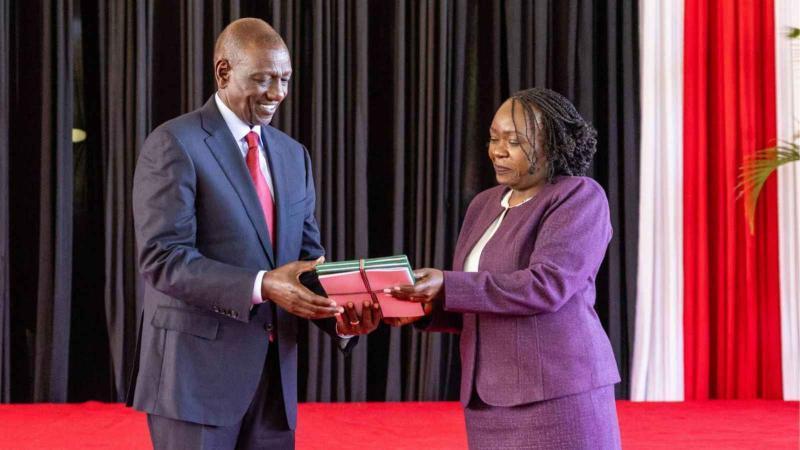
This comes days after the government announced that compensation payments to victims affected by demonstrations and public protests could begin within a week.
Speaking on Monday, June 15, Panel of Experts on Compensation of Victims of Demonstrations and Public Protests Chairperson Makau Mutua said the verification of beneficiaries was at an advanced stage.
"The panel is now subjecting all of these names to verification assisted by its AI integrated case management system and will be in a position your excellency to begin making payments in a short time as a week from today," he said.
President William Ruto said the government had set aside Ksh2 billion to compensate individuals and groups who suffered losses or injuries during protests.
"We have allocated Ksh2 billion towards compensation and reparation for those who have suffered verified harm arising from protests, injured citizens, affected families, businesses lost and law enforcement officers injured in the course of their duties," he stated.
Ruto said the compensation initiative was intended to help the country move forward from a difficult period marked by loss and violations of rights.
"This marks the end of a painful chapter in our national life. There have been instances where the response to public demonstrations has resulted in excessive use of force, violation of rights and loss of life," he added.
 (1)-1791178178-md.jpg)
 (1)-1791178178-sm.jpg)