
Editor's Review
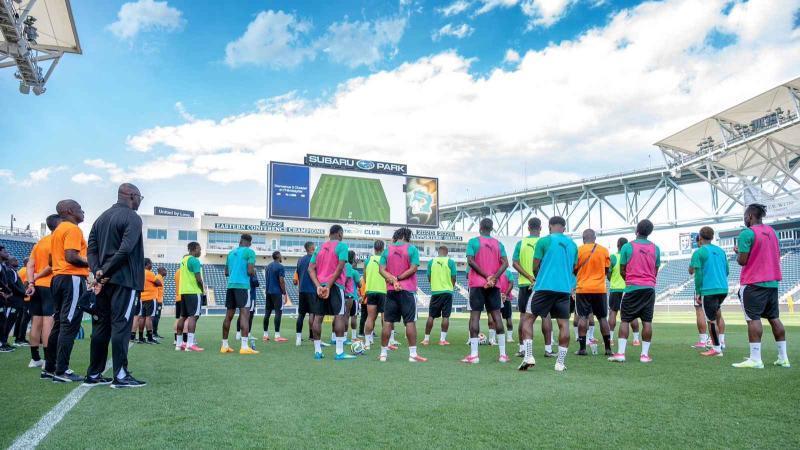
The Ivorian Football Federation (FIF) has confirmed that striker Elye Wahi will not travel to Canada with the national team ahead of Ivory Coast’s upcoming FIFA World Cup fixture.
The Ivorian Football Federation (FIF) has confirmed that striker Elye Wahi will not travel to Canada with the national team ahead of Ivory Coast’s upcoming FIFA World Cup fixture.
In a statement on Thursday, June 18, the federation said the player was barred from entering the country after failing to secure the necessary entry documents.
"The FIF informs the public that the player will not be able to travel with the delegation to Canada. This is because the administrative authorizations required for his entry into Canadian territory have not been obtained at this stage," the statement read.
FIF explained that Wahi will remain in the United States while awaiting the return of the national team delegation.
At the same time, the federation addressed reports circulating in the media alleging that Wahi had been arrested.
Read More
FIF said it had not received any official notification regarding any legal or administrative action involving the forward.
"During this particularly sensitive period, the FIF extends its full support to the player and reaffirms its confidence in him. Elye Wahi remains an important member of the Côte d’Ivoire national team," the statement added.

This development comes days after Ghana protested Canada’s decision to deny Black Stars midfielder Thomas Partey a temporary residence visa for the ongoing 2026 FIFA World Cup.
In a statement issued on Saturday, June 13, the Ministry of Foreign Affairs described the move as unfair and confirmed that it had launched diplomatic efforts aimed at reversing the decision.
The government argued that the refusal was based on ongoing legal proceedings in the United Kingdom that had not resulted in a conviction.
"We are informed that the Immigration, Refugees and Citizenship Canada (IRCC) arrived at this outcome on grounds of inadmissibility under paragraph A36(1)(c) of Canada’s Immigration and Refugee Protection Act (IRPA).
"The decision is understood to be based on pending criminal proceedings in the United Kingdom that have not resulted in any conviction or judicial finding of guilt," the statement read.
The government emphasized that Partey remained innocent unless proven guilty and questioned the basis upon which the visa refusal was made.
"The Government of Ghana reaffirms the fundamental legal principle of the presumption of innocence, a cornerstone of justice and due process in democratic societies.
"While respecting Canada’s sovereign right to enforce its immigration laws, Ghana considers that reliance on unproven charges in the absence of a judicial determination raises fundamental questions of fairness and proportionality," the statement added.
Ghana further revealed that it had already taken formal diplomatic action and was seeking a review of the decision.
"Accordingly, Ghana is pursuing active diplomatic engagements with the relevant Canadian authorities on this matter.
"On June 11, 2026, the Foreign Ministry of Ghana dispatched an official note of protest to Global Affairs Canada. The note also requested that Canada reviews its unfortunate decision," the statement noted.
The ministry stated that it was prepared to pursue all available avenues under both Canadian and international law.
"The Government of Ghana is determined to explore and pursue all available diplomatic, legal and administrative remedies under Canadian and international law, including, where appropriate, judicial review before the Federal Court of Canada, to ensure full and fair consideration of all relevant legal and factual issues in accordance with due process," the statement further read.

 (1)-1791178178-md.jpg)



 (1)-1791178178-sm.jpg)