Ruto explained that the report will ensure broad access to information across ministries, departments, and agencies.
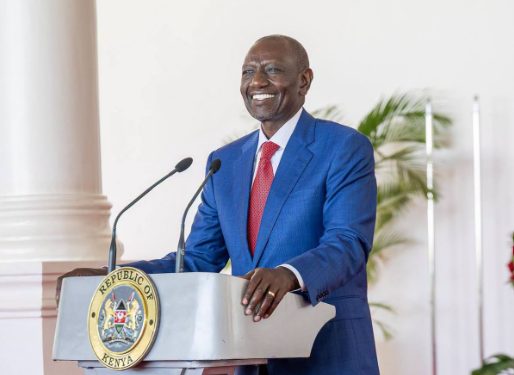
On Thursday, July 16, President William Ruto announced that the government will regularly publish a State of Openness Report as part of a plan to entrench openness in his administration.
Ruto explained that the report will ensure broad access to information across ministries, departments, and agencies, thus strengthening public trust.
He intimated that the inaugural State of the Openness Report would be launched later in the year and would be the first of its kind in the world.
"It will establish a national benchmark for measuring transparency, accountability and institutional performance across Government, while providing an honest assessment of where we are succeeding, what we must improve and the reforms necessary to strengthen public trust."
"Our objective is to build and earn public trust while confronting the growing threat of fake news, misinformation, disinformation and propaganda through transparency, accountability and accessibility to accurate information," he stated.
A file photo of President William Ruto and Attorney General Dorcas Oduor.
Consequently, he directed every ministry, department, agency, constitutional commission and county government to extend their full cooperation to the Commission on Administrative Justice by providing timely, accurate and comprehensive information throughout this exercise.
.
The President further highlighted several steps and policies enacted to ensure government transparency. He noted that his administration had expanded the digitisation of Government services from just 350 in 2022 to more than 26,000, making public services more accessible, efficient and accountable.
Ruto added that under his administration, a Unified Government Digital Payment Platform has been introduced to eliminate leakages, reduce opportunities for corruption and strengthen accountability in the collection of public revenue.
"We have also implemented electronic procurement to enhance transparency, promote fair competition and ensure prudent use of public resources," he pointed out.
The Head of State noted that the openness was also extended to government-owned enterprises by enacting a law that helps to strengthen transparent, merit-based and competitive recruitment free from political influence.
"I am happy that last year we passed the law on government-owned enterprises, and as a result, we have had to retire 250 board members so that we can competitively hire professionals to run those parastatals," he stated.
Other initiatives include the enactment of the Conflict of Interest Act, which has further reinforced integrity by strengthening transparency, accountability and ethical conduct of public officers, and the National Infrastructure Fund (NIF).
According to Ruto, the NIF has allowed the government to introduce robust mechanisms to strengthen openness and transparency, limit the President's role in appointing the NIF Council, and enhance institutional independence and accountability.
Paul Kurgat is a Digital Journalist based in Nairobi, Kenya. He is passionate about writing to inform and educate the public. His interests are in politics, current affairs, and real-life experience.