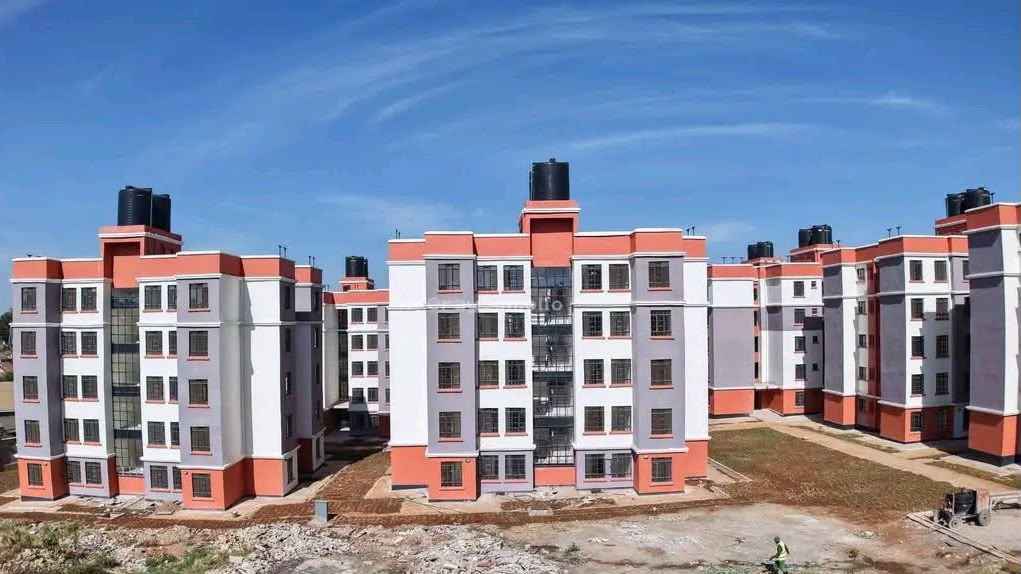
The National Assembly Departmental Committee on Lands has commenced consideration of proposed amendments to the Land Act that would reduce the period lenders must wait before enforcing loans and selling properties financed under the Affordable Housing Programme.
The proposed amendments are contained in Clauses 14 and 15 of the Business Laws (Amendment) Bill, Senate Bill No. 51 of 2024, legislation aimed at improving the country's business environment.
Having already been approved by the Senate without changes, the Bill is now before the National Assembly for review.
The committee is assessing whether the proposed changes achieve an appropriate balance between encouraging investment in affordable housing and protecting the rights of borrowers.
Committee Chairperson, North Mugirango MP Joash Nyamoko, said members are examining the implications of the proposals before making recommendations.
Read More
"Our duty is to ensure that any amendments to the Land Act promote investment while safeguarding the constitutional rights of Kenyans. We must interrogate whether the proposed timelines are fair, practical and in the public interest," he stated.
If enacted, the amendments would cut the period before a lender can begin enforcing a loan secured by an affordable housing property from 90 days to 45 days.
The notice period before a lender exercises its statutory power of sale would also be reduced from 40 days to 20 days.
The revised timelines would apply only to affordable housing properties, with all other categories of property retaining the current legal provisions.
Backers of the proposals argue that shortening the recovery process would lower lending risks, boost investor confidence, and encourage financial institutions to extend more financing for affordable housing projects.

Nyamoko assured members that the committee would consider views from all relevant stakeholders before reaching its conclusions.
"We intend to hear from all affected parties, including lenders, housing developers, legal experts and consumer representatives, before presenting our report to the Departmental Committee on Trade, Industry and Cooperatives," he added.
The committee is scheduled to submit its findings in line with Standing Order 127 before the Departmental Committee on Trade, Industry and Cooperatives prepares its final report for tabling in the House by August 13.
Meanwhile, the State Department for Housing and Urban Development has clarified that houses under the Affordable Housing Programme are not available for rental-only occupancy.
The clarification came after a social media user sought an explanation after being informed that affordable housing units could not be rented without entering into a homeownership arrangement.
"Looking for a unit to rent only. I was told they are not available. Only rent-to-own units are available. Why?" the user asked.
Responding to the inquiry, the department explained that the programme is structured to enable Kenyans to own homes instead of offering them as rental units.
"Kindly note that the Affordable Housing Programme is designed to support homeownership, not rental-only occupancy," the department said.
The department further outlined the first option available to prospective occupants through the Tenant Purchase Scheme (TPS).
Under this arrangement, buyers pay the mandatory five percent deposit before moving into the unit and continue making affordable monthly payments while living in the house until the purchase is completed.
"Once you complete payment, you will be issued with a Sectional Title Deed, confirming you as the owner of the unit," the department explained.
The government also noted that buyers who are able to pay the full purchase price upfront can acquire a unit immediately through an outright purchase.
After completing the payment, they are issued with a Sectional Title Deed confirming ownership of the property.
Once ownership has been transferred, the homeowner has full rights over the property and can choose how to use it, including occupying it personally or leasing it to other people.
"Once you become the legal owner of the unit, you are free to occupy it, rent it out, or use it as you wish," the department added.



 (1)-1785301360.jpg)