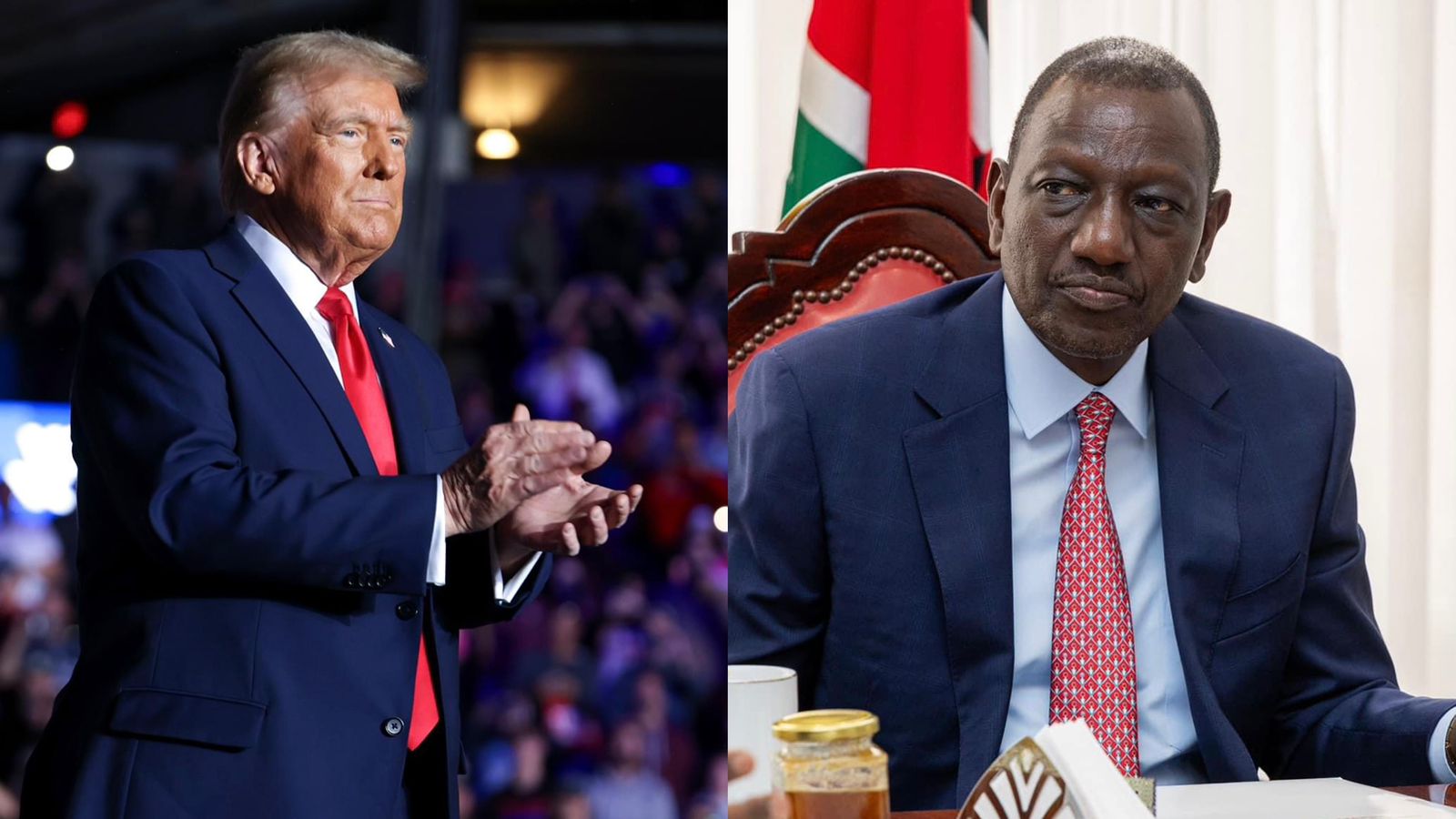
United States President Donald Trump has issued a trade pronouncement targeting countries that maintain commercial relations with the Islamic Republic of Iran.
In a statement on Tuesday, January 13, he announced an immediate tariff measure, noting that any commercial engagement with Iran would attract penalties in trade with the US.
"Effective immediately, any country doing business with the Islamic Republic of Iran will pay a tariff of 25% on any and all business being done with the United States of America. This order is final and conclusive," he said.
Although the declaration is general in scope, its potential implications extend to a wide range of countries with active diplomatic and economic links to Iran, including Kenya.
Kenya’s engagement with Iran has evolved through structured bilateral mechanisms aimed at expanding trade, technology exchange, and diplomatic cooperation.
Read More
In August 2025, the two countries concluded a series of agreements during the seventh session of the Kenya-Iran Joint Commission for Cooperation held in Nairobi.
The agreements placed emphasis on economic diversification, with both sides committing to broaden trade beyond traditional commodities and explore opportunities in Kenyan horticulture, livestock, and minerals.

Agriculture featured prominently, with Iran agreeing to transfer agro-processing technology to Kenya, a move intended to enhance food security and boost productivity across the agricultural sector.
A persistent trade issue involving Kenyan tea exports to Iran was also addressed through the creation of a joint committee tasked with resolving the matter.
Beyond economics, the Joint Commission produced diplomatic outcomes, including the establishment of a political committee to advance high-level political dialogue and parliamentary diplomacy between Nairobi and Tehran.
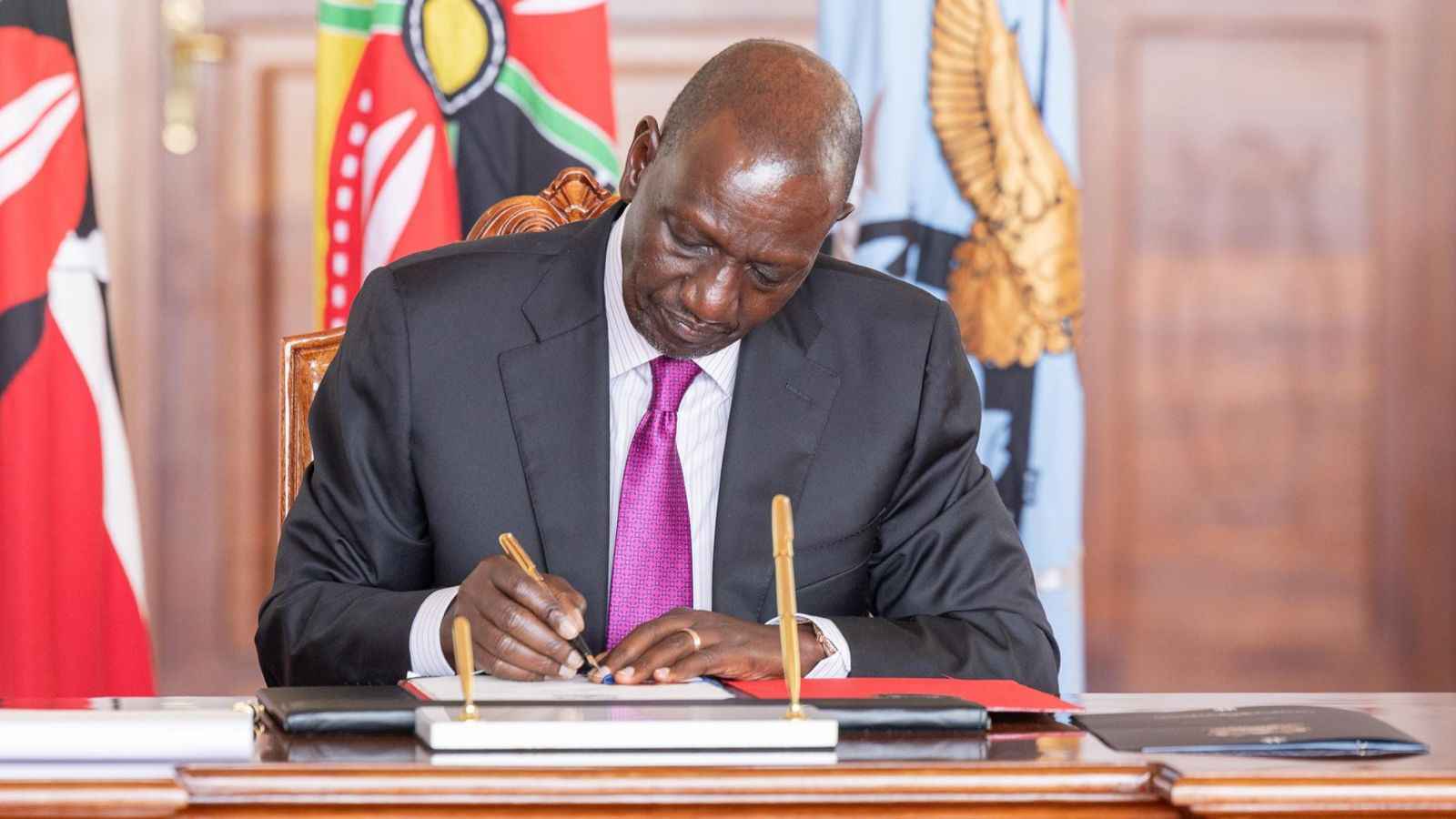
Earlier, in July 2023, the late Iranian President Ebrahim Raisi visited Nairobi and held talks with President William Ruto at State House.
Following the meeting, State House stated that Kenya would leverage its strong ties with Iran to expand trade, with both leaders acknowledging that existing trade volumes remained modest but held significant growth potential.
Ruto explained that Kenya and Iran were working toward a formula to increase exports and address trade imbalances, particularly through key commodities.
"This will bring about the much-desired trade balance that is in favour of Iran," he said.
Ruto also noted Kenya’s intention to benefit from Iran’s technological capacity and innovation ecosystem, highlighting the establishment of the Iran House of Innovation and Technology in Nairobi as a central platform for collaboration.
"This is an innovative way of enabling enterprises to access Iranian technologies, skills and information," he added.
Ruto further observed that the strategic geographic positions of Kenya and Iran give both countries an advantage as regional gateways.
"We will seek to capitalise on this unique advantage for our prosperity," he further said.
The two nations have signed more than 22 MoUs and agreements, covering cooperation in development, education, infrastructure, health, water, fisheries, agriculture, and other sectors.
Additional agreements signed during the 2023 engagement expanded collaboration into areas such as culture, ICT, housing, and urban development.



-1780045795.jpg)