
Editor's Review
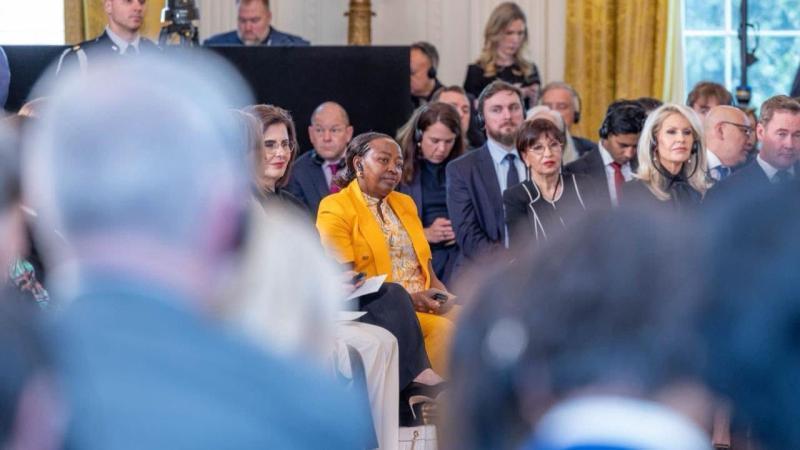
First Lady Rachel Ruto was among a select group of First Spouses who attended a high-level technology summit held at the White House.
First Lady Rachel Ruto was among a select group of First Spouses who attended a high-level technology summit held at the White House.
The event, dubbed 'Fostering the Future Together,' was convened by Melania Trump and attracted participants from across the world.
In a statement after the meeting, Rachel highlighted the significance of the engagement and the collaborative spirit among the attending First Spouses.
"It was an honour to join my fellow First Spouses at the 'Fostering the Future Together' initiative, which was convened at the White House by the First Lady of the United States, Melania Trump," she said.
Read More

Rachel noted that discussions at the summit centered on the transformative power of emerging technologies and the need to ensure inclusivity in access to these tools.
"The summit focused on the ways in which technology, particularly artificial intelligence, is reshaping education and the future of work, and on ensuring that every child has fair and safe access to these opportunities," she added.

Elsewhere, this comes weeks after the High Court in Kerugoya declined to immediately halt the deployment of artificial intelligence systems in Kenya.
In a ruling issued on Thursday, February 5, High Court judge Edward Muriithi declined to grant conservatory orders that were being sought at the ex parte stage, holding that the request to restrain the State from deploying artificial intelligence systems was wide-reaching and could not be issued without hearing the other parties.
The ruling came after a petition filed by human rights activists warning of serious risks to constitutional rights and the 2027 General Election.
In their petition filed against the Cabinet Secretary for ICT and the Principal Secretary for ICT, the activists sought conservatory orders restraining the respondents from deploying, authorising, or operationalising AI systems pending the hearing and determination of the petition.
Further, the activists argued that the deployment of what they termed as “high-risk AI systems,” was being done without adequate legal, regulatory, or institutional safeguards, exposing citizens to imminent violations of rights, including privacy, equality, dignity, freedom of expression, fair administrative action, political participation, labour rights, and consumer protection.
"Kenyans are experiencing and are imminently threatened with violation of the rights to privacy, equality, discrimination, dignity, fair administration, and unregulated AI deployment," read the petition in part.
In their application, the petitioners also raised concerns about the upcoming 2027 general elections, warning that unregulated AI could facilitate electoral manipulation through deepfakes, disinformation, algorithmic interference, and other threats to free and fair elections.
They further highlighted risks to vulnerable populations, consumers, the education system, academic integrity, intellectual property rights of Kenyan creators, and labour markets due to rapid AI deployment without adequate safeguards.



-1783602407-md.jpg)






-1779781762-sm.jpg)