Editor's Review
Corruption allegations infiltrated key state institutions and implicated billions of shillings intended for public services in 2025.
The year 2025 was marred by scandal, as corruption allegations infiltrated key state institutions and implicated billions of shillings intended for public services.
From the National Youth Service to the country’s flagship digital payment platform, and from the healthcare sector to county governments, a pattern of systematic looting emerged that stunned the public.
Here are some that made headlines:
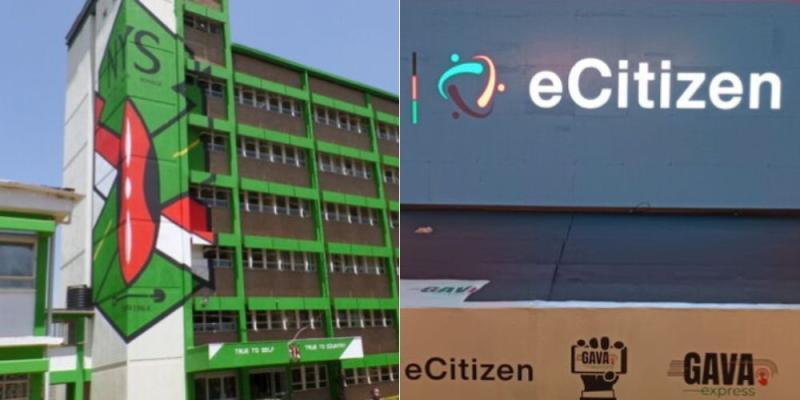
National Youth Service: KSh2bn Scandal
On Wednesday, May 7, 2025, the Ethics and Anti-Corruption Commission (EACC) conducted dramatic raids on the homes and offices of several senior National Youth Service (NYS) officials, launching an investigation into what would be revealed as a KSh 2 billion embezzlement scheme.
Read More
The operation, carried out under court orders, was part of an ongoing probe into suspected corruption at an NYS college.
According to EACC, the raids were successful, with crucial evidence believed to be linked to the scandal seized from the officials' premises.
The anti-graft agency revealed that top NYS officials under investigation had used their positions to engage in various malpractices, including conflict of interest, abuse of office, and procurement fraud spanning five financial years from 2019/2020 to 2024/2025.
The investigation uncovered a sophisticated scheme in which the suspects allegedly abused their positions of trust and authority to embezzle public funds through collusion, procurement fraud, and payment for fictitious contracts.
Through companies linked to themselves and their close associates, the officials channeled millions in public funds to themselves, enabling the payment of contracts that never existed or were never executed.
"The suspects allegedly abused their positions of trust and authority to embezzle public funds through collusion, procurement fraud, and payment for fictitious contracts," EACC stated in its official communication.
To succeed in the scheme, the suspects reportedly colluded with close proxies, family members, and accomplices who were registered as directors in companies that traded with NYS. These companies effectively secured lucrative fictitious contracts worth a staggering KSh 2 billion over the five-year period.
After the raids, the officials were accompanied to EACC headquarters for questioning as investigators sought to piece together the complex web of transactions linked to them.
The anti-graft body confirmed that the operation had yielded ‘valuable evidentiary material’ that would aid in building the prosecution case.
"The outcome of this inquiry will inform the appropriate action, including prosecution of any culpable persons and recovery of unexplained wealth or proceeds of corruption," EACC declared.
On May 29, 2025, Public Service Cabinet Secretary Geoffrey Ruku ordered the immediate suspension of three senior National Youth Service managers, a move he said was meant to uphold accountability and restore discipline within the institution.
Ruku emphasized the need for public officers to embrace good governance and quality service delivery.
Citing Articles 10 and 232 of the Constitution, the CS stressed that public officers must ensure efficient and effective use of resources, uphold transparency, and serve all Kenyans fairly and responsibly.
"We have individuals who believe they can take advantage of NYS, but we must protect and guard it as a public institution. Resources must be managed appropriately and efficiently to achieve the intended goals," Ruku declared.
The Cabinet Secretary reaffirmed President William Ruto's directive to safeguard public resources, warning that individuals found mismanaging funds would have no place in the NYS.
eCitizen Platform: The Auditor-General's Report
Kenya's flagship digital payment platform, eCitizen, came under intense scrutiny in 2025 following the release of the Auditor-General's Special Report on Government Digital Payments Platform. The report, which examined the financial year ending June 30, 2024, uncovered heavy revelations, including the diversion of funds from the mandatory Paybill 222222 for payment of government services to private accounts and the irregular collection of convenience fees totaling KSh 1.807 billion.
One of the most troubling aspects of the eCitizen scandal was the murky question of ownership and control. The Auditor-General's report revealed that while the idea to digitize revenue collection in Kenya was a government initiative financed by the World Bank/International Finance Corporation (IFC), the platform's ownership had somehow shifted to private hands.
The development was initially financed by IFC, which contracted Webmasters Kenya to provide Software Development and Maintenance Support Services. In 2017, IFC handed over instruments, including contracts, source code, business case, and handover notes to the National Treasury via a handover letter dated August 7, 2017. The government, therefore, owned the eCitizen Platform at that point.
However, on January 13, 2023, the Ministry of Information Communications and Digital Economy and Webmasters Kenya Limited entered into a handover agreement where Webmasters, being the vendor of the eCitizen Platform, agreed to unconditionally hand over the platform to the government.
"It was not explained how the ownership and control of the eCitizen Platform ended up in the hands of the vendor after having been handed over to the National Treasury by IFC in 2017,” the report stated.
Further, after the transfer of ownership by Webmasters Ltd in January 2023, the government did not obtain full control of the systems, resulting in continued over-reliance on the vendor. The control of the system by the vendor created a single point of failure, with the majority of government services provided through the platform.
The audit established that Equity Bank statements for eCitizen's Collection Accounts showed receipts amounting to KSh 68,719,877 and USD 48,142,844 from an undisclosed account named "pesaflow." This account was not listed among the approved collection accounts by the National Treasury and was used to irregularly collect money. The total amount irregularly collected using this account could not be established as bank statements for the account were not provided for audit.
Perhaps the most brazen aspect of the scandal involved unauthorized transfers directly from the government's main collection paybill. All collections paid using Paybill 222222 were expected to be auto-transferred to the Settlement Account held at KCB Bank. However, review of the 222222 Paybill Statement revealed that on January 25, 2024, there were four transactions made from the Paybill to private entities instead of the designated Settlement Account.
These four transactions amounted to KSh 127,850,850. Approval and documentation to support these transfers of money directly from the Paybill to private entities were not provided for audit. This was a blatant violation of Article 201 on principles of Public Finance, which requires public funds to be used in a prudent and responsible way.
The scandal also involved the systematic overcharging of Kenyans through irregular convenience fees. Gazette Notice No. 9290 of 2014, dated December 23, 2014, required that a Nominal Administrative Fee be charged per transaction, which was to be a prorated percentage of the amounts paid. However, during the period prior to January 23, 2023, the National Treasury did not establish a prorating band.
Instead, the Convenience Fee was charged at KSh 50 or USD 1 per transaction, contrary to the Gazette Notice. In this regard, KSh 1,807,946,257 and USD 3,333,989 were irregularly collected from the public.
Similarly, between December 14, 2023, and June 30, 2024, the National Treasury irregularly collected Convenience Fee of KSh 50 instead of prorating the fee as stipulated in Gazette Notice No. 17422 of December 14, 2023, resulting in an overcharge amounting to KSh 30,729,415 for collections made through the previous payment gateway and KSh 319,029,250 for collections made through the new gateway.
The audit revealed that Revenue Accountability Statements for the period ending June 30, 2024, indicated a balance of KSh 2,574,798,662 relating to receipts in the Settlement Account that could not be linked to any invoices from the Pesaflow System. According to the Accountability Statements, the unaccounted receipts were due to partial payments, erroneous payments, and duplicate payments. This indicated a lack of revenue traceability and accountability, which could lead to misappropriation, fraud, or revenue leakages.
An analysis of the eCitizen Reporting Module revealed inconsistencies in settlement reports. Settlement Reports indicated that KSh 2,239,096,922 was due for settlement by the Government Digital Payment (GDP) Unit to the Tourism Fund. However, a summation of weekly reports used by GDP Unit to settle collections to MDAs and Counties for the same period totaled KSh 1,724,202,473, resulting in a variance of KSh 515,494,449.19. This discrepancy highlighted inadequacies in the eCitizen reporting module, raising concerns about the reliability and accuracy of settlement reports generated by the system.
Social Health Authority: Healthcare Fraud

The introduction of the Social Health Authority (SHA) in 2025 was meant to revolutionize Kenya's healthcare system. Instead, it became one of the year's biggest corruption scandals, with allegations of fraudulent claims, ghost facilities, and systematic looting of funds meant for healthcare.
In March 2025, the Auditor-General's report flagged irregular, unbudgeted procurement of the SHA digital system and breaches of procurement law. The report established that the unbudgeted procurement of the SHA system breached the law by using uncompetitive procurement procedures, single-sourcing a service provider of the digital system in violation of Article 227 of the Constitution, which requires fairness, transparency, and cost-effectiveness.
On August 8, 2025, Health Cabinet Secretary Aden Duale announced the suspension of user rights of eight doctors and four clinicians over their alleged involvement in a fraud scheme targeting SHA. The action followed a forensic audit and digital investigation that unearthed fraudulent activity linked to health facilities in multiple counties.
"During the period of the investigation, our digital system and the forensic audit further identified several health professionals who have been directly involved in these criminal schemes. These are eight doctors associated with the facilities in Nairobi, Bungoma, and Kilifi counties, and four clinicians associated with the facilities in Nairobi and Homa Bay counties," Duale stated.
SHA immediately withdrew the user rights for these doctors and clinical officers from all authority and digital health platforms.
According to Duale, the implicated health professionals were connected to some of the 40 facilities that had been suspended for allegedly defrauding SHA. The facilities faced immediate sanctions, including being surcharged for the money lost.
"We have suspended 40 health facilities found to be defrauding SHA. These suspensions take effect immediately. During the investigation period, these facilities will not receive any benefits from SHA, and we will surcharge them for the money lost," Duale announced.
The SHA scandal took a dramatic turn when social media investigations and mainstream media visits revealed that some facilities receiving substantial SHA payments appeared to be non-operational or even non-existent.
Social media whistleblowers, including Nelson Amenya, made explosive allegations. One claim stated that "Ladnan hospital associated with the chairman of SHA Abdi Mohamed, allocated his Wajir hospital a whopping 52 million in one month, more than KUTRRH and MTRH combined."
Another user alleged that the "SHA Chairperson allocated 66M in his own private hospital in Wajir, LADNAN, whereas the entire Trans-Nzoia County received 812k out of 100M owed by SHA."
Social media investigators posted images showing what appeared to be modest facilities receiving millions.
One user posted about visiting 'Trenya Hospital,' describing it as a "hospital on a phone," and finding what looked like a building under construction with "no staff working, no lights connected, a ghost place."
Most shocking was when a local media house visited Nyandiwa Hospital, where SHA had disbursed KSh 20 million, only to find a non-operational facility. Area residents expressed shock, explaining they had been waiting nearly a decade for the health center to become operational.
"That is a surprise, breaking news to me. That is very, that is so concerning. How is it working? How is it funded? For what? When we talk about funds, we don't expect to come and see the cash; we expect to see the hospital working. So this is a waste project," said one resident.
On August 25, Health CS Duale dismissed social media allegations as information his ministry already possessed through legitimate channels. He clarified that most facilities being questioned on social media had already been closed, suspended, or downgraded by health regulators in May.
Regarding the specific allegations about Ladnan Hospital, Duale confirmed that SHA chairman Abdi Mohamed used to own the facility but dismissed any conflict of interest. However, Metro Group PLC later issued a clarification stating that while Dr. Abdi Mohamed had previously been associated with the facility, he had divested his entire shareholding in Metropolitan Hospital Holdings Limited the previous year.
The controversy intensified when SHA temporarily removed its hospital payments list from its official website on Monday night, shortly after Duale released his response. Following public backlash, SHA restored the list on August 26 and directed the public to access verified payment data through its official portal.
On August 26, following comprehensive investigations, SHA published a gazette notice suspending 45 health facilities from providing services under the Social Health Insurance program. The suspensions came after investigations revealed disturbing fraud patterns, including bill inflation (upcoding), falsified records, and claims for services never provided to patients.
The suspended facilities spanned multiple counties, with Mandera County having the highest number at eight facilities, followed by Kisii County with seven facilities. Other affected counties included Kisumu, Turkana, Kakamega, Homa Bay, Meru, Migori, and Kirinyaga.
On September 1, 2025, SHA and the Kenya Medical Practitioners and Dentists Council (KMPDC) handed over more than 1,188 files to the Directorate of Criminal Investigations (DCI) for investigation. Health CS Aden Duale confirmed this as part of efforts to crack down on fraudulent and non-compliant health facilities.
Of the 1,188 files submitted, SHA provided 190 while KMPDC delivered 998. The SHA files were categorized into 24 facilities where evidence of fraud had already been concluded, 61 facilities still under investigation, and 105 facilities that had been closed by KMPDC but still held contracts with the Authority.
KMPDC's 998 files focused on facilities accused of operating outside the law, including being unregistered or unlicensed, operating below required standards, employing unlicensed practitioners, and lacking critical infrastructure.
On October 3, the DCI provided an update, confirming that five suspects were in custody pending arraignment and that efforts to apprehend additional suspects were underway.
"The suspects will be arraigned on various charges, including offences under the Penal Code, the Proceeds of Crime and Anti-Money Laundering Act, the Social Health Insurance Act, and the Anti-Corruption and Economic Crimes Act," the DCI stated.
On October 6, 2025, eight individuals and one health facility were arraigned in court over allegations of defrauding SHA of KSh 7 million through falsified medical claims.
According to the Director of Public Prosecutions, the accused faced multiple charges, including conspiracy to commit a felony, fraudulent alteration and falsification of information, acquisition and use of proceeds of crime, cheating, forgery, uttering false documents, and falsification of health records.
All accused persons pleaded not guilty and were released on a bond of KSh 600,000 each, pending further mention of the case.
Busia County: Senator Omtatah's KSh 5.2 Billion Fraud Allegations

In what would become one of the most controversial county-level scandals of 2025, Senator Okiya Omtatah released a detailed press statement alleging systemic financial mismanagement and abuse of public funds by the County Executive of Busia during the 2022/2023 financial year.
The allegations, backed by what Omtatah claimed was a forensic fraud audit, painted a picture of deliberate financial manipulation amounting to over KSh 5.2 billion.
The Senator revealed that his investigation had been delayed because he was unable to access documents he had requested from the Governor and his team, including the IFMIS Vote Book, the IFMIS Cash Book, and source documents such as procurement papers for specific projects where the County Executive spent colossal amounts of money.
Senator Omtatah noted that after the Auditor-General's report on the finances of the County Executive of Busia for the 2022/2023 financial year was tabled in the Senate on March 19, 2024, he was, “disgusted to note glaring gaps between the data the County Executive Committee Member (CECM) for Finance and Planning had presented to the Auditor-General and the information on record in the documents prepared by the Controller of Budget."
“The Auditor-General had hardly interrogated the financial statements the County Executive Committee Member of Finance and Planning presented. The Auditor-General did not interrogate and ferret out the glaring cases of creative accounting, budgeted corruption, and the misuse of the supplementary budget for improper motives or corrupt practices. The numbers don't add up."
Critically, the Senator noted that contrary to Section 164 of the Public Finance Management Act (Cap 412A), the audit report did not contain financial statements from the accounting officers of the various entities.
These glaring anomalies prompted Senator Omtatah to raise a Preliminary Objection in November 2024 to stop the audit report from being considered by the County Public Accounts Committee (CPAC) of the Senate, where he was a member. He halted the process, demanding that before the Governor could be held to account on the Report, its author, the Auditor-General, should appear in person before the committee.
"I wanted the committee for me to interrogate her on her report. I wanted to pin down the Auditor-General down on what I consider incompetent auditing, collusion, and deliberate cover-up. That has not happened to date," Omtatah stated.
Having failed to get anywhere with the CPAC, and especially after being moved to the National Cohesion and Integration Committee, Senator Omtatah decided to commission an independent fraud auditor, Bernard Muchiri Muchere, CFE, to interrogate key financial documents he had obtained.
According to Senator Omtatah's commissioned audit, through systematic manipulation of IFMIS, false records, illegal expenditures, fraudulent budget variations, and deliberate non-disclosure, the County Executive of Busia could not account for KSh 5.249 billion meant for the provision of public goods and services in the 2022/2023 fiscal year.
Busia County Government swiftly dismissed Senator Omtatah's claims as "fabricated and baseless." Through a press statement, the County accused the Senator of peddling misinformation driven by political motives and personal interest.
"Let it be made abundantly clear: A Senator cannot, and does not, have the mandate to singly audit County accounts," the statement read.
"Senator Omtatah's purported audit of Busia County Government accounts lacks both legal grounding and institutional legitimacy."
The statement accused Senator Omtatah of misrepresenting the audit process and undermining constitutional institutions for political mileage. Citing Sections 29 of the Leadership and Integrity Act and the Penal Code, the County warned that the Senator's actions might violate the law by misusing public trust and spreading unfounded claims.
"To be clear, the County Government of Busia has nothing to hide. We welcome audit and oversight, when conducted within the bounds of law and decorum," the statement concluded.
The standoff between Senator Omtatah and Busia County Government remained unresolved as the year ended, with both sides maintaining their positions and Kenyans left to wonder about the true state of the county's finances.
-1789385357-md.jpeg)


 (1)-1791708588-sm.jpg)
 (1)-1791175033-sm.jpg)