Editor's Review
The Uganda Communications Commission (UCC) has explained the decision behind the temporary suspension of public internet access and selected mobile services during the election period.
The Uganda Communications Commission (UCC) has explained the decision behind the temporary suspension of public internet access and selected mobile services during the election period.
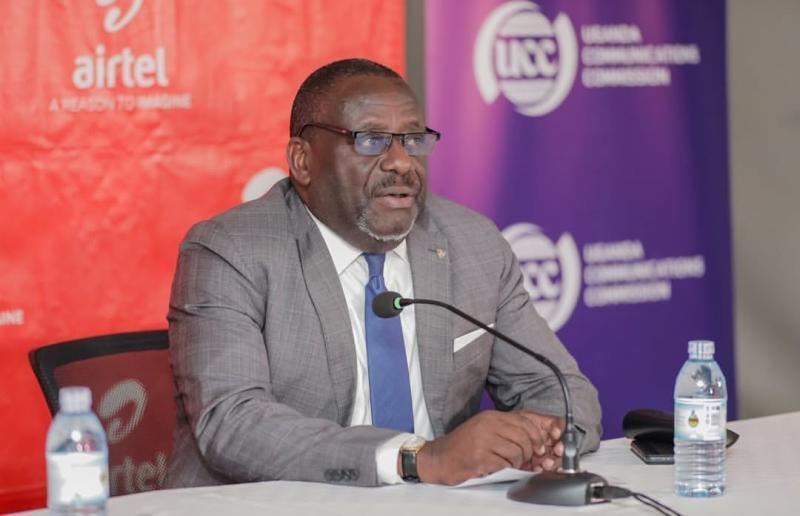
In a statement on Wednesday, January 14, the UCC said the directive was issued after advice from the Inter-Agency Security Committee, instructing all licensed mobile network operators and internet service providers to temporarily suspend public internet access and selected mobile services during the elections.
"Following strong recommendation from the Inter-Agency Security Committee, the Uganda Communications Commission (UCC) on Tuesday issued a directive to all licensed Mobile Network Operators (MNOs) and Internet Service Providers (ISPs) to temporarily suspend public internet access and selected mobile services during the election period," the statement read.
UCC explained that the suspension was intended to address threats linked to false information, electoral manipulation, and potential violence that could disrupt public order and national security.
"This measure was taken to mitigate the rapid spread of misinformation and disinformation, curb risks of electoral fraud, and prevent incitement to violence, all of which could undermine public order, national security and the integrity of the electoral process," the statement added.
Read More

UCC further clarified that not all services were affected, noting that critical and essential services were allowed to continue to ensure the country’s core systems and institutions remained functional.
"Services deemed essential were exempted to support critical systems and institutions necessary for maintaining normalcy and continuity in strategic areas of service delivery. Any internet-based services that are not life-saving or critical, and can reasonably be deferred, will regrettably remain suspended for the duration of this period," the statement further read.
UCC also provided a pathway for organizations that believe their services are essential but were not included in the exemptions to seek a review of their status.
"Institutions or service providers that believe their services are of a critical nature but have not been exempted may formally write to UCC for reconsideration by the Inter-Agency Security Committee," the statement concluded.
The shutdown comes a week after opposition leader Bobi Wine appealed to SpaceX founder and CEO Elon Musk following the shutdown of Starlink internet services in Uganda.
In a statement on Monday, January 5, he raised concerns over the move that has occurred just days before the country’s January 15 elections.
Wine stated that Starlink’s shutdown in Uganda had cut off citizens’ access to the internet ahead of the election that the opposition views as a peaceful opportunity to end President Yoweri Museveni’s decades-long rule.
"Elon Musk, here in Uganda, your Starlink has disabled citizens' access to its internet just days to the January 15th election in which we seek to peacefully end Yoweri Museveni’s 40-year-old dictatorship.
"Like other dictators, Museveni has suffocated free expression, engaged in mass killings, brutally persecuted the opposition, and suppressed citizens' rights - among other atrocities," he said.
Wine appealed for the restoration of Starlink services, arguing that internet access is essential for citizens to communicate freely.
"Please reactivate Starlink internet access in Uganda so that citizens can be able to communicate and stand a fair chance at shaping their destiny. Democracy dies in darkness," he added.