
Editor's Review
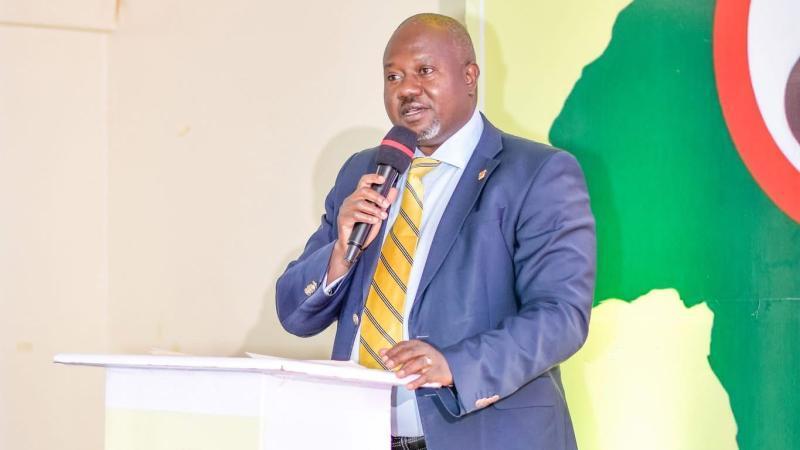
NACADA CEO Anthony Omerikwa said the inspection exercise was carried out late last year, involving multiple government agencies and covering hundreds of facilities.
The National Authority for the Campaign Against Alcohol and Drug Abuse (NACADA) has shut down 15 drug and alcohol rehabilitation facilities following a nationwide inspection.
In a statement on Thursday, January 15, NACADA CEO Anthony Omerikwa said the inspection exercise was carried out late last year, involving multiple government agencies and covering hundreds of facilities.
"The Authority announces the findings of a nationwide inspection of treatment and rehabilitation facilities conducted in November 2025 under a Rapid Results Initiative (RRI). The exercise was conducted by a Multi-Agency Team comprising of relevant Government Agencies and 236 facilities were inspected across 36 Counties," he said.
Omerikwa reported that slightly over half of the inspected centres met the required standards and were granted full accreditation.
However, NACADA noted that a significant number of facilities failed to meet minimum safety and operational requirements.
Read More
"Following the inspections, 135 facilities were fully accredited, offering a combined residential bed capacity of nearly 3,800. These accredited centres, many providing Level 3 residential services, form the backbone of the country's treatment and recovery response.
"However, 30 facilities were denied accreditation, while 15 facilities were issued immediate closure notices due to serious violations that posed risks to clients, including expired medicines, poor hygiene, unsafe structures, and a lack of qualified medical personnel. An additional 56 facilities were found to have compliance gaps and will remain under close monitoring," he added.

Additionally, Omerikwa said the inspection exposed broader systemic weaknesses in access, affordability, and specialised care within the rehabilitation sector.
"The findings also reveal major systemic gaps. Most accredited facilities are privately owned, making quality inpatient care unaffordable for many families. There is a critical shortage of public outpatient and community-based services, and an alarming lack of specialised rehabilitation services for women and adolescents," he further said.
This comes a week after President William Ruto announced plans to deploy multi-agency border teams at five key entry points as part of an intensified crackdown on drug trafficking and organized crime in Kenya.
In a statement on Wednesday, January 7, he announced that the government is accelerating its response to alcohol and drug abuse, in line with the commitments he outlined in his New Year's Address.
Ruto disclosed that he chaired a multi-agency meeting to fast-track the implementation of measures aimed at combating the drug menace that has continued to threaten the country's social fabric and national security.
He said the relevant legal framework will be finalized to strengthen coordination and accountability across government agencies as additional officers are being deployed to the Anti-Narcotics Unit, with the requisite training and logistical support.
"To disrupt drug trafficking and organised crime, multi-agency border teams will be deployed at five key entry points," he stated.
The government also announced plans to establish rehabilitation centers in all 47 counties, working closely with county governments and NACADA, alongside strengthened rehabilitation services in national referral hospitals.
He noted that the Social Health Authority will enhance coverage for treatment and recovery, ensuring that victims of drug and alcohol abuse have access to comprehensive care and support systems.
"Our focus remains clear; we will apply a whole-of-government approach integrating prevention, enforcement, treatment, and recovery to safeguard our people and national security," he further said.


 (1)-1793001898-md.jpg)
-1780684637-md.jpg)




 (1)-1793001898-sm.jpg)