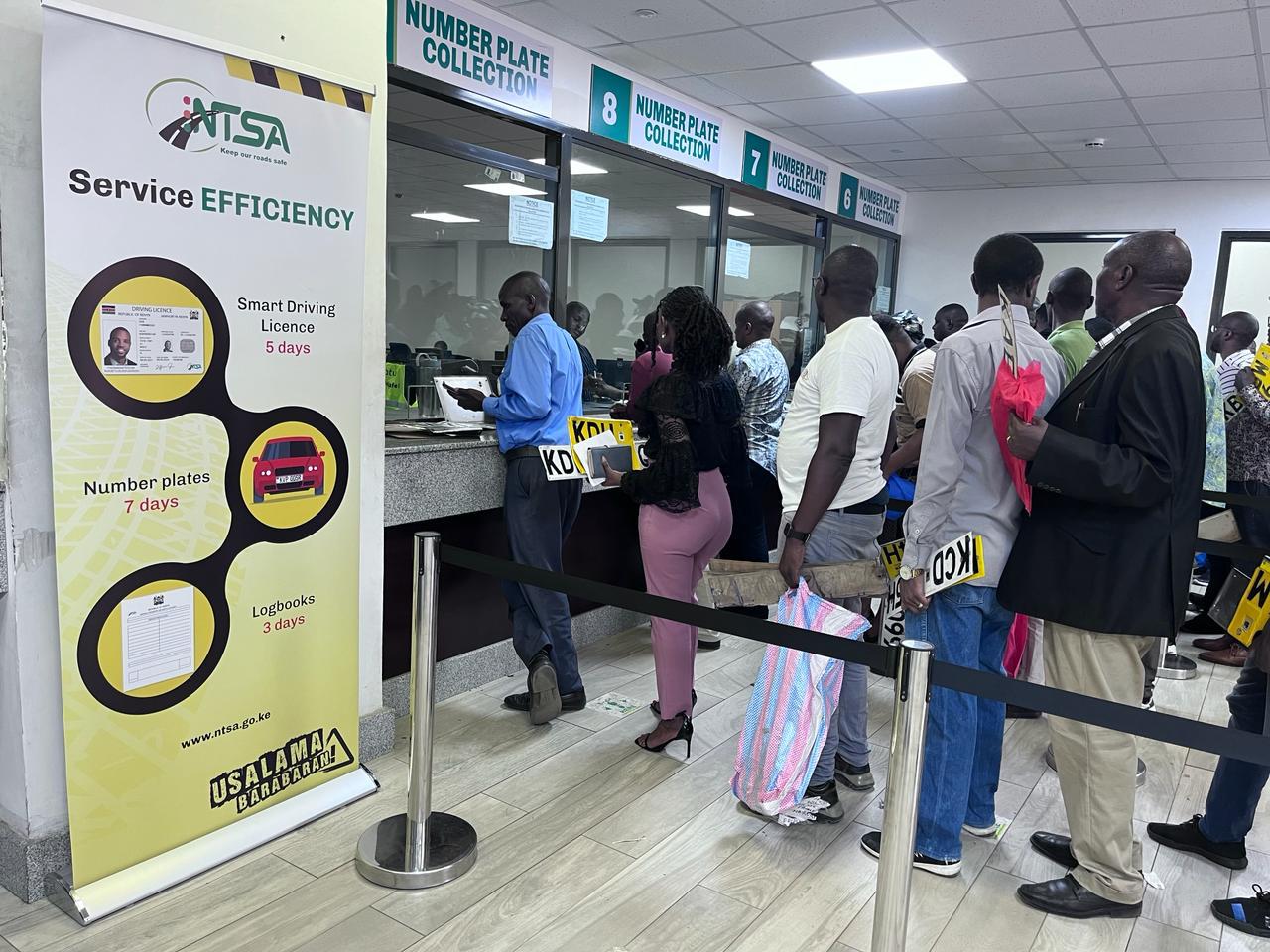
The National Transport and Safety Authority (NTSA) has released comprehensive guidelines for civilian vehicle re-registration, outlining the requirements and processes vehicle owners must follow when transferring ownership.
In a notice issued on Tuesday, January 27, the authority detailed the mandatory documents and step-by-step procedures required to complete the re-registration process.
According to NTSA, vehicle owners seeking re-registration must present a request letter explaining why the vehicle should be considered for re-registration, accompanied by a DCI report on the owner requesting the transfer.
Additional requirements include the original certificate of registration or logbook, a tape lift of the chassis and engine numbers from the DCI, the KRA PIN of the motor vehicle owner, and the owner's National ID.
The authority has emphasized that, for civilian-to-civilian re-registration, clients must submit original physical documents for verification and processing at NTSA offices. This requirement ensures that all transfers are properly authenticated and documented.
Read More
The application process begins online through the NTSA service portal. Vehicle owners must first log in to serviceportal.ntsa.go.ke and select their vehicle for re-registration.
From there, they navigate to Motor Vehicle Services and click Motor Vehicle Re-registration. After entering all required information, owners look up the entry and KRA PIN, then select the type of number plate they require.
At this stage, all required documents must be attached to the application before clicking on the declaration and submitting the form. Payment for re-registration and inspection fees is made immediately upon submission.
Once payment is complete, buyers must log in to their accounts and click notifications to accept or decline consent. They must then select the number plate and logbook collection as the re-registration counter and enter details of an authorized person who will collect the logbook and number plate on their behalf.
On the seller's end, a notification prompts them to book a re-registration inspection. The seller must click on this notification, book the inspection, and select their preferred inspection center and date before submitting the application.
After the inspection, all required original physical documents must be submitted for verification. The final step involves waiting for approval and number plate allocation from the authority.

The new guidelines follow earlier procedures established for the re-registration of ex-government vehicles, including those from parastatals, government agencies, and county governments.
For such vehicles, NTSA previously required authorization letters from the respective Principal Secretaries or the Department of Defence, along with specific documentation, including GK number plates, retention letters from disposing institutions, and GK registration certificates.
Those guidelines also mandated prescribed application forms duly filled and signed by applicants and disposing institutions, auction documentation where applicable, and tape lifts of chassis and engine numbers from the DCI. A notable distinction in ex-government vehicle transfers is that number plates and registration certificates are not applicable to ex-military vehicles.
The authority has streamlined the re-registration process to ensure transparency and prevent fraud in vehicle ownership transfers. By requiring DCI reports and physical document verification, NTSA aims to combat vehicle theft and ensure legitimate ownership transfers across the country.
The emphasis on physical document submission at NTSA offices adds an extra layer of security to the process, making it more difficult for fraudulent transfers to occur. This approach also allows officials to verify the authenticity of documents and cross-check information with relevant databases.
Vehicle owners are advised to ensure all their documents are in order before initiating the re-registration process to avoid delays or application rejections. Missing or incomplete documentation can significantly slow down the transfer process and may result in additional costs or trips to NTSA offices.