Editor's Review
Power supply in Nyanza and parts of Western Kenya has stabilised following the energisation of the Sondu-Ndhiwa-Homa Bay-Awendo 132kV transmission line.
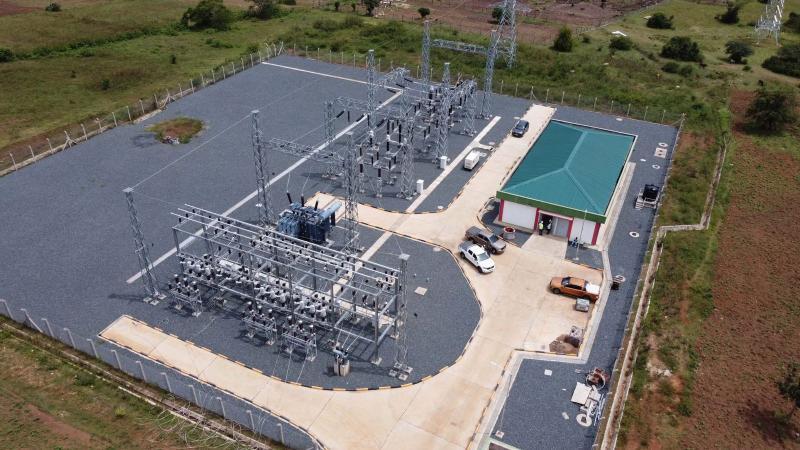
Power supply in Nyanza and parts of Western Kenya has stabilised following the energisation of the Sondu-Ndhiwa-Homa Bay-Awendo 132kV transmission line and its associated substations.
The project, implemented by the State Department of Energy under Principal Secretary Alex Kamau Wachira and the Kenya Electricity Transmission Company Limited, was energised at approximately 4:07 p.m. on Thursday, January 29,
It is intended to address long-standing power supply constraints that have affected economic activity in the region.
Support was also provided by National Government Administration Officers (NGAO) to facilitate coordination and ensure system stability during implementation.
In addition, administrative coordination was led by Internal Security and National Administration Principal Secretary Raymond Omollo, who said the involvement of multiple agencies was necessary to deliver the project efficiently.
Read More
According to system data, load shedding affecting the area has been eliminated following the energisation.
The project has also reduced congestion along the Muhoroni-Chemosit line, which had been operating under sustained strain.
Before the new line became operational, Sondu did not supply power to Ndhiwa, while the Muhoroni-Chemosit line carried loads of up to 68MW. After energisation, Sondu is now supplying 27MW to Ndhiwa, while the load on the Muhoroni-Chemosit corridor has dropped to about 40MW.
Power flows between Muhoroni and Kisumu have also declined, allowing for more balanced distribution across the network.

Engineers say the redistribution of loads lowers the risk of overloads and large-scale outages, improving overall grid resilience.
Energy planners expect national peak electricity demand to rise as suppressed demand in Nyanza is gradually released.
Several economic sectors are expected to benefit from the improved reliability, including agro-processing industries such as sugar, cotton, maize and dairy.
Fishing communities around Lake Victoria are also expected to gain from more consistent power for cold storage and fish processing, reducing post-harvest losses.
The strengthened transmission network is also expected to support County Aggregation and Industrial Parks, which rely on stable electricity to attract investment, as well as small and medium-sized enterprises in manufacturing, hospitality and retail that have previously been disrupted by outages.
Officials say the improved supply supports Kenya’s push toward a 24-hour economy by enabling businesses and service providers to operate for longer hours.
Traders, digital workers and service providers are expected to benefit from more reliable evening power.
Public institutions, including schools and health facilities, are also expected to gain as last-mile connections improve electricity and internet access, supporting digital learning and service delivery.
According to Kenya Power and Lighting Company Chair Joy Mdivo, some regions have historically remained underserved due to infrastructure gaps and limited transmission capacity.
She said the current administration has prioritised correcting these imbalances by expanding transmission infrastructure.
Mdivo noted that ageing infrastructure had contributed to unreliable power supply in western Kenya and Nyanza for many years, and said the new line would significantly stabilise electricity supply.
She added that dependable power would support industrial parks, fish cooling plants and agro-processing industries, while expanded last-mile connectivity would improve outcomes for schools.