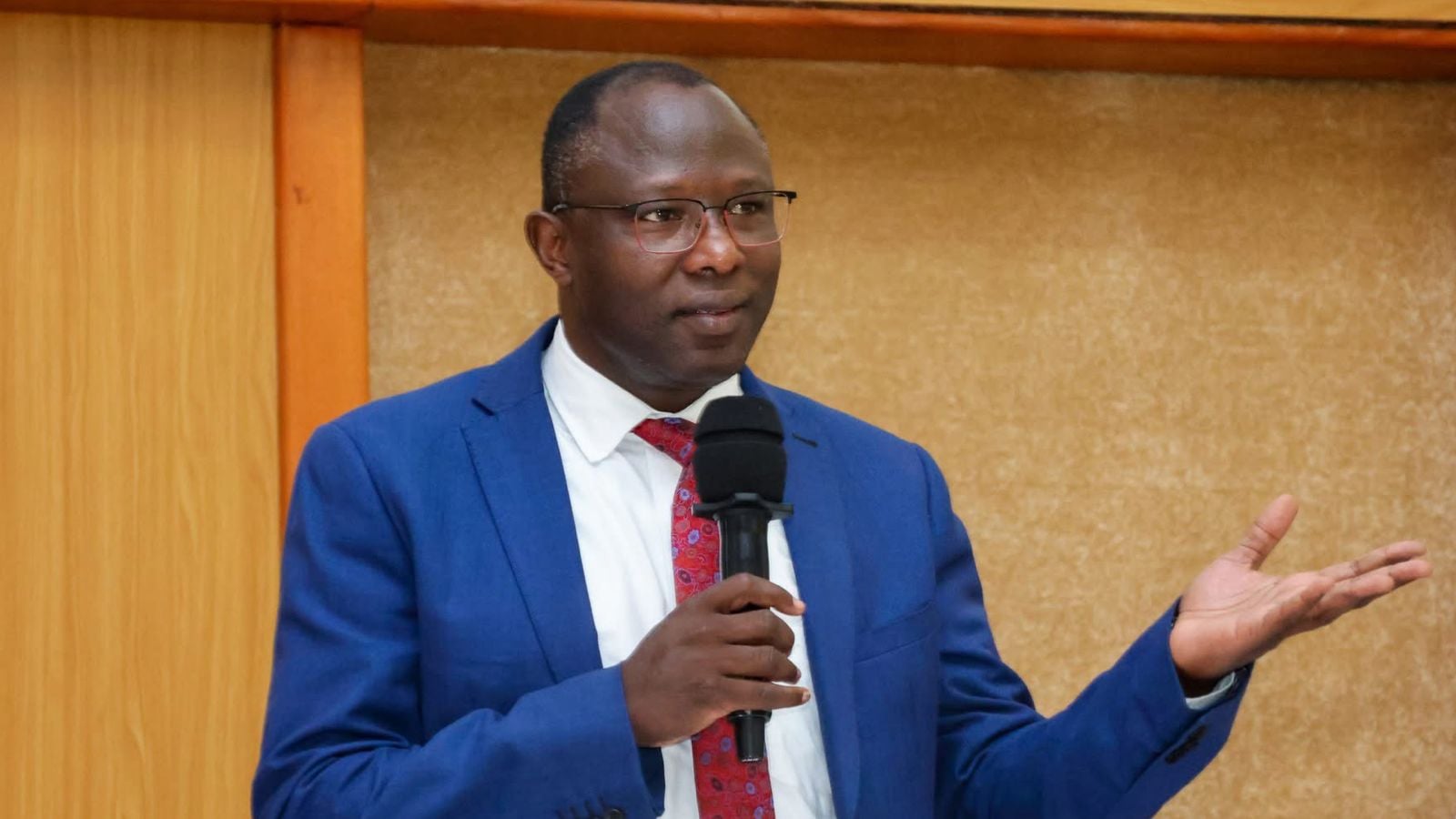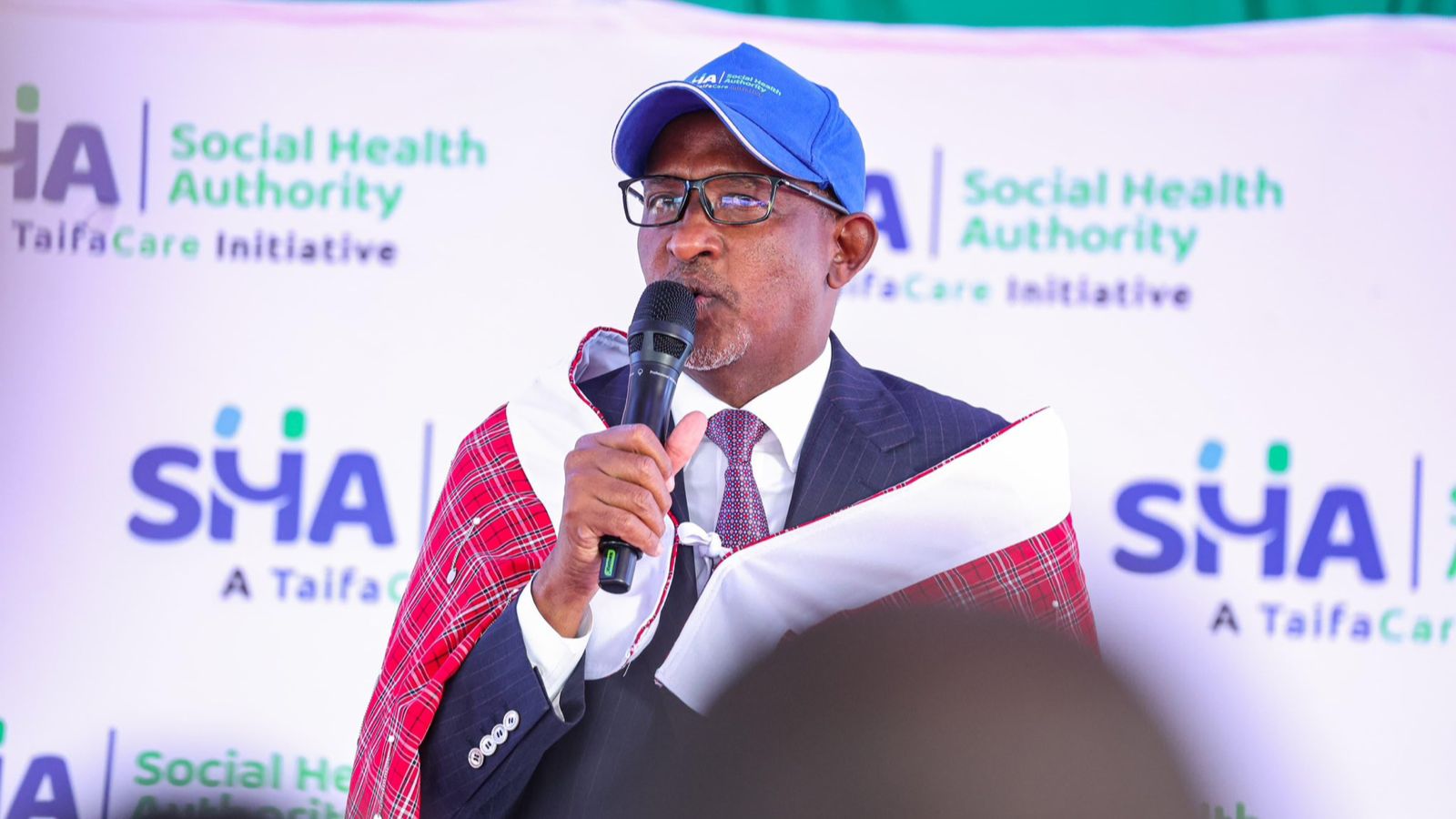
Health Cabinet Secretary Aden Duale has outlined measures the government has put in place to detect and prevent fraud under the Social Health Authority (SHA) in real time.
In a statement on Sunday, February 15, the CS said the Ministry of Health has tightened verification systems, deployed artificial intelligence tools, and initiated legal action against facilities and individuals implicated in fraudulent schemes.
Speaking on the ministry’s anti-fraud strategy, Duale explained that the government has strengthened patient identification systems across public health facilities.
"We have phased out the easily compromised One-Time Password (OTP) system. Patient identification across Level 4, 5, and 6 facilities now requires fingerprint authentication to ensure the person receiving care is the actual registered beneficiary. Rollout to Level 2 and 3 facilities is currently underway," he said.
Duale also addressed the introduction of a geo-fenced digital tool aimed at curbing the misuse of pre-authorizations by healthcare workers.
Read More
"Healthcare professionals must now use this geo-fenced application for pre-authorizations, preventing unauthorized off-site approvals and code-sharing," he added.
Duale further revealed that SHA has adopted artificial intelligence technology to monitor claims and detect suspicious patterns instantly.
"SHA has deployed an advanced AI system that flags anomalous billing patterns (such as upcoding or irregular admissions) in real-time, instantly blocking suspicious claims for manual forensic review," he continued.
Duale added that enforcement measures are already underway against facilities and medical personnel found to be engaging in fraudulent practices.
"We have actively suspended dozens of non-compliant facilities and withdrawn SHA platform access rights from implicated medical personnel, turning their files over to the DCI," he stated.

Duale also issued a warning to beneficiaries who may be colluding with healthcare providers to defraud the authority.
"Any beneficiary found colluding to defraud the Authority faces severe legal consequences. Under Section 48(1) (c) of the Social Health Insurance Act, 2023, fraudulently altering or providing false information is a criminal offense. Beneficiaries involved in such schemes are immediately handed over to the Directorate of Criminal Investigations (DCI) for prosecution," he cautioned.
Duale maintained that the law will be applied firmly to all parties involved in fraudulent activities.
"Charges can include conspiracy to defraud under the Penal Code and, where applicable, asset recovery under the Proceeds of Crime and Anti-Money Laundering Act (POCAMLA). We are ensuring that the full force of the law is applied to both the healthcare providers and the beneficiaries facilitating these crimes," he concluded.
This comes two weeks after Duale revealed that the Ministry of Health blocked fraudulent health insurance claims amounting to Ksh11 billion through the use of an artificial intelligence-powered verification system.
In an interview on Wednesday, January 28, Duale disclosed that the health payments platform is equipped with an AI fraud detection engine supported by auditors and medical professionals.
"Our system has the latest AI fraud engine. In our own system, we have forensic and risk auditors. We have a team of clinical review doctors. That is why we found out that Ksh11 billion of fraudulent claims have been rejected. If we had to pay, there could have been a loss of public funds," he said.
Duale stated that the rejected claims will not be paid under any circumstances, adding that those behind the attempted fraud will be exposed publicly.
"Respectfully, you cannot call a minister a liar. You can call me a liar, you can call me a bulldozer, you can call me anything, but we will not pay the rejected Ksh11 billion. We are going to publish all these people who wanted to get the Ksh11 billion fraudulent rejected claims," he added.
Duale further pointed out that the health system processes claims in under a minute and accused some facilities of deliberately delaying services to push patients into paying cash.
He noted that such practices are now being actively monitored.
"Our system turnaround is less than 1 minute. Some facilities want to frustrate patients so that they wait, and then they pay out of pocket. The system is doing vigilance on such facilities," he further said.