Editor's Review
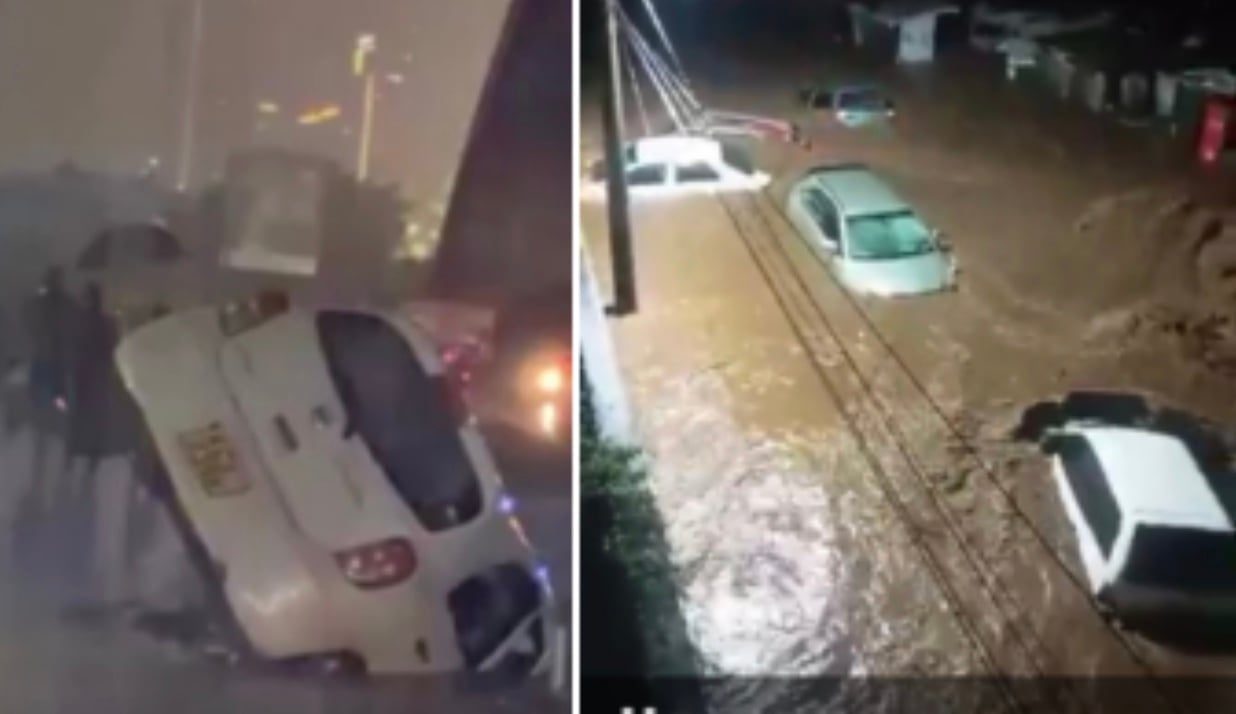
The heavy rainfall left vehicles submerged, homes flooded and property destroyed.
Nairobi City was partially submerged after heavy rainfall on Friday, March 6, leaving most areas flooded.
The rains started in the late afternoon hours in line with a weather forecast issued by the Kenya Meteorological Department and went on nonstop for hours.
Nairobi's perennial drainage issues were brought to light once more as the city's drainage system could not handle the stormwater.
The Kenya Red Cross confirmed that several parts of the city experienced flooding, resulting in insurmountable damage and loss of property.
"Heavy rainfall has caused flooding in several parts of Nairobi and surrounding areas, leading to road closures, property damage, displacement, and distress among affected communities," the Kenya Red Cross stated.
Read More
Sections of CBD roads, Uhuru Highway, Mbagathi Way, Mombasa Road (South C–JKIA Exit–Kyumbi), Thika Superhighway (Githurai–Kahawa Sukari), Jogoo Road, Lunga Lunga Road, Enterprise Road, and Lang’ata Road near T-Mall were affected by floods.
.png)
Other areas include Pipeline & Embakasi (Kware Road cut off), Mukuru (Kwa Njenga, Reuben, Viwandani), Kibra, Mathare, Huruma, Baba Dogo, Bosnia, South B & South C, Nairobi West, Lang’ata, Umoja 3, Chokaa, Njiru, Ruai, Utawala, Roysambu, Kahawa West, Githurai, Loresho and parts of Westlands.
Consequently, the Kenya Red Cross deployed teams to conduct search-and-rescue operations in affected areas.
Flooding on Uhuru Highway was severe along the stretch from Westlands Roundabout to University Way.
Private vehicles and even 33-seater matatus were submerged in the floodwaters. Passengers were forced to hold hands to form a humanchain to cross the road to safety.
T-Mall section of Lang'ata Road and Mbagathi Way was flooded after the Mbagathi River burst its banks. Two cars were completely submerged in water.
South C shopping centre, downtown Nairobi, and the road adjacent to Yaya Centre in Kilimani were also turned into a cesspool of water.
The Moja Expressway Company announced free use of the elevated roadway as the A8 Momnasa Road was rendered impassable due to flooding and a traffic gridlock that lasted for hours.
Even those who were already at home were not spared as the flood waters seeped through into some homes, causing insurmountable damage.

Social media personality Arap Uriah shared a video clip of his home where water had risen to a knee-high level. His furniture was literally floating about in his living room.
Some sections of Nairobi were also left without electricity following the heavy downpour. Kenya Power is yet to issue a statement on the same.
The flooding sparked outrage from residents who questioned why the county government had not resolved the drainage issues in the county three years after the first severe flooding incident.
A section of Kenyans demanded that Governor Johnson Sakaja should resign from office due to his alleges laxity in dealing with the flooding issue.
Nonetheless, some Kenyans argued that the blame should also lie squarely on the citizens who consistently litter the city and construct along or on top of drainage systems.