Editor's Review
The government said it was monitoring the situation in the Middle East as it unfolds.
At least 15 Kenyans who were stranded in Tehran in the face of the crisis in Iran have landed safely in Nairobi.
They landed at the Jomo Kenyatta International Airport (JKIA) Sunday morning, March 22 and were received by officials from the State Department of Diaspora Affairs under the Ministry of Foreign Affairs.
According to the department, the Kenyans made their way out of Tehran through Türkiye's capital, Ankara, perhaps for safety.
Upon their landing, the evacuees were subjected to psychological counselling before reuniting with their families, who had been awaiting them.
"The evacuees, who had been based in Iran, transited through Türkiye before arriving in Kenya. Upon landing, the team underwent immediate debriefing and received on-the-spot psychosocial support to help them process their experiences. They were then reunited with their waiting families," the department said.
Read More
Their return was facilitated by the Kenyan government, whose foreign missions in Tehran and Ankara collaborated to locate the Kenyans and arrange their return.

The department said it was monitoring the situation as it unfolds in the Middle East, urging Kenyans to heed any counsel given by the authorities.
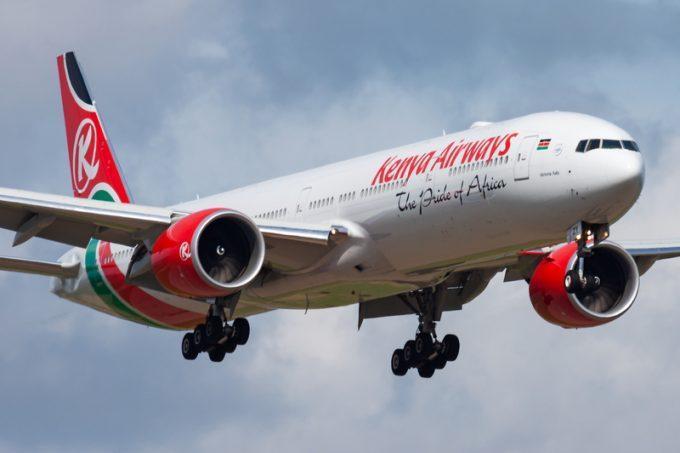
This came weeks after Kenya Airways (KQ) temporarily halted repatriation flights to and from Dubai in the United Arab Emirates (UAE), one of the countries affected by the crisis.
The national carrier attributed the move to the guidance issued by Dubai Airport Authorities. saying that disregarding the advisory would pose significant risks to passengers and crew.
Customers are encouraged to monitor their flight status via the airline’s website and keep their contact details current to receive direct notifications.
Additionally, KQ advised travellers to reach out to the Kenya-United Arab Emirates (UAE) consulate for further assistance.
The Middle East crisis escalated on February 28 when Israel launched a strike against Iran, prompting widespread airspace closures across the region.
Iran responded with missile attacks that triggered explosions in Abu Dhabi and Dubai, aimed at US bases and allied facilities in the Emirates.
Blasts were reported in central Tehran following Israel’s confirmation of a pre‑emptive strike, with impacts reported in several districts outside the city.
One strike occurred at the offices of Iran's Supreme Ayatollah Ali Khamenei, killing him on the spot.
Israel’s Defence Minister, Israel Katz, confirmed the operation and announced a nationwide state of emergency, stating the action was intended to neutralise threats.
Emergency sirens were activated across major cities, schools and workplaces were shut down except for essential services, and residents were instructed to remain close to shelters.
In addition, Israel’s Airports Authority suspended civilian flights, reflecting concerns over potential Iranian retaliation.
The United States of America (USA) backed and reinforced Israel in the attacks against Iran, with President Donald Trump saying the aim was to deliver the country from the late Khamenei's apparent grip.


-1772458092-md.jpg)




-1772458092-sm.jpg)