
Editor's Review
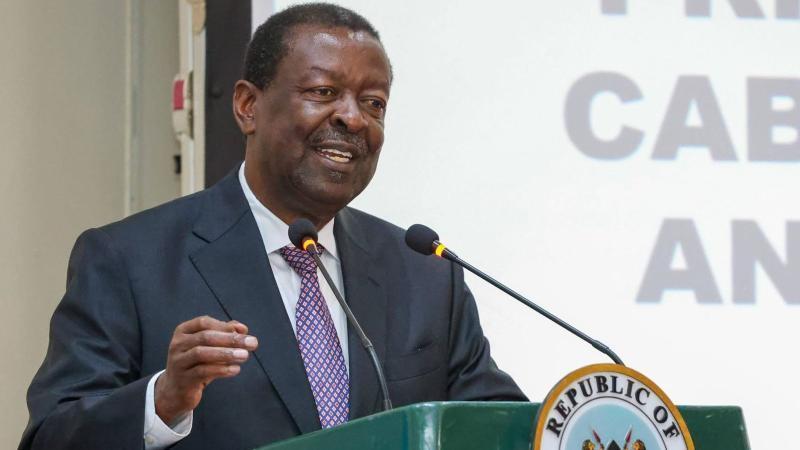
Prime Cabinet Secretary Musalia Mudavadi has explained why Kenya cannot relocate its capital from Nairobi to another city.
Prime Cabinet Secretary Musalia Mudavadi has explained why Kenya cannot relocate its capital from Nairobi to another city.
Speaking on Monday, March 30, Mudavadi elaborated that Kenya’s reliance on privately owned land makes the process complex and impractical.
"Here, you are dealing with privately owned land that belongs to Kenyan citizens. Whether you are moving into Kajiado, Machakos, or Kiambu, or going towards Thika, you would be looking at expropriating people's land to create a new city. I think that is not practical," he said.
Mudavadi made the remarks while comparing Kenya’s situation with other countries that have successfully moved their capitals.
"I don't think we can relocate from Nairobi and establish another city. It has happened in Dar es Salaam; they moved to Dodoma. In Nigeria, they moved away from Lagos to Abuja. However, the land tenure system we have is different," he stated.
Read More

This comes a week after Nairobi Governor Johnson Sakaja announced plans to rehabilitate the Nairobi Dam following a joint assessment by officials from the County Government of Nairobi, the Water Resources Authority (WRA), the Nairobi Rivers Commission, the Nairobi City Water and Sewerage Company, and disaster management teams.
Speaking during a site visit on Monday, March 23, Sakaja highlighted the urgency of taking immediate action to address the deteriorating state of the dam.
"This dam has a long history, dating back to 1953. It was built not just for recreation but to manage floods for downstream areas along the Ngong and Mitumi rivers. Over the years, pollution, sewage, encroachment, and settlements have created serious risks to our people," he stated.
Sakaja outlined a three-pronged strategy aimed at restoring the dam and protecting nearby communities, including the immediate removal of debris and blockages downstream of the spillway to restore natural water flow and ease pressure on the weakened dam walls.
He added that geotechnical surveys would be conducted to assess the strength of the embankment and ensure the dam’s long-term structural integrity.
Additionally, Sakaja noted that a 30-meter protective barrier would be established around the dam to prevent encroachment, enhance public safety, and preserve the infrastructure.
Sakaja insisted that the interventions were essential not only in preventing potential flooding but also in safeguarding the environment and ensuring the safety of communities living in surrounding areas.




 (1)-1791178178-md.jpg)





 (1)-1791178178-sm.jpg)