
Editor's Review
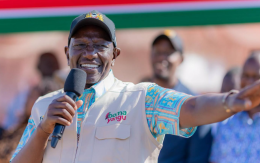
DCP Deputy Party leader Cleophas Malala has warned of mass protests if fuel prices are hiked in the next review.
Democracy for the Citizens Party (DCP) Deputy Party leader Cleophas Malala has warned of mass protests if fuel prices are hiked in the next review.
Speaking on Saturday, April 4, in Juja, Kiambu County, Malala said Kenyans will not accept any increase in fuel prices.
The former Kakamega Senator cautioned that if the protests break out, they would not end until President Ruto leaves office.
“We want to tell President Ruto that we will not accept any increase in fuel prices. If you raise fuel prices, we will go to the streets to protest.
“This time we will not stop until we remove you from State House and send you home,” Malala stated.
Read More

Malala’s warning comes days after former Public Service Cabinet Secretary Moses Kuria said April could be one of the most economically challenging months as a result of the conflict in Iran.
In a statement on Wednesday, April 1, Kuria predicted that fuel prices could jump up to Ksh250 per liter due to supply disruptions at the Strait of Hormuz, which is a key route for oil shipments.
“April will be the toughest and most brutal month of all time. The real effects of the regrettable war in Iran will take a toll on the global economy.
“The Hormuz effects of energy supply disruptions will hammer the global economy. In countries like Kenya, pump prices will end up in the region of Ksh230 to Ksh250 per litre,” Kuria stated.
On Thursday April 2, Treasury CS John Mbadi assured lawmakers that Kenya has adequate petroleum reserves despite escalating tensions in the Middle East.
Appearing before the National Assembly’s Finance and National Planning Committee, CS Mbadi revealed that, based on data from the Ministry of Energy and Petroleum, Kenya has sufficient fuel stocks covering petrol, diesel, and jet fuel needs for several days.
The Treasury CS noted that as of March 30, the country had 138,623 metric tonnes of Super Petrol, which translates to 16 days of supply, 207,841 metric tonnes of diesel, equivalent to 19 days, and 150,398 metric tonnes of jet fuel, enough for 49 days.
Mbadi further explained that additional shipments scheduled for March and April are expected to strengthen these reserves.
While acknowledging that the current supply situation remains stable, Mbadi warned that future imports could become more expensive.
He cautioned that rising global oil prices in the coming months may translate into higher pump prices locally, potentially triggering inflationary pressure and straining public finances.
"The Middle East serves as the continent’s largest external supplier of petroleum products and natural gas, making African economies highly vulnerable to supply disruptions and price shocks arising from instability in the region," he observed.
The Energy and Petroleum Regulatory Authority (EPRA) is scheduled to review fuel prices on April 14, 2026.