Editor's Review
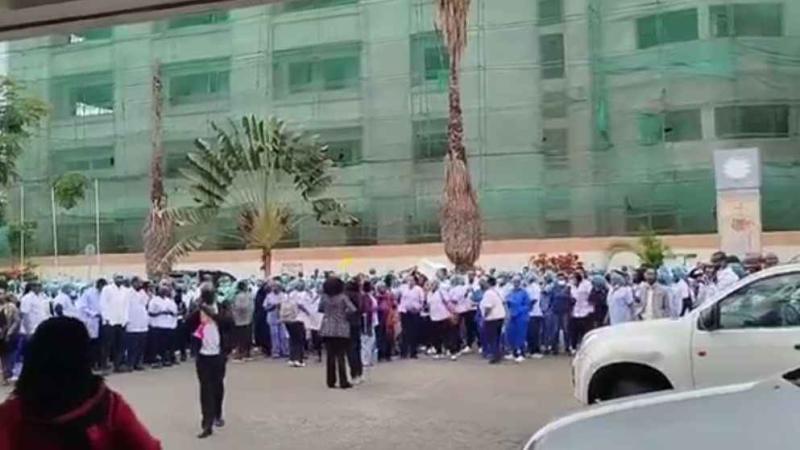
Operations at Kenyatta National Hospital (KNH) have been disrupted after nurses downed their tools in protest.
Operations at Kenyatta National Hospital (KNH) have been disrupted after nurses downed their tools in protest.
The strike, which began on Monday, April 13, followed a breakdown in talks between hospital management and the nurses.
Notably, efforts by the hospital's Chief Executive Officer, Richard Lesiyampe, to engage the striking staff and restore normalcy were in vain.
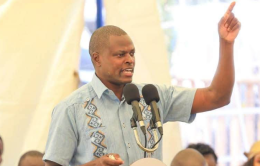
Lesiyampe acknowledged the concerns raised by the nurses and pointed to ongoing efforts to address longstanding issues at the institution, stating:
"My dear nurses, I came here six months ago and I found a lot of problems, and you showed me all the problems. I have been trying to solve one problem at a time, we can't finish all of them in six months," he said.
Read More
The nurses' strike now raises concerns about the continuity of essential healthcare services, especially for patients relying on KNH for specialized treatment.
In a statement on Sunday, April 12, Lesiyampe sought to reassure staff, patients, and the public that discussions were ongoing and that the matters raised were being handled.
He explained that the concerns raised largely revolve around remittance timelines and staff welfare.
"The Hospital Management wishes to assure staff, patients, and the public that the issues highlighted primarily relate to remittance timelines for statutory and third-party deductions, as well as broader staff welfare matters.
"These issues are currently being addressed through the established institutional consultation mechanisms between the Hospital, relevant government agencies, and staff representatives," the statement read.

Lesiyampe clarified that salaries have been paid up to date, while explaining the nature of remittance processes within public institutions.
"KNH confirms that staff salaries have been processed and paid up to March 2026. As with many public sector institutions, the settlement of statutory and third-party deductions is undertaken through structured remittance arrangements linked to institutional cash-flow cycles and reimbursement processes," he added.
Lesiyampe added that the hospital’s reliance on national health financing systems plays a role in determining when remittances are processed.
"A significant portion of the Hospital's operational funding is derived from reimbursement frameworks under national health financing arrangements. Consequently, the timing of remittance processing is, in part, influenced by the broader national healthcare financing and reimbursement cycle," he continued.
Lesiyampe also noted ongoing engagement with government agencies to streamline the process and ensure all obligations are met.
"KNH continues to engage closely with the relevant government institutions to ensure that these processes proceed efficiently and that all obligations are addressed within the applicable administrative and regulatory frameworks," he further said.
On pension matters, Lesiyampe maintained that the hospital is operating within the required structures.
"With regard to pension contributions, the Hospital continues to operate within the established pension administration framework to ensure that both employer and employee obligations are managed in accordance with the applicable arrangements," he stated.
Addressing concerns about contract staff, particularly nurses, he highlighted progress made in transitioning workers to permanent terms.
"On the matter of staff serving on contract terms, the Hospital has, over the past several years, made considerable progress in regularizing clinical staffing. A significant number of nurses and other healthcare professionals have already transitioned to Permanent and Pensionable terms, with further discussions ongoing within the appropriate government and institutional frameworks to address the remaining cases," the statement concluded.
-1792071927-md.jpg)


-1792071927-sm.jpg)