Deputy President Kithure Kindiki has told of Kenyans planning protests after the soaring of fuel prices in the country.
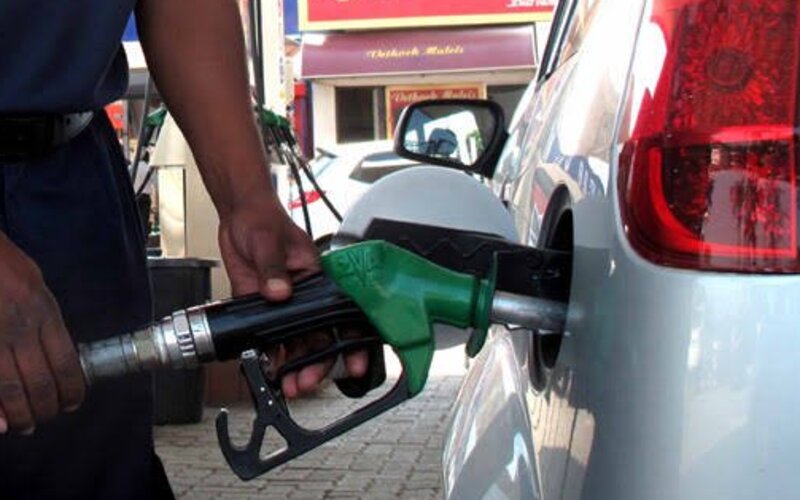
A section of Kenyans has threatened to hit the streets Tuesday, April 21, to protest against the upward revision of prices of the petroleum products, blaming it on the government.
However, speaking in Tharaka Nithi Saturday, April 18, the deputy president observed that the prices were as a result of forces beyond Kenya's control.
According to him, the Middle East crisis pitting Iran against the United States and Israel is to blame for the disruptions in oil supply.
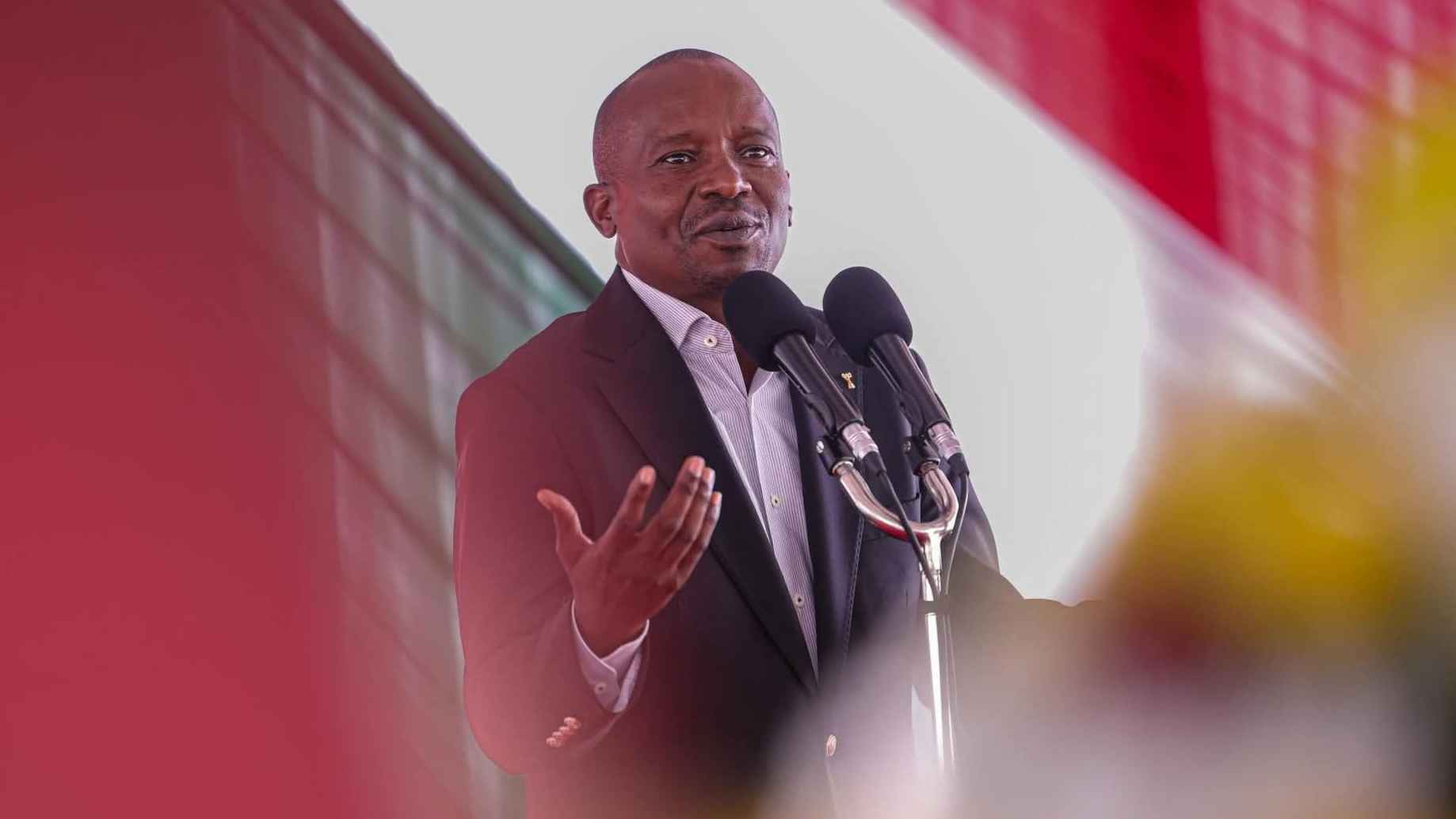
"I want to say this with avoidance of doubt; the recent escalation of fuel prices is not a creation of the government of Kenya. It is a creation of the war between the US and Israel on one hand, and Iran on the other. There are people moving around spreading lies about this issue," Kindiki said.
Read More
He drew an instance from the opposition-led protests against the high cost of living in 2023.
According to Kindiki, the prices of such basic commodities as maize flour went down after the intervention of the government, which formulated polices to regulate the prices.
He observed that the protests had no impact, as only government policies came to the rescue of Kenyans.
"Going to the streets for protests won't be a solution. Even if Kenyans were to go to the streets to protest, at the end of the day the prices would still be high. Our friends protested in 2023 when maize flour prices were high, and the prices never fell. It only went down after the government put in place policies that it formulated to ensure the prices are regulated. Same with the oil issue. Protests won't reduce the prices of fuel," he said.
On April 14, the Energy and Petroleum Regulatory Authority (EPRA) announced new fuel prices to take effect from April 15 to May 14.
The adjustments saw diesel rise by Ksh40.30 per litre and super petrol by Ksh28.69 per litre, while kerosene remained unchanged.
In Nairobi, this pushed retail prices to Ksh206.97 for super petrol, Ksh206.84 for diesel, and Ksh152.78 for kerosene.
EPRA explained that the changes reflected tax components and recent legislative amendments in the petroleum sector.
The announcement triggered public outrage, with many Kenyans criticising the government for failing to shield citizens from the rising cost of living.
President William Ruto defended the increase, attributing it to global factors such as disruptions in oil supply caused by turmoil in the Middle East.
To ease the burden, he ordered a reduction in Value Added Tax (VAT) on fuel from 13% to 8%.
Following this directive, EPRA revised the prices again on April 15, confirming that the new rates would apply from April 16 to May 14.
The updated review showed a drop in pump prices, with super petrol reduced by Ksh9.37 per litre and diesel by Ksh10.21 per litre in Nairobi.
As a result, the capital’s retail prices fell to Ksh197.60 for super petrol, Ksh196.63 for diesel, while kerosene stayed at Ksh152.78 per litre.